



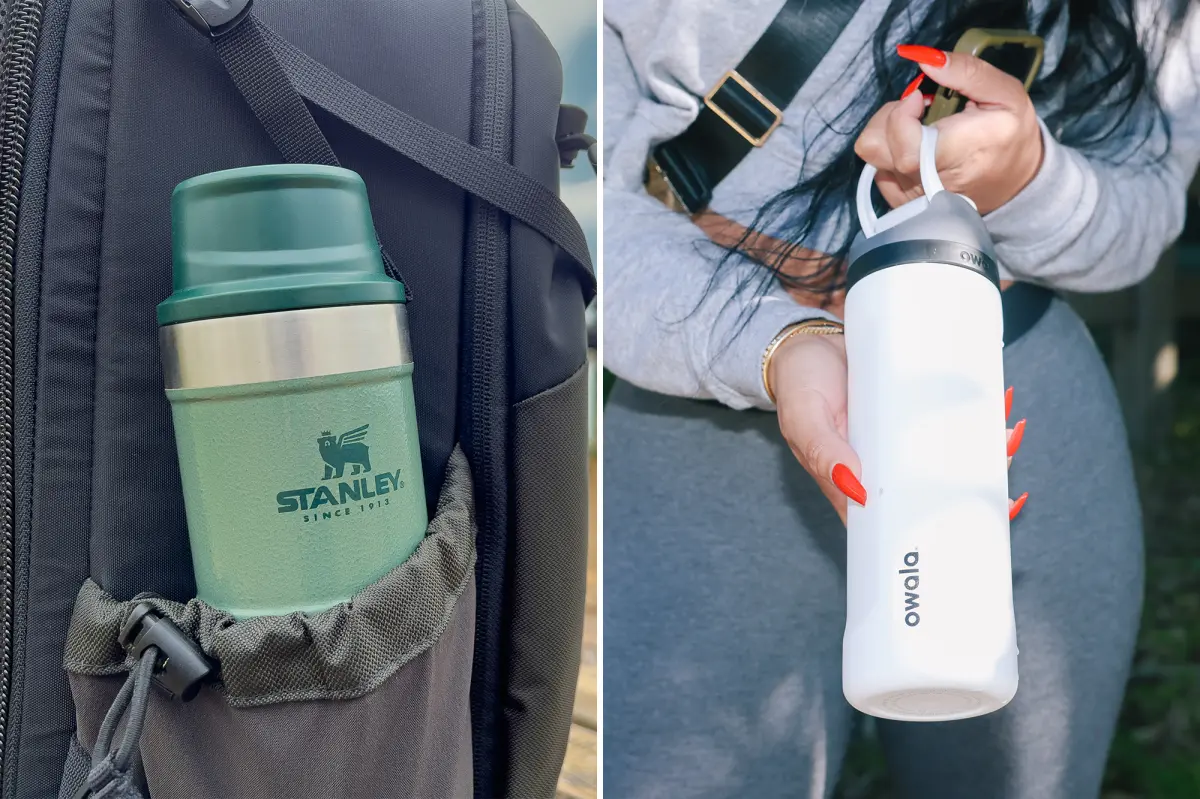
For today’s youth, the “emotional support water bottle” is far more than a simple vessel for hydration; it has morphed into a defining cultural touchstone, a canvas for self-expression, and a vital comfort object. Walks through any middle or high school hallway reveal a colorful mosaic of vacuum-insulated metal canisters from premium brands like Stanley, Owala, and Brumate, heavily adorned with vinyl stickers, charms, and custom boots. These expensive accessories serve as modern security blankets, helping anxious students navigate the intense social landscapes of modern adolescence. However, for families in the Hardin County Schools district of Kentucky, this deeply ingrained daily ritual came to an abrupt and jarring halt just one week before the academic year was set to begin. In a sudden announcement that sent shockwaves through the community of nearly 15,000 students, school administrators declared a total ban on all metal water bottles during regular school hours. What was supposed to be a week of typical back-to-school excitement quickly dissolved into a storm of frustration, confusion, and logistical chaos as parents and students scrambled to adjust to the unexpected new reality.
The driving force behind this sweeping prohibition, according to district officials, is a stark and unsettling reality of modern school safety. While parents see a costly, durable container designed to keep ice water cold for twenty-four hours, school administrators have increasingly had to view these heavy, double-walled steel vessels through the lens of threat assessment. John Wright, the public relations director for Hardin County Schools, explained that the district had witnessed a disturbing post-pandemic trend of students weaponizing these heavy metal bottles during physical altercations. In the hands of an angry teenager, a fully filled, forty-ounce stainless steel tumbler becomes a formidable, blunt-force weapon capable of inflicting severe physical harm. Over the past couple of years, the district has documented an escalation of bottle-related incidents, some of which resulted in serious injuries, including concussions that required emergency room visits and hospitalizations. Faced with the immediate duty to protect student physical well-being, the district’s leadership team concluded that the most effective way to eliminate this specific hazard was to ban metal containers from their academic buildings entirely, replacing them exclusively with lightweight plastic alternatives.
Despite the safety-focused rationale, the timing and execution of the announcement ignited a firestorm of parental outrage across the district. Coming just days before the first bell on August 6, the sudden policy change felt to many like an unfair, last-minute ambush, especially since many families had already completed their school shopping. Premium metal water bottles are a significant financial investment, often retailing between thirty-five and fifty-five dollars, and many parents had just purchased brand-new ones to celebrate the upcoming school year. The district’s Facebook page was quickly flooded with hundreds of angry, bewildered comments from parents questioning the logic of punishing the entire student body for the misbehavior of a few, prompting administrators to eventually disable the comment section altogether. Recognizing the strain this put on local families, John Wright publicly apologized on behalf of the administration, admitting that the district absolutely should have communicated the decision much sooner. He explained that the policy was finalized during a very recent, urgent strategy meeting between school principals and district leaders, leaving them with no choice but to roll out the rule immediately rather than waiting for another semester to pass.
The human impact of this policy shift is perhaps most vividly felt through the eyes of the students themselves, who view these bottles as central to their social identity. For a thirteen-year-old girl in the district, the news did not arrive as an administrative update, but as a crisis of social conformity and personal comfort. Upon hearing about the ban, she immediately called her father, James Paulk, in a state of sheer panic, deeply worried about how she would stay hydrated and what kind of bottle she would now be allowed to carry. This reaction highlight a poignant truth about modern teenage life: in an era of heightened academic pressure and social media scrutiny, these bottles offer a sense of control, predictability, and belonging. To teenagers, being forced to swap a trendy, insulated Stanley cup for a cheap, sweating plastic bottle is not just a minor inconvenience; it feels like an embarrassing loss of agency and a disruption to their daily coping mechanisms. Parents are left trying to validate their children’s very real emotional anxieties while simultaneously trying to support the school’s efforts to maintain a safe, orderly environment.
Reflecting on his daughter’s distress, James Paulk offered a nuanced perspective that bridges the gap between frustrated parents and defensive school administrators. While he deeply sympathizes with the kids who feel their personal freedom is being chipped away, he also acknowledges that the landscape of public education has fundamentally shifted. Paulk pointed out that the omnipresence of these massive personal water bottles is actually a relatively recent phenomenon, largely born out of the COVID-19 pandemic when school water fountains were disabled to prevent the spread of germs. During that anxious period, carrying a large, personal supply of water was a health necessity, but as society has transitioned out of the pandemic era, the necessity has morphed into an unregulated commercial trend. Paulk suggested that perhaps the community needs to step back and reevaluate whether the culture of carrying heavy, metallic personal items around all day still makes sense in a post-pandemic world, especially when those items are occasionally being used to hurt others. His reflection highlights the complex challenge modern schools face as they try to dismantle pandemic-era habits that have outlived their original utility and turned into safety liabilities.
To ease the transition and prevent disciplinary chaos on the very first day of school, Hardin County school officials have assured families that there will be a generous grace period before the plastic-only policy is strictly enforced. Administrators understand that finding suitable, leak-proof plastic replacements takes time and money, and they want to focus the opening weeks on education rather than confiscating property. Furthermore, the district has built a compromise into the policy: the ban on metal water bottles applies strictly during regular instructional hours inside the school buildings. Students are still fully permitted to use their beloved insulated metal bottles during after-school activities, such as athletic practices, band rehearsals, and various clubs, where the environment is structured differently and the physical demands for cold water are much higher. This compromise represents a delicate attempt by the school district to balance the physical safety of the classroom with the practical and emotional needs of its students. As the school year begins, Hardin County will serve as a testing ground for how communities negotiate the boundary between youth culture, consumer trends, and the collective responsibility of keeping kids safe.