

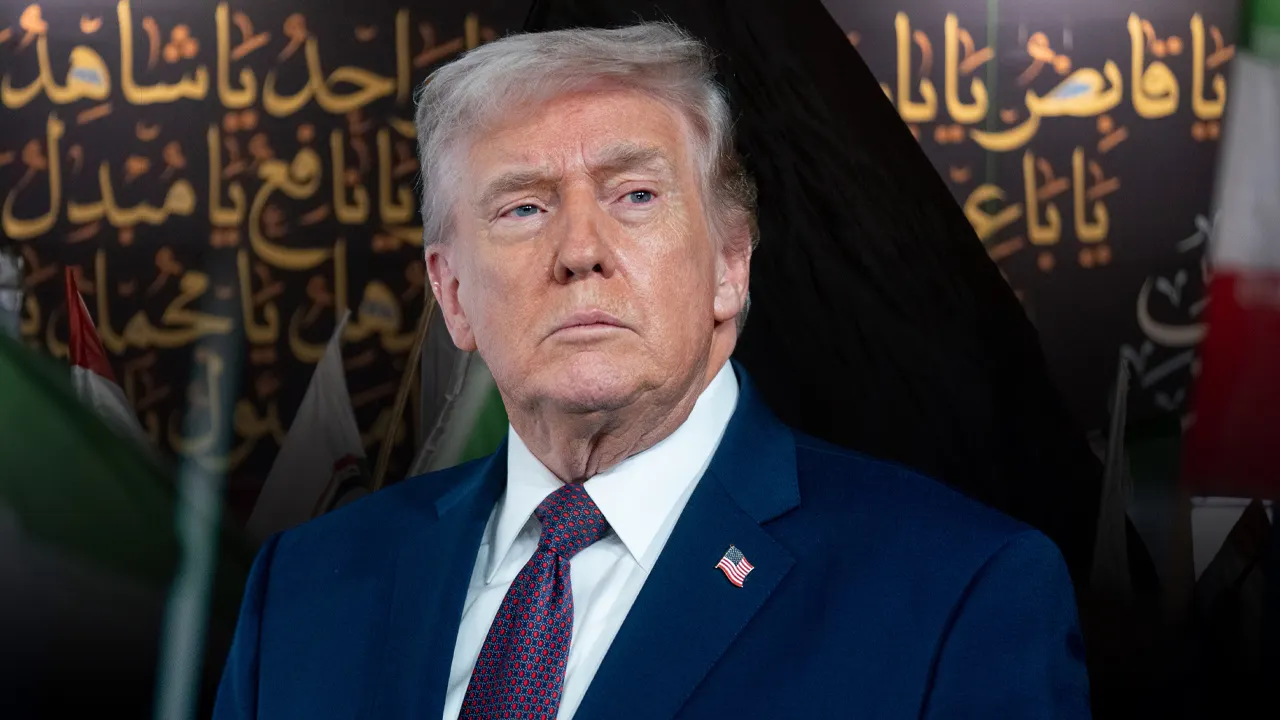
The morning sun rises over a world that feels increasingly precarious, where the hypothetical scenarios of yesterday rapidly crystallize into the chilling headlines of today. This sense of escalating global tension represents a profound shift in international relations, characterized by a fragile balance of power where words carry the weight of missiles. Former President Donald Trump’s repeated warnings regarding foreign aggression have transitioned from political rhetoric to absolute reality in the wake of Iran’s recently launched, yet ultimately failed, air assault. This highly aggressive act of hostility has forced military planners and global citizens alike to confront the terrifying reality of modern drone and missile warfare. In response to these shifting geopolitical currents, the United States military is actively demonstrating its formidable capabilities on the global stage. For the first time in history, the Army has deployed and tested the legendary and devastatingly powerful “Hammer of the Gods” weapon system in a massive, high-stakes overseas exercise. This dramatic display of military might is designed to send a crystal-clear message of deterrence to adversaries who seek to exploit perceived weaknesses in Western alliances. However, as the physical tools of war become increasingly advanced, the military is simultaneously forced to confront a highly insidious threat originating from a classic, everyday item: the humble smartphone. The Pentagon is currently debating aggressive, sweeping policies aimed at confiscating mobile devices from service members on active operations. This unprecedented step is a direct reaction to a critical intelligence vulnerability, as soldiers recording and uploading casual battlefield footage have accidentally gifted enemy forces with highly precise geographical data. Foreign adversaries are aggressively harvesting these open-source videos, using the digital metadata and landmarks to refine, recalibrate, and launch devastatingly accurate counter-strikes. In our hyper-connected modern era, a simple social media post can unintentionally transform into a lethal homing beacon, illustrating how the boundaries between everyday convenience and high-stakes national security have completely dissolved under the weight of digital-era warfare.
Back home, the theater of conflict shifts from physical battlefields to the chambers of political power and deep-seated institutional control, where the demand for leadership accountability has achieved a fever pitch. In Washington, the lingering trauma and administrative distrust from the pandemic era have boiled over. This frustration is epitomized by a prominent United States Senator who is aggressively leading a congressional crusade demanding that Dr. Anthony Fauci face severe legal prosecution and potential jail time over his public health directives and controversial foreign research funding. This fierce pursuit of justice reflects a broader, systemic anger among millions of citizens who feel that those in power have operated too long without consequence, treating public safety as a pawn for bureaucratic overreach. At the exact same time, a quieter but equally influential ideological revolution is taking place within the nation’s most sacred cultural institutions. Former Democratic political operatives and prominent diversity, equity, and inclusion (DEI) specialists have actively stepped into key leadership roles at the Smithsonian Institution. This dramatic transition has ignited a fierce national conversation regarding how America’s history, values, and triumphs are preserved, framed, and presented to future generations, with critics warning that these once-apolitical spaces are being transformed into progressive advocacy grounds. This domestic battle over national identity and truth is further exacerbated by the constant pressure of covert foreign influence. In an extraordinary public show of defiance, a Republican senator recently turned the tables on an activist organization funded by the Chinese Party that had attempted to ambush and corner him over his foreign policy stance on Iran. By exposing the group’s hidden financial linkages in real-time, the lawmaker highlighted a vital truth for the American public: the struggle to preserve national sovereignty and intellectual independence is not a distant concern, but an active, aggressive daily defense of our public squares, media narratives, and historical legacies.
This pervasive crisis of confidence and institutional failure is manifesting output at a local level in some of America’s most iconic metropolitan cities, where the grand promises of urban progressivism are clashing violently with devastating reality. On the West Coast, Los Angeles Mayor Karen Bass found herself embroiled in a fierce controversy after a veteran real estate developer presented a mountain of hard, undeniable receipts that directly contradicted the city’s glossy, highly optimistic public reports regarding the persistent homelessness crisis. This blistering exchange highlighted the deep-seated exhaustion shared by local business owners and citizens who feel that official government narratives are completely disconnected from the crime, visible human suffering, and economic decay occurring on their streets. Simultaneously, on the opposite side of the country, New York City is experiencing its own historic political realignment. In a stunning and highly publicized break from party loyalty, prominent political insiders from the Clinton and Obama administrations have opened fire on far-left New York Mayor Eric Adams, publicly distancing themselves from his administration amidst growing concern over his management of the city’s complex infrastructure. The fiscal stability of the Big Apple is further threatened by radical legislative proposals; state lawmaker Zohran Mamdani has openly refused to rule out the implementation of massive cash reparations programs, even as the city struggles under the colossal financial weight of basic municipal services. Weary of this compounding cycle of high taxation, rising crime, and tone-deaf governance, a massive wave of middle-class and coastal workers is packing their bags and fleeing historic blue-state strongholds. This historic exodus is paving the way for a remarkable demographic shift, creating a golden opportunity for revitalized Midwestern hubs like Detroit to attract highly skilled talent, transforming the American economic map as families seek out affordable housing, lower costs of living, and a return to pragmatic, common-sense governance.
As the economic and political foundations of our major cities undergo these dramatic shifts, the cultural landscape is experiencing equally powerful tremors, transforming arenas of athletics and education into highly polarized ideological battlegrounds. The sports world was rocked to its core as a massive controversy regarding transgender athletes exploded within the WNBA. The situation escalated rapidly, resulting in the high-profile suspension of a team co-owner, and forcing star players like Sophie Cunningham to break their long-held silence to address the mounting tension. This explosive crisis highlights the growing friction between the push for total inclusivity and the fundamental, biological necessity of maintaining fair, safe athletic competition for female athletes. This exact same ideological battle is playing out with even greater intensity within the public school system, where parental trust has reached an all-time low. Outraged families recently took the dramatic step of withdrawing their children from a local elementary school after fourth-grade students were shown mature LGBTQ+ content without any prior warning or parental consent, sparking a nationwide debate over who possesses the ultimate authority to introduce young children to complex sexual and social ideologies. This breakdown in mutual respect and moral accountability is being played out on elite college campuses as well. Renowned broadcaster Piers Morgan engaged in a fiery, televised confrontation with an unapologetic Cornell University student over highly offensive, antisemitic comments made on campus. This viral interaction laid bare a disturbing trend: the rise of a highly aggressive, ideologically radical student demographic that operates with absolute arrogance and a complete lack of historical perspective. These combined crises indicate that the modern culture war has evolved beyond mere political disagreements; it is a fundamental struggle over core values, the protection of childhood innocence, the preservation of meritocracy, and the defense of basic moral decency in our society’s most visible public and educational forums.
Yet, even as we navigate these massive, sweeping structural shifts, the raw and deeply personal stories of the human experience continue to grip our collective consciousness, demonstrating the enduring power of hope, mystery, and resilience. In a stunning triumph of modern science over historic tragedy, a teenager who was discovered in a shallow vineyard grave nearly fifty years ago has finally been identified, bringing a bittersweet sense of peace to a grieving family who immediately issued a chilling public warning that they are still actively seeking justice against the killer. This breakthrough is mirrored in another enduring mystery—the tragic case of Nancy Guthrie—where retired FBI experts believe that an untouched $1.2 million reward holds the critical, overlooked key to unlocking the truth behind a cold case that has baffled law enforcement for decades. The intense emotional weight of modern life was also vividly captured in the cultural sphere when a prominent, beloved musical artist broke down in tears mid-performance, abruptly canceling the show and leaving the stage after delivering a raw, gut-wrenching apology to thousands of stunned fans, illustrating the immense psychological pressure faced by those in the public spotlight. In brighter news, the world of sports witnessed a beautiful demonstration of physical grit, as a star New York Giants wide receiver shocked medical professionals and fans alike by returning to a full-contact practice alongside his teammates after a grueling rehabilitation process. Concurrently, public health advocates are issuing vital lifestyle warnings, advising seafood lovers to think twice before consuming predatory shark meat due to danger of heavy metal contamination. At the same time, medical watchdogs are warning consumers to practice extreme caution regarding the exploding, highly unregulated grey market for peptide and GLP-1 weight-loss drugs, emphasizing that the search for easy, instantaneous physical transformation can carry devastating, hidden health risks.
In our hyper-accelerated modern society, waking up to the endless stream of news can easily feel like trying to sip water from a raging firehose, leaving citizens feeling exhausted by the weight of global instability, cultural polarization, and domestic unrest. Daily digests like “Fox News First” serve as invaluable lighthouses in these turbulent digital waters, helping curious readers map out the complex intersections of high-level politics, global security concerns, and intimate human dramas. Yet, beneath the anxiety-inducing headlines and the structural political updates, there remains a powerful, unifying thread: the resilient, unyielding human desire for accountability, safety, truth, and community. Whether we are testing our trivia knowledge with interactive culture quizzes, staying informed on cutting-edge medical discoveries, or listening to investigative podcasts that unpack the complex science behind weight-loss trends, we are all actively seeking to make sense of a rapidly changing world. The solution to navigating these complex times is not to retreat from the world in cynicism, but to engage with the news with a highly analytical mind, a strong moral compass, and an empathetic heart. By understanding the deep geopolitical strategy of our military, the structural issues facing our major cities, and the persistent quest for justice in cold cases, we empower ourselves to be active, informed participants in our communities. As we prepare to face the challenges of another Friday and whatever lies ahead, keeping a steady hand on the pulse of the nation allows us to remain resilient, hopeful, and profoundly connected to the unfolding human story that we are all writing together.