


Even in an era defined by economic headwinds, fluctuating currency values, and soaring jet fuel prices that have inevitably pushed the cost of airline tickets and hotel stays to historic highs, our collective, deeply human desire to explore the world remains entirely unbroken. This unyielding spirit of wanderlust is particularly evident across Europe, a continent that continues to serve as the beating heart of global tourism. According to the comprehensive Travel Insights 2026: Focus on Europe report, jointly published by the observational experts at Amadeus Travel Intelligence and UN Tourism, Europe is not merely surviving this turbulent financial period; it is thriving with a quiet, steady resilience. Between May 2025 and April 2026, the continent witnessed a heartening 2.3% increase in air passenger traffic and a solid 2% rise in hotel occupancy compared to the previous year. As the world’s undisputed premier travel destination, Europe opened its arms to more than 130 million international visitors in the first quarter of 2026 alone—a remarkable 4% jump that builds beautifully upon the powerful momentum established in late 2025. This enduring appeal proves that even when the logistics of travel grow complex and expensive, the emotional pull of wandering through historic European streets, breathing in fresh mountain air, and sitting in lively open-air plazas remains an essential, non-negotiable part of our modern lives.
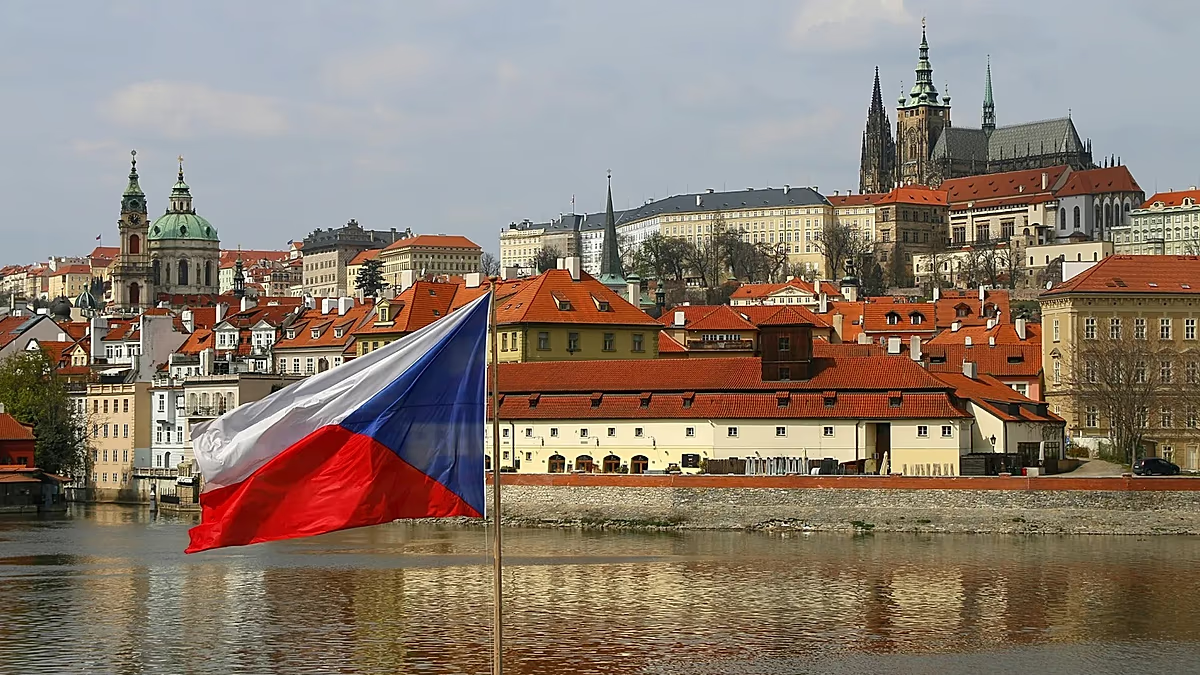
What is perhaps most fascinating about this current travel landscape is how our collective definitions of the perfect vacation are evolving, leading us away from overcrowded, traditional tourism hotspots and toward places that offer a more authentic, balanced sense of discovery. While classic destinations still hold their timeless magic, travelers are actively seeking out culturally rich city breaks and nature-packed journeys in Northern and Central Europe. Czechia, for instance, has captured the hearts of modern explorers, emerging as the fastest-growing booked destination in the region with an extraordinary 18% year-on-year growth, closely followed by the mystical, volcanic landscapes of Iceland at 11%. This hunger for novel experiences is also reflected in digital curiosity, with online searches for Sweden, Switzerland, Denmark, Ireland, Belgium, and Norway skyrocketing by over thirty percent. Even more astonishing is the sudden, intense interest in the ancient caravan routes of Central Asia, with search volumes for both Uzbekistan and Tajikistan leaping by a staggering 64%. This dramatic shift in interest signals a profound collective desire to step off the well-worn path, to embrace seasonal balance, and to gather deeply personal stories in corners of the world that have yet to be commercialized or overcrowded.
Behind every single statistic from this report is a human storyteller, a person packing a suitcase and setting out to bridge the distance between cultures, and the data shows some incredibly heartwarming shifts in who these travelers are. Throughout the spring and summer of 2026, air passenger volumes and scheduled airline seats to Europe are projected to peak at just over 160 million, driven largely by loyal visitors from the United States, Germany, and Spain. However, the most delightful surprise is the triumphant return of travelers from Japan, who are demonstrating a renewed, passionate love affair with the European continent. Mirroring an incredible 62% explosion in online travel searches from Japan, actual bookings saw a massive 19% growth, easily outpacing other highly eager origin markets like Denmark and Egypt. For Japanese travelers, long-haul journeys are no longer dreams deferred but exciting realities, showing us that no matter how vast the geographical or cultural distance between East Asia and Europe may be, our shared human curiosity and desire to understand one another will always find a way to build a bridge across the sky.
When we turn our eyes to the sun-drenched coastlines of Southern and Mediterranean Europe, we see a region prepare for its crowning season, expecting a breathtaking influx of nearly 70 million air passengers during the peak warmth of July and August. To accommodate this massive influx of sun-seekers, dreamers, and historians, airlines have woven an incredibly intricate web of global connectivity, launching around 1,100 brand-new flight routes over the past year alone. This massive expansion in aviation infrastructure is driven by major hubs in Germany, France, Italy, and Spain, but it also features unexpected, beautiful new linkages that connect vastly different worlds, such as direct flights from Slovakia to Spain, Ethiopia to Portugal, and China to Greece. These new routes do so much more than just transport bodies from point A to point B; they seamlessly unite coastal fishing villages, ancient ruins, and modern metropolitan cities, making the far corners of the Mediterranean basin more accessible and welcoming to the global community than ever before in human history.
The way we plan and secure these journeys also reveals a fascinating psychological play between our need for safety and our love for spontaneous adventure. The report highlights that more than half of all travelers heading to the idyllic Southern and Mediterranean regions—about 53%—prefer the peace of mind that comes with booking their flights and accommodations at least a month in advance, with a highly organized 26% of those securing their itineraries within a generous 61-to-180-day window. On the other hand, there remains a highly passionate, romantic contingent of spontaneous travelers who refuse to live life by a strict calendar. Nearly 29% of trips to this gorgeous region are booked within a mere two weeks of departure, with another 17% finalized just a month prior. This healthy urge for last-minute exploration has created a vibrant, dynamic marketplace, encouraging hotels and airlines to offer imaginative flash promotions, enticing weekend getaway packages, and flexible pricing structures that cater directly to our modern, spur-of-the-moment desires to simply pack a bag on a Thursday night and fly away.
Finally, we must look at the wise, worldly travelers who are driving this European travel renaissance, quietly shattering the outdated stereotype that wanderlust is purely a young person’s game. Today, mature adults aged 46 to 65 make up the single largest travel demographic on the continent, accounting for approximately 30% of entire travel demand—a number that swells even higher in iconic cultural capitals like London, Paris, and Madrid. This affluent, discerning audience is not interested in superficial sightseeing or checking items off a generic bucket list; instead, they are searching for authentic local interactions, slow travel, personal wellbeing, and intellectual discovery that satisfies their souls. This magnificent trend of mature, high-spending travelers investing deeply in premium, culturally respectful journeys creates a wonderful balance when paired with younger, budget-conscious backpackers. Together, these different generations create a beautiful, rich tapestry of global citizenship, proving that the timeless act of traveling across Europe is not just about visiting new places, but about celebrating our shared humanity, honoring history, and finding meaning at every single stage of our lives.