



The Great Decoupling: Why the Federal Reserve’s Monetary Policy May No Longer Dictate Bitcoin’s Destiny
1. The Central Bank Crucible and the Modern Crypto Market
                    FED INTEREST RATE DECISION
                                |
      +-------------------------+-------------------------+
      |                                                   |
      ▼                                                   ▼
[Traditional Assets] [Digital Assets]
· Nasdaq/S&P 500 · Bitcoin (BTC)
· Heavy positioning · Sideways consolidation
· High macro-sensitivity · Decoupling from equities
| |
▼ ▼
Directly Impacted Muted Volatility
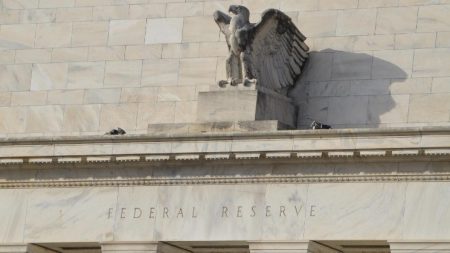
For the past several years, the global cryptocurrency market has operated under the imposing shadow of traditional macroeconomic policy, with digital assets trading almost as a direct proxy for global liquidity conditions. Every announcement originating from the Federal Open Market Committee (FOMC) has historically sent shockwaves through both traditional equity desks and decentralized exchange order books alike. Today, as investor attention once again converges on the Federal Reserve’s critical interest rate decision, the financial landscape presents a familiar air of high-stakes anticipation, though the underlying mechanics of market response are undergoing a profound structural shift. While the consensus baseline expectation across primary trading desks points toward a stabilization of the benchmark federal funds rate, macroeconomic observers remain acutely aware that monetary policymakers rarely tie their own hands, leaving a 25 basis point rate hike as a lingering, albeit minority, possibility. According to real-time interest rate futures data aggregated by the CME FedWatch Tool, market participants have periodically priced the probability of an unexpected July rate hike at roughly 31.5%. This statistical variance underscores the residual anxiety that continues to plague speculative markets, where investors must constantly hedge against the threat of a hawkish surprise that could tighten credit conditions and drain capital from higher-risk asset classes. Yet, despite these deeply ingrained anxieties, a growing body of quantitative evidence suggests that the historical transmission mechanism between central bank announcements and the valuation of digital gold is beginning to fray, signaling a dramatic departure from the market regimes of 2021 and 2022.
2. Decoupling from Wall Street: A Break in the Nasdaq Correlation
 A Decoupling of Paths (Correlation at Multi-Year Lows)

 [Nasdaq Index]                       [Bitcoin (BTC)]
 ▲                                    ►
 │ * Strong upward momentum           │ * Volatility near multi-year lows
 │ * Heavy institutional positioning  │ * Sideways consolidation
 └──────────────────────────          └──────────────────────────
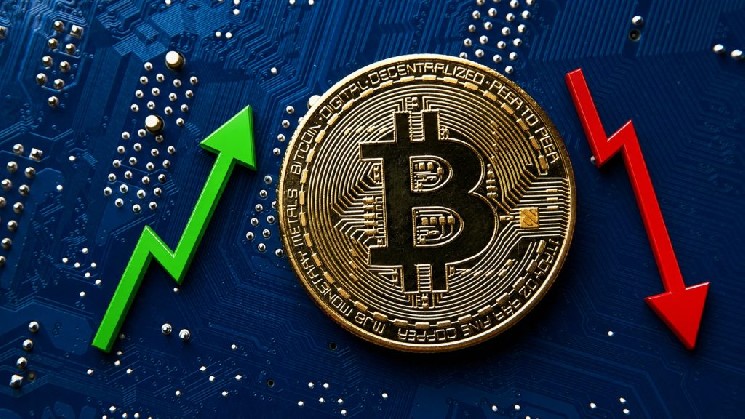
To understand why the impending Federal Reserve interest rate decision may fail to spark the explosive volatility historically witnessed in the digital asset space, one must analyze the shifting relationship between cryptocurrency and traditional tech equities. Historically, Bitcoin has behaved as a high-beta play on the technology sector, rising and falling in lockstep with the Nasdaq 100 as broad liquidity flows dictated the appetite for growth assets. However, recent data compiled by leading digital asset analytics firm K33 Research reveals a stark divergence in this relationship, indicating that the correlation between the world’s largest cryptocurrency and major Wall Street indexes has plummeted to near multi-year lows. Vetle Lunde, the highly respected head of research at K33, highlighted this phenomenon by pointing out that while the Nasdaq entered the summer months fueled by fierce upward momentum, massive tech earnings beats, and heavily concentrated institutional positioning in artificial intelligence stocks, Bitcoin chose an entirely different path. Instead of riding the coattails of this equity market exuberance, the premier cryptocurrency settled into an exceptionally tight, sideways trading band, exhibiting price volatility that scraped the bottom of historical ranges. This divergence suggests that the institutional capital flows driving traditional equity markets and those navigating the digital asset space are no longer running along the same path. Consequently, because the current run on equities has become highly sensitive to interest rate expectations and discount rate calculations, Bitcoin’s isolation from these specific equity dynamics effectively insulates it from the broader macro-economic shocks that typically ripple through conventional equity portfolios following an FOMC press release.
3. The Mechanics of Volatility Compression and Market Isolation
                    VOLATILITY COMPRESSION
                              │
     ┌────────────────────────┴────────────────────────┐
     ▼                                                 ▼
[Low Macro-Sensitivity] [Organic Market Drifts]
· Fed decisions see · Price dictated by crypto-
diminishing impact. specific fundamentals.
The stabilization of the digital asset markets is not merely a statistical anomaly; it is the direct byproduct of extreme volatility compression and a fundamental change in market structure. Under typical market conditions, high-profile economic indicators—such as the Consumer Price Index (CPI), non-farm payroll data, and FOMC rate announcements—act as structural catalysts that force rapid portfolio rebalancing across global asset management firms. However, as Vetle Lunde noted in K33 Research’s comprehensive market report, when an asset class experiences an extended period of sideways consolidation near multi-year volatility lows, its short-term price discovery mechanism becomes increasingly detached from macroeconomic headlines. The relative quietude in Bitcoin’s spot and futures markets suggests that speculative leverage has been largely flushed out, replaced by long-term spot accumulators who are insensitive to short-term changes in the federal funds rate. Because there is a lack of highly leveraged, macro-driven derivatives positions waiting to be liquidated, the sudden bursts of forced selling or panic buying that historically characterized CPI and FOMC release days have been replaced by a quiet, determined holding pattern. This low-volatility environment limits the capacity of any single monetary policy decision to establish a new macro trend for digital assets, suggesting that unless the Federal Reserve delivers an utterly unprecedented policy shock, Bitcoin is highly likely to continue its localized, organic price discovery, largely independent of the central bank’s near-term policy adjustments.
4. The Psychology of “Priced-In” Fear and Asymmetric Post-FOMC Upside
                         FOMC CYCLE EFFECT

     [Pre-FOMC Phase]                       [Post-FOMC Phase]
            │                                       │
            ▼                                       ▼
   Accumulated Anxiety                    Anxiety Resolves/Dissipates
(Markets hedge, expecting the worst) (Capital flows back, relief rally)
While quantitative analysts focus heavily on multi-year correlation coefficients and structural volatility indexes, market psychologists and seasoned trading veterans look to the perpetual cycle of investor sentiment to identify trading opportunities. Prominent digital asset analyst Michaël van de Poppe presents a compelling contrarian thesis that aligns with the structural outlook of K33 Research, though viewed through the lens of market psychology and technical price action. Van de Poppe posits that the financial media and retail trading communities have systematically priced in an excessive level of macroeconomic anxiety ahead of the current FOMC meeting, mistaking standard pre-meeting quietness for weakness. In the days leading up to highly publicized central bank meetings, risk-averse market participants frequently reduce exposure, purchase protective puts, or move capital to stablecoins, creating artificial downward pressure and an atmosphere of impending doom. This cycle of anticipatory fear often sets the stage for a classic “sell the rumor, buy the news” market reaction; once the actual monetary policy decision is announced and the market receives clarity from Federal Reserve Chairman Jerome Powell’s press conference, the accumulated anxiety instantly dissipates. Van de Poppe argues that Bitcoin’s underlying resilience throughout this pre-meeting period—characterized by strong support-level defense and consistent dip-buying—strongly supports the thesis that a sustained post-FOMC relief rally is the path of least resistance. Under this framework, even if the Fed delivers a hawkish tone, the mere resolution of policy uncertainty allows sidelined capital to return to the market, transforming a historically feared economic event into a tactical launchpad for the next leg of the cryptocurrency market’s upward journey.
5. Global Liquidity Cycles and the Shift to Digital Gold
                GLOBAL LIQUIDITY PARADIGM SHIFT
                               │
     ┌─────────────────────────┴─────────────────────────┐
     ▼                                                   ▼
[The Old Era: 2020-2022] [The New Era: 2024+]
· Direct liquidity dependence · Sovereign credit hedge
· High tech-stock correlation · Independent value asset
To fully grasp why the Federal Reserve’s rate decisions may be losing their immediate grip on the cryptocurrency market, one must place these developments within the broader evolutionary timeline of global monetary systems and digital assets. In the immediate aftermath of the 2020 economic shock, Bitcoin was widely embraced by institutional macro funds as a direct liquidity play—essentially a highly sensitive sponge that absorbed the historic wave of fiat currency printing executed by global central banks. However, as the global financial system transitions from an era of aggressive, synchronized quantitative tightening toward a fragmented monetary landscape marked by sovereign debt concerns, banking instabilities, and changing reserve asset strategies, the investment thesis for digital assets is undergoing a critical shift. Sophisticated investors are increasingly viewing Bitcoin not merely as a speculative growth vehicle dependent on cheap credit, but as an alternative sovereign risk offset—a unique financial asset that carries no counterparty or geostrategic risk. This structural reassessment explains why short-term shifts in interest rate policies, whether they result in a brief pause or a minor 25 basis point hike, are beginning to lose their ability to dictate long-term digital asset valuations. As structural trends such as institutional spot exchange-traded funds (ETFs), corporate balance sheet allocations, and rising global debt-to-GDP ratios gain momentum, the fundamental drivers of Bitcoin’s long-term utility are increasingly decoupled from the short-term fluctuations of the Federal Reserve’s balance sheet.
6. A New Era of Maturity and Autonomy for the Crypto Ecosystem
ASSET MATURITY MODELPhase I: Speculative Tech ──► Phase II: Macro Puppet ──► Phase III: Autonomous Asset
(Early retail-driven era) (Tight link to Fed policy) (Decoupled, global hedge)
Ultimately, the observed decoupling of Bitcoin from traditional tech giants and the minimizing impact of Federal Reserve decisions reflect a broader theme of maturity, stabilization, and autonomy within the digital asset ecosystem. The cryptocurrency market is rapidly outgrowing its status as a mere appendix to Wall Street’s tech sector, establishing its own unique capital cycles, liquidity sources, and institutional corridors that are insulated from the immediate whims of central bankers. While macroeconomic data releases will undoubtedly remain an important part of any global macro trader’s calendar, the days when a single hawkish comment from a Federal Reserve official could instantly wipe out major support lines in the digital asset market appear to be transitioning into a past market regime. Investors who navigate this newly mature landscape must adapt by looking beyond the immediate noise of the FOMC and instead focusing on structural inflows, address activation rates, halving dynamics, and fundamental on-chain volume metrics. As Bitcoin continues to carve out its own distinct niche within the global financial architecture—acting as a low-correlation store of value with its own structural momentum—the digital asset ecosystem is steadily proving that its long-term destiny is no longer bound to the monetary experiments of traditional central banking institutions.
Key Takeaway Metrics
For quick reference, the table below highlights the contrasts between the traditional equity paradigm and the emerging digital asset paradigm described by top macro research analysts:
| Metric / Characteristic | Traditional Tech Equities (Nasdaq) | Decoupled Cryptocurrencies (Bitcoin) |
|---|---|---|
| Current Performance Momentum | High upward trajectory with heavy institutional positioning | Sideways consolidation near multi-year volatility lows |
| Sensitivity to FOMC Rate Decisions | High (Highly sensitive to cost-of-capital discount models) | Moderated (Strongly cushioned by structural HODLers) |
| Historical Correlation Trend | Benchmark setter for broad macro-economic risk appetite | Declining correlation, approaching multi-year lows |
| Post-Event Market Expectation | Subject to adjustments based on rate dot-plots | Potential relief rally driven by resolved market anxiety |
Disclaimer: The information provided in this journalistic report is for educational and news purposes only and does not constitute financial, investment, or trading advice.