


The “Bite of Seattle” has long served as an essential, vibrant cornerstone of summertime celebration in the Pacific Northwest—a joyful, three-day festival established in 1982 that annually draws over 350,000 visitors to the sprawling, beautiful lawns of the Seattle Center. Beneath the majestic, towering silhouette of the historic Space Needle, families, friends, culinary enthusiasts, and local merchants traditionally gather to celebrate community pride, cultural diversity, and artistic expression. On a warm, picturesque Sunday evening, during the waning hours of this highly anticipated annual event, the air was filled with the mouthwatering aromas of sizzling international cuisines, the lighthearted melodies of live musical performances, and the innocent laughter of children playing in the grass. It was a shared public space where people felt fundamentally safe, interconnected, and deeply immersed in the simple, restorative pleasures of a Pacific Northwest weekend. However, around 6:00 p.m., this peaceful sanctuary of communal celebration was instantly shattered. The cheerful hum of the crowd was violently punctuated by the sharp, terrifying crackle of rapid gunfire, triggering an immediate, agonizing transformation from absolute joy to pure, unadulterated terror. In a matter of seconds, carefree laughter turned to desperate, blood-curdling screams as hundreds of innocent bystanders suddenly realized that their peaceful oasis had become a chaotic venue of deadly violence. This sudden, shocking disruption of a cherished civic space highlights a heart-wrenching modern vulnerability, illustrating how quickly a celebration of human connection can be violently torn apart, leaving an entire city to grapple with a profound sense of loss and a collective trauma that will linger long after the physical wounds heal.
The source of this unthinkable devastation was not an organized act of mass terror, but rather a reckless, deeply tragic confrontation between two armed individuals who chose to settle a personal dispute in the middle of a densely packed, entirely defenseless crowd. Investigators believe that the two suspects began shooting directly at each other, displaying a callous, unimaginable disregard for the thousands of men, women, and children surrounding them. The resulting crossfire was immediate, chaotic, and devastatingly lethal. Two young men, aged 19 and 44, and a 56-year-old woman lost their lives—each representing a unique universe of relationships, potential, and families whose futures were permanently extinguished in a single moment. Four other innocent bystanders were wounded in the senseless onslaught, their bodies bearing the physical scars of a violent dispute they had absolutely no part in provoking. Most heartbreakingly, among those hospitalized in stable condition was a two-year-old toddler, a little boy whose early experiences of the world should be filled with safety, curiosity, and play, but who was instead subjected to the physical pain and psychological terror of a gunshot wound. The inclusion of such a young child among the victims underscores the devastating collateral damage of gun violence in America, calling attention to the painful human cost paid by completely innocent citizens when private rivalries spill over into public places.
The immediate reaction of the festival-goers was a visceral, desperate scramble for survival as the realization of an active shooter rippled through the crowded festival grounds. Faith Adia Hunter and her friends had just purchased hot crepes from a local vendor, anticipating a peaceful moment of indulgence, when the terrifying sounds of gunfire erupted mere feet from where they stood. Overcome by a rush of survival adrenaline, they abandoned their food and fled hand-in-hand with the stampeding crowd, running blindly toward any physical structure that promised a barrier against the flying bullets. They eventually found shelter inside the nearby Seattle Children’s Museum, a beloved institution normally dedicated to youthful imagination, education, and childhood joy, but suddenly transformed into an emergency fortress against real-world violence. Inside the museum’s dim hallways, frightened families huddled together behind closed doors and in the quiet corners of interactive exhibits, speaking in hushed, trembling whispers as they waited desperately for the danger to pass. The sensory experience of those terrifying moments—the sound of feet pounding desperately on concrete, the gasps of breathless panic, and the frantic search for safety—remained deeply etched into the minds of those who ran. For Hunter and countless other survivors, a mundane and joyful summer outing was instantly redefined by a terrifying fight for survival, illustrating the heavy psychological wounds that survivors carry with them long after the physical sirens fade.
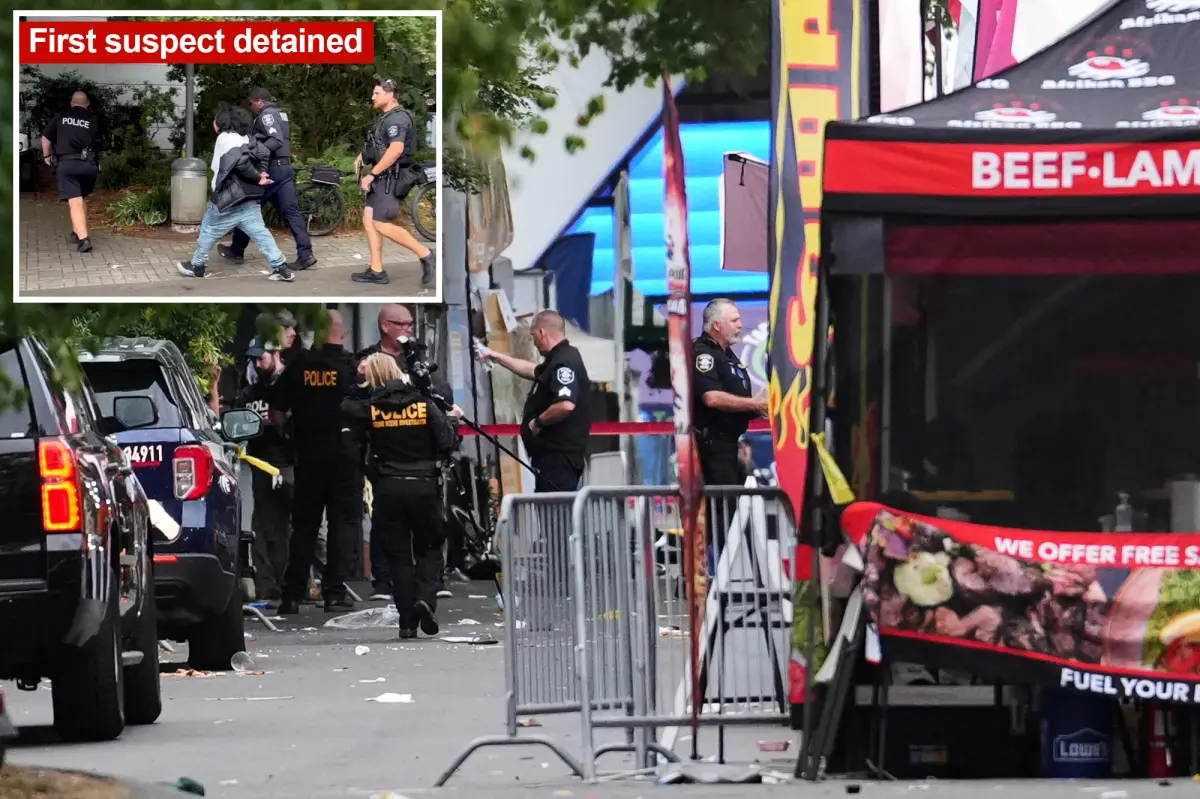
As the initial panic subsided, it left behind an eerie, quiet devastation across the sprawling Seattle Center campus, which had only moments prior been a bustling hub of commerce and connection. Roberto Ramirez, a vendor who had spent the entire busy weekend cooking and interacting with happy customers, initially believed the loud pops were merely firecrackers celebrating the festival’s final hours. This comforting illusion was instantly shattered when frantic screams of “shooter!” echoed through the corridors of white tents, forcing him and other vendors to abandon their hot grills, cash registers, and inventory to run for their lives. Within minutes, the once-vibrant, crowded marketplace was completely deserted, resembling a ghost town draped in the heavy scents of half-cooked food left behind on burning stoves. Hours after the area was evacuated by emergency personnel, vendors like Ramirez could only stand behind the heavy yellow police tape, staring helplessly at their abandoned booths and wondering when they would be allowed to recover their livelihoods, tents, and personal belongings. Meanwhile, new visitors continued to arrive at the Seattle Center campus, entirely unaware of the tragedy that had just unfolded, only to be met by heavily armed police officers directing them to turn back. This stark juxtaposition between those arriving in search of joy and those fleeing in deep trauma underscores the chaotic, fragmented reality of a community in the immediate aftermath of public violence.
The pure desperation of the stampede was witnessed in its most raw, distressing form by Estan Wakonabo and his girlfriend, who had been waiting in a cheerful queue for a photo booth to capture a memory of their evening out. Suddenly, a massive wave of fleeing people shoved him from behind, and as he turned around, he witnessed a harrowing scene of human panic and vulnerability: baby strollers were being knocked over in the rush, people were pushing past one another, and many fell hard to the concrete under the weight of the stampeding crowd. After safely and bravely escorting his girlfriend to a secure area away from the line of fire, Wakonabo made the courageous decision to return toward the epicenter of the chaos to offer assistance and document the reality of the situation. There, he was confronted with the tragic aftermath of the violence, seeing multiple victims lying wounded on the hard pavement, surrounded by scattered personal items, discarded bags, and half-eaten meals. The sight of these individuals, who moments ago were full of life and happiness, now lying bleeding and helpless, deeply impacted Wakonabo and highlighted the profound vulnerability of our human bodies in the face of sudden, mechanized violence. His willingness to return to a dangerous scene to help others and bear witness to their suffering speaks to a resilient human instinct to offer light, aid, and truth in our darkest, most painful moments.
As darkness fell over the Seattle Center campus under the watchful eye of the illuminated Space Needle, an exhaustive search for justice commenced in the shadows. Dozens of security and police officers had been stationed at the festival to protect the community, and while some observed a suspect actively firing and managed to arrest him on the scene, the second shooter slipped into the fleeing crowd and escaped. Assistant Seattle Police Chief Tyrone Davis sought to reassure a rattled public during a late-night press conference, stating that investigators believed there was no ongoing, active threat to the community, even as the search for the second suspect continued into the night. Yet, for the city of Seattle and the hundreds of thousands of people who cherish the “Bite of Seattle” as more than just a food festival, but as a landmark of their shared identity, the process of rebuilding a sense of safety will take much longer than any police investigation. An event that began in 1982 to foster communal joy, connection, and peace has now been painfully woven into the complex and modern narrative of American gun violence. It serves as a solemn, powerful reminder of the urgent need for empathy, safety, and peace, and the incredibly high price paid by innocent families when personal disputes turn deadly in our public spaces.