

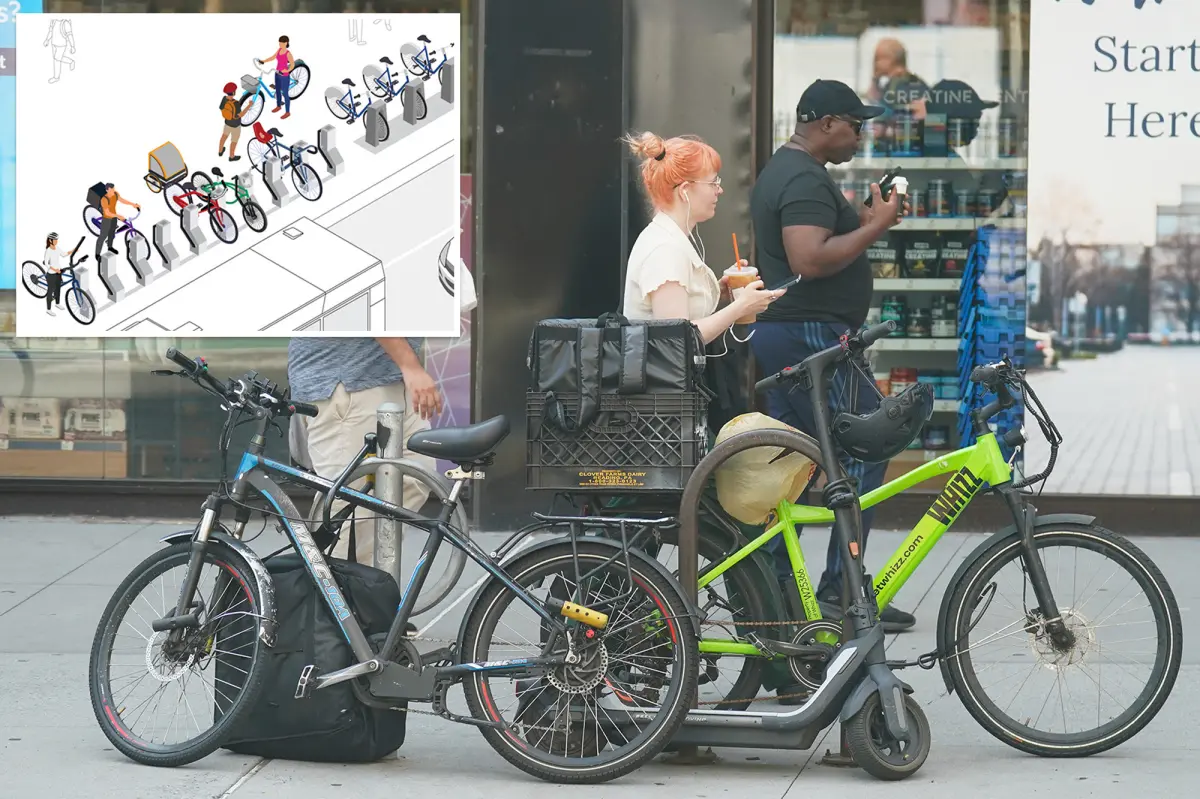
In the bustling, high-stakes theater of New York City’s streets, a new battleground is forming over the very pavement beneath our feet. The Department of Transportation has unveiled an ambitious, $26 million initiative to install 500 state-of-the-art, secure bike lockers across the five boroughs, aiming to revolutionize how urban commuters store their green vehicles. Yet, while city planners dream of a modern, multi-modal metropolis, many everyday New Yorkers are looking at the proposed structures with a mixture of disbelief and outright exhaustion. To a driver who has spent forty-five minutes circling the block in search of an elusive parking spot, the thought of losing hundreds of curb spaces to these bulky metal pods is a hard pill to swallow. These lockers, engineered to hold up to six bicycles each at an estimated price tag of $52,000 apiece, represent more than just concrete and steel; they symbolize a profound shift in how the city prioritizes its limited public space. As the DOT begins seeking public input on where to position these pods, the initial reaction from the sidewalks has been less of a welcome home and more of a collective groan, highlighting a deep-seated disconnect between progressive transit policies and the grueling daily realities of life in the Big Apple. The friction is palpable on every corner, where pedestrians already feel overwhelmed by the sheer volume of delivery workers, motorized scooters, and traditional cyclists competing for dominance. For many, this latest municipal endeavor feels less like a step forward in green infrastructure and more like a costly, tone-deaf assault on neighborhood parking that fails to address the underlying chaos of the city’s streets.
The heart of the local backlash is rooted in the lived experiences of residents who feel their neighborhoods are already at a breaking point with erratic two-wheeled traffic. On the historic streets of the Upper West Side, where quiet residential brownstones stand in stark contrast to the buzzing commercial avenues, locals are expressing deep skepticism. Susan Lennon, a resident who has watched the neighborhood evolve over years, did not mince words when asked about the prospective locations for these heavy-duty lockers, suggesting with a dry laugh that perhaps they would be better suited for Brooklyn. Pointing toward a chaotic intersection near a local McDonald’s at Broadway and Tenth Avenue, Lennon described a “mess” of delivery bikes and aggressive riders who have turned the sidewalks into a hazardous obstacle course. This sentiment is widely shared by her neighbor, sixty-nine-year-old Serge Ossorguine, who lives just steps away from the bustling 72nd Street subway station and echoed the sentiment that such structures simply do not make sense in their crowded Manhattan enclave. For these residents, the proposal ignores the immediate, systemic issues of traffic enforcement and pedestrian safety, offering instead a high-tech band-aid that rewards the very demographic they feel is making their daily walks more perilous. The idea of sacrificing highly coveted parking spaces—often referred to as gold dust in Manhattan—to accommodate more bicycles feels like a direct affront to those who rely on their personal vehicles or simply crave a return to more orderly, peaceful streets.
Beyond the neighborhood aesthetic and the headache of losing parking spaces, the staggering financial cost of the initiative has left many taxpayers rubbing their eyes in disbelief. At an estimated $52,000 per locker, critics are questioning the fiscal responsibility of allocating millions of dollars toward a minority of the population. In Harlem, forty-five-year-old Claudia Weber expressed a nuanced but wary view, acknowledging that secure bike parking could theoretically benefit the community, but voicing deep concern over the massive price tag and asking what vital municipal services might see their funding cut as a result. To manage this sprawling network of secure pods, the city plans to contract with technology vendor Tranzito to develop a specialized, city-branded mobile application that will handle user access, digital key management, and payment processing. The current business model envisions a dual-pricing system: an affordable annual membership rate for residents who need reliable overnight storage near their homes, and an hourly rate for commuters parking near major transit hubs. Furthermore, select locations are slated to feature e-bike charging capabilities for an additional hourly fee, turning these storage pods into active charging stations. While the technological sophistication of the plan is undeniable, the massive investment required to build and maintain this infrastructure leaves middle-class residents wondering why their tax dollars are being funneled into high-end cycling amenities while schools, parks, and basic subway maintenance continue to suffer from chronic budget shortfalls.
The debate also exposes a deep cultural divide between those who embrace bicycle culture and those who view it as a lawless disruption of civic harmony. In Union Square, a major transit and cultural hub where traffic of all kinds converges, resident Barry Goralnick represents a growing faction of locals who feel that cyclists have already been given too many concessions by the city without showing any mutual respect for the rules of the road. Goralnick points out that many riders routinely run red lights, travel in the wrong direction down one-way streets, and show a flagrant disregard for the safety of walking pedestrians, arguing that rewarding this behavior with expensive, dedicated street space is entirely counterproductive. His frustration is backed by official data from the Department of Transportation’s own archives, which reveals that only about nine percent of New Yorkers regularly ride bicycles, with just over sixty thousand commuting to work by bike in 2023. To the remaining ninety-one percent of the population, spending millions of dollars to cater to a tiny fraction of commuters feels wildly disproportionate. Critics argue that instead of pouring resources into premium parking spaces for cyclists who often ignore traffic laws, the city should focus its efforts on strict enforcement, registration for motorized bikes, and education to ensure that everyone sharing the asphalt is held to the exact same standards of conduct and safety.
In response to this mounting wave of criticism, the Department of Transportation defends the program as a vital, forward-looking solution to a systemic housing and equity crisis that plagues working-class New Yorkers. A spokesperson for the agency pointed out that the $52,000 price tag is far from finalized and emphasized that the ultimate goal of the secure parking project is to remove the physical barriers to bicycle ownership. In a city dominated by walk-up apartment buildings, cramped tenements, and strict lease agreements that forbid indoor bicycle storage, many families are functionally locked out of cycling simply because they cannot haul heavy frames up flights of stairs or fit them into microscopic living rooms. The DOT views curb space not as the exclusive domain of private automobiles, but as a flexible public resource that must be allocated equitably among various modes of transportation. By repurposing roughly six hundred parking spots out of the city’s estimated three million—a tiny fraction representing just 0.02 percent of the total available spaces—the city believes it can unlock a massive wave of micro-mobility that will ease congestion on overcrowded subways and reduce the city’s carbon footprint. From this perspective, the initiative is a necessary intervention to level the playing field, providing low-income workers, food delivery couriers, and working-class families with the same peace of mind that car owners enjoy when they park their vehicles on public streets overnight.
As the city continues to collect feedback through its online portal, inviting residents to drop virtual pins on a map to suggest future locker locations, the conversation remains a powerful microcosm of New York’s perpetual identity crisis. The battle over these 500 proposed bike lockers is not merely a dispute over parking spaces and price tags; it is an active negotiation over what the future of the American city should look like. On one hand, there is a vision of a greener, quieter, and more accessible New York, where streets are reclaimed from heavy, emission-producing cars to make way for active transit and pedestrian-friendly infrastructure. On the other hand, there is the undeniable reality of a city that runs on convenience, where small business owners, working families, and outer-borough commuters rely on their cars to survive in an increasingly expensive world. Whether the Department of Transportation can successfully bridge this divide remains to be seen, but as the debate rages from the dining tables of the Upper West Side to the community board meetings of Harlem, one thing is certain: in a metropolis of over eight million people where every square inch of asphalt is fiercely contested, progress is never quiet, and change always comes at a price.