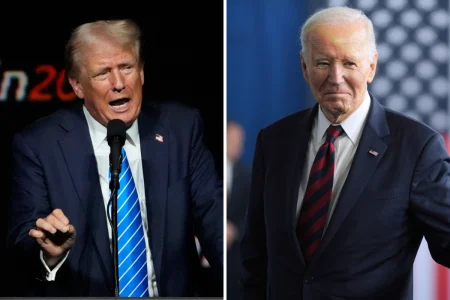



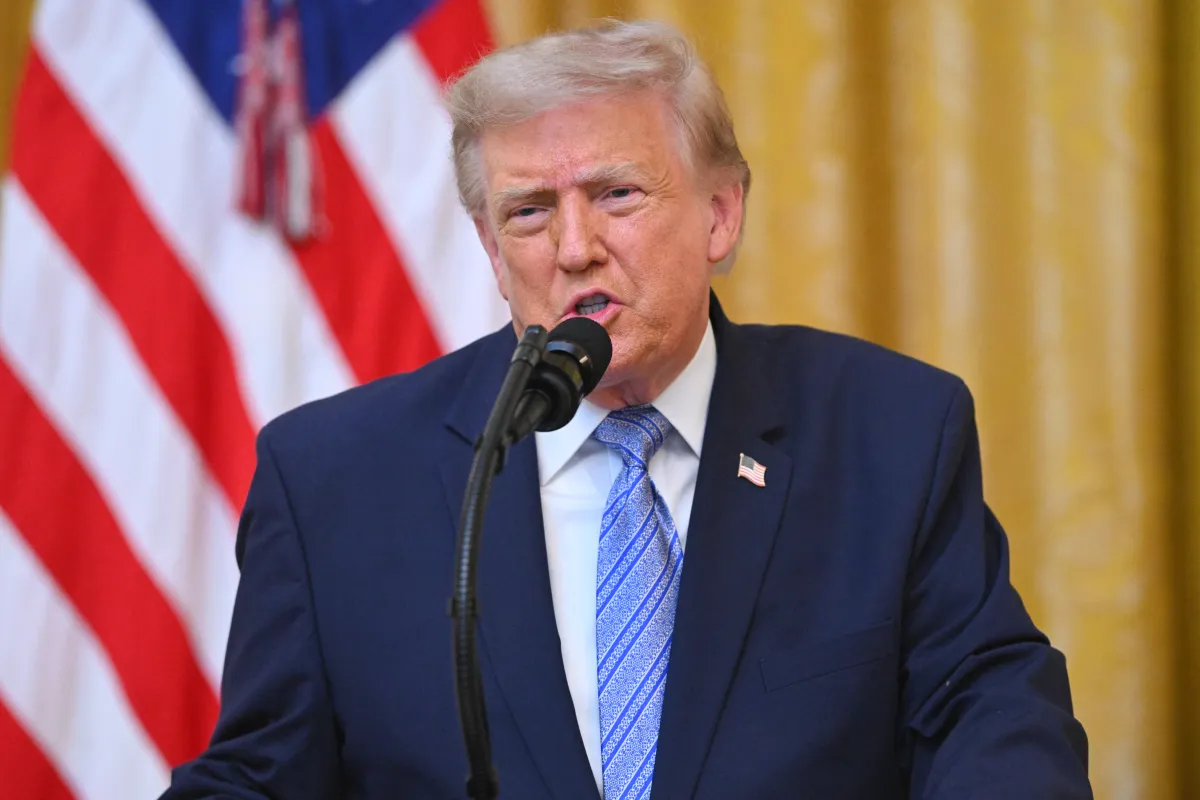
In a high-stakes, prime-time address on Thursday, President Donald Trump made a series of dramatic allegations, claiming that a vast network of election interference—orchestrated by China and the U.S. “deep state”—had compromised America’s democratic process. Utilizing the speech to advocate for a drastic overhaul of election security and stricter voter registration standards, Trump released what he described as five “major areas of concern.” Chief among his claims was that Beijing carried out the largest data breach in history by acquiring 220 million American voter files. Pointing to this as proof of a hopelessly shattered system, Trump declared that the vulnerability of our elections is no longer defensible. This speech comes at a pivotal moment, as conservative lawmakers ramp up pressure to reshape federal voting laws ahead of the 2026 midterms.
The President’s address eagerly revived claims that the 2020 election was rigged, contrasting sharply with a mountain of evidence to the contrary. Over the past few years, dozens of legal challenges questioning the 2020 results have been dismissed by federal and state courts, including by judges Trump himself appointed, due to a distinct lack of credible evidence. Independent audits, recounts, and exhaustive bipartisan investigations—along with a detailed report titled Lost, Not Stolen written by prominent conservative legal scholars—all concluded that Joe Biden’s victory was completely legitimate. While Democratic Senator Mark Warner dismissed Trump’s warnings as the panic of a candidate who knows he is headed for a loss, Republican Senator Tommy Tuberville of Alabama fueled the fire, publicly claiming that several current senators did not legally win their seats.
Expanding on his narrative of a grand conspiracy, Trump accused intelligence officials within the “deep state” of actively suppressing information about China’s meddling to keep both him and the public in the dark. He painted a grim picture of American democracy, warning of systems exposed to foreign hacking, dead people filling the voter rolls, and millions of unverified mail-in ballots floating across the country. In response, Chinese Embassy spokesperson Liu Chang flatly rejected the accusations, stating that China has never and will never interfere in U.S. elections. Intelligence experts likewise urged caution; Sue Gordon, former Principal Deputy Director of National Intelligence, noted on CNN that intelligence is merely the starting point of an investigation, not a final verdict, adding that foreign attempts to sow discord in American politics are a long-standing threat that Trump failed to resolve during his presidency.
A central pillar of the administration’s argument for stricter voting laws is a Department of Homeland Security review which allegedly identified roughly 278,000 non-citizens on state voter rolls. Based on these numbers, the White House is pushing heavily for federal mandates requiring proof of citizenship and physical voter IDs. However, nonpartisan organizations like the Center for Election Innovation & Research paint a very different picture. Their studies show that while isolated clerical errors and rare administrative infractions do occur, claims of widespread non-citizen voting are almost always based on outdated or mismatched data. Once election officials conduct thorough, real-world audits, these initial alarming figures shrink to statistically negligible margins that have no bearing on election outcomes, proving that current safeguards are highly effective.
To combat these perceived vulnerabilities, Trump used his prime-time platform to demand that Capitol Hill immediately pass the SAVE America Act—legislation that would mandate documentary proof of citizenship to register for federal elections. “Secure elections should not be a partisan issue,” Trump urged, a sentiment echoed on social media by Vice President JD Vance. To force the bill through, Trump has employed a variety of aggressive political maneuvers, including attempting to tie the measure to vital military spending bills, urging Senate Republicans to bypass the filibuster, and putting public pressure on lawmakers via Truth Social. While proponents argue the bill is an essential step to restore trust, critics warn it is a manufactured solution that will only succeed in making voting more difficult for eligible, everyday Americans.
The backlash from the opposition was swift and fierce. Following the address, Democratic National Committee Chair Ken Martin released a scathing statement accusing Trump of recycling old grievances and outright lies to justify a blatant assault on free elections. Martin argued that the administration is simply laying the groundwork to contest the upcoming midterm elections because they anticipate a major defeat at the ballot box. He emphasized that while the Republican platform focuses on chaos and sowing distrust to hold onto power, Democrats remain committed to protecting voting access and holding the administration accountable. As the political divide widens, the speech has set the stage for a fierce national debate over who gets to vote and how those votes are protected.