



Our nation’s immigration system is facing renewed scrutiny after a tragic sequence of events in Florida, where federal authorities are now demanding custody of a twice-entered illegal immigrant accused of a brutal slaying. The Department of Homeland Security recently confirmed that Immigration and Customs Enforcement has officially lodged a detainer against Akbor Miah, a Bangladeshi national who also went by the alias Shahidul Islam. Federal officials are requesting that Florida authorities hand Miah over to federal custody immediately following the conclusion of his state criminal proceedings. This demand highlights a deeply troubling loophole in border security, as Miah had previously been deported under the first Trump administration only to slip back across the border and gain release under the Biden administration.
The timeline of Miah’s interactions with U.S. immigration authorities paints a frustrating picture of a system struggling to keep track of deported individuals. According to Department of Homeland Security records, Miah first crossed into the United States in 2016 during the Obama administration. Two years later, in February 2018, he was arrested by immigration officers, and a federal judge subsequently issued a final order for his removal. By January 2019, Miah was deported back to Bangladesh. However, his departure from the United States was temporary. Despite face-to-face deportation, Miah committed a federal felony by illegally reentering the country, after which he was processed and ultimately released back into the American interior by the Biden administration in March 2022.
The consequences of his return became devastatingly clear in May 2025 in Lake County, Florida. Local authorities report that Monica Islam, Miah’s sister-in-law, vanished after completing her shift at a convenience store in the city of Eustis, where she worked alongside Miah. Just hours after her disappearance, her body was discovered along a roadside in nearby Mount Dora, dead from a gunshot wound. The loss sent shockwaves through the local community, transforming a routine spring day into a heartbreaking criminal investigation. Forensic teams soon discovered highly incriminating evidence in Miah’s personal vehicle, including the victim’s DNA, a bullet lodged in the passenger-side door, and clear signs of a shattered passenger window.
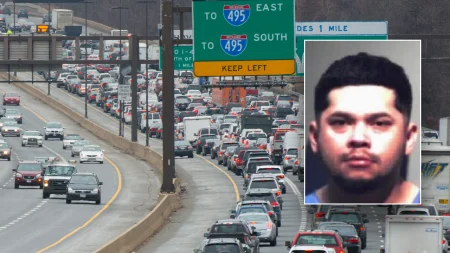
Following the shooting, prosecutors allege that Miah fled the state of Florida in a rental car, driving hundreds of miles north to New York in an attempt to evade law enforcement. He was eventually tracked down and arrested through a coordinated effort by local police, state investigators, and the U.S. Marshals Service. He was subsequently extradited back to Florida to face justice. State Attorney Bill Gladson revealed that the investigation uncovered highly suspicious internet search histories on Miah’s electronic devices from the morning of the murder, pointing to a calculated plan. A Lake County grand jury has since indicted Miah on charges of premeditated first-degree murder, and state prosecutors have announced they are actively seeking the death penalty.
The case has ignited a fierce political debate over sanctuary cities and national border policies, with federal officials expressing outrage over the suspect’s attempt to hide from justice. DHS acting Assistant Secretary Lauren Bis emphasized that Miah falsely believed he could escape the law by fleeing to New York, a state known for its protective sanctuary policies. Bis commended the quick action of multi-jurisdictional law enforcement partners who successfully removed a dangerous individual from the streets. By issuing the immigration detainer, federal authorities want to ensure that regardless of the outcome of his murder trial or any subsequent prison sentence, Miah will never again be allowed to walk free within the United States.
At its core, this tragedy represents a profound failure of systemic safeguards, leaving a family devastated and a community mourning the loss of Monica Islam. As Miah awaits trial in a Florida jail, his case stands as a sobering reminder of the compounding real-world consequences of border enforcement gaps. While prosecutors prepare to argue for the ultimate punishment in a state court, federal agencies are waiting in the wings to ensure that the legal system closes its doors on him permanently. The painful reality remains that a life was cut short by an individual who, by all legal standards, should never have been in the country to commit the crime in the first place.