


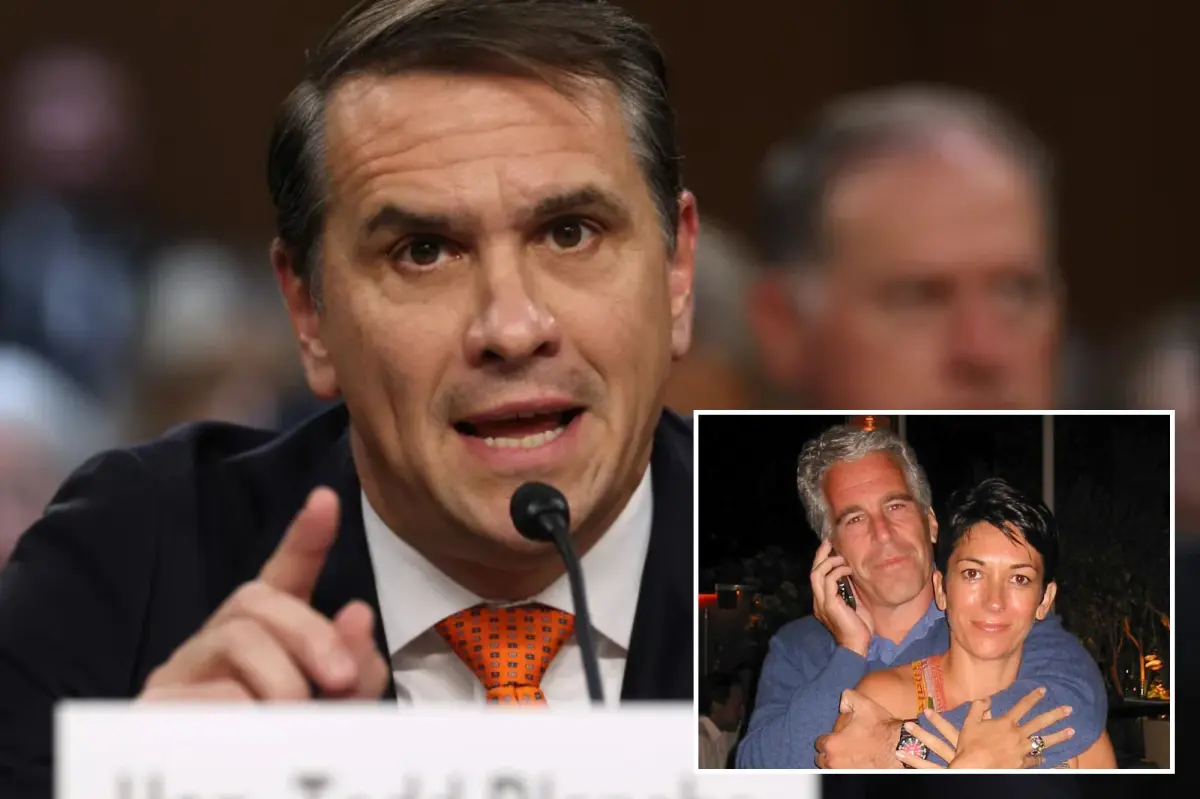
During a recent congressional hearing, Acting Attorney General Todd Blanche shared a sobering update on one of the most infamous criminal investigations in modern history. Testifying before lawmakers, Blanche revealed that despite years of exhaustive investigation, the Department of Justice has not yet uncovered definitive, actionable evidence proving that the late convicted sex offender Jeffrey Epstein trafficked his victims to other powerful men. This admission comes as a disappointing blow to many who have long demanded accountability for the wealthy and influential figures associated with Epstein, yet it highlights the strict legal thresholds federal prosecutors must meet when building a criminal case.
Rather than dismissing the widespread allegations of a broader conspiracy, Blanche sought to clarify the nuances of the government’s findings. He explained that career prosecutors and federal agents in both New York and Florida—who have spent years painstakingly parsing through financial records, travel logs, and survivor testimonies—did indeed identify other “participants” in Epstein’s predatory network. However, he noted that many of these accomplices were complex figures themselves, often serving as both facilitators of the abuse and victims of Epstein’s manipulation and coercion. The lack of indictments against other high-profile men is not due to a lack of effort, Blanche suggested, but rather a lack of evidence that meets the high standard of proof required in a federal court of law.
Importantly, Blanche was careful not to close the door on the possibility that other powerful men were involved in Epstein’s trafficking ring. “That does not mean it didn’t happen,” Blanche stressed during his testimony, acknowledging the lingering public suspicion and the painful reality that many crimes of this nature occur in the shadows. He emphasized that the Justice Department’s current lack of progress on this front is a reflection of the evidence currently in their possession, rather than a definitive declaration of innocence for Epstein’s associates. His comments reflect the ongoing frustration of investigators who are convinced of a wider network but remain hamstrung by the silence of key witnesses and the destruction of evidence.
In a poignant moment during his testimony, the Acting Attorney General made a direct, public appeal for new information. Addressing survivors, witnesses, or anyone with knowledge of Epstein’s operations, Blanche begged them to come forward and speak with federal authorities. This plea underscores the department’s dependency on firsthand accounts to crack open closed doors. For many survivors, however, coming forward remains a deeply daunting prospect, fraught with the fear of retaliation, public scrutiny, and the painful process of reliving their trauma, especially when dealing with targets who possess immense wealth and influence.
The reaction to Blanche’s testimony has been mixed, reigniting the public debate over justice and accountability in the Epstein saga. For survivors and their advocates, the statement is a frustrating reminder of how the powerful often manage to evade legal consequences, shielded by NDAs, high-priced legal teams, and the passage of time. Critics argue that the government’s inability to bring charges against other elite men represents a systemic failure, while legal analysts point out that prosecutors cannot ethically bring charges based on public rumor or circumstantial association alone.
Ultimately, Blanche’s testimony paints a picture of a Justice Department stalled at a difficult crossroads, possessing a deep understanding of Epstein’s depravity but lacking the smoking gun needed to prosecute his alleged high-society clients. As the investigation remains technically open, the search for the truth continues to rely on the bravery of those willing to step out of the shadows. Until new, concrete evidence emerges, the full scope of Epstein’s network may remain one of the most frustratingly unresolved chapters in the annals of American justice.