



In a bold and highly controversial escalation of its efforts to reshape how Americans vote, the Trump administration has announced a new policy that ties federal anti-terrorism funding directly to state-level election laws. Through newly issued guidance from the Department of Homeland Security (DHS), the federal government is warning states that they must adopt a specific suite of administration-backed election rules or risk losing a significant portion of their federal security grants. Under these new guidelines, states seeking money from the Homeland Security Grant Program (HSGP) must officially certify that they comply with federal mandates, such as requiring hand-marked paper ballots and demanding proof of U.S. citizenship during voter registration. This aggressive move bypasses traditional legislative routes, attempting to leverage vital public safety dollars to force local election offices into alignment with Washington’s political agenda.
The financial leverage the administration is wielding is immense, potentially disrupting critical public safety operations nationwide. The HSGP is a massive federal lifeline that distributes billions of dollars annually to help states, territories, and major metropolitan areas guard against terrorism, secure critical infrastructure, boost cybersecurity, and train first responders for active shooter or bombing scenarios. Under this new formula, any state that refuses or fails to meet the DHS’s election rules could see up to 20 percent of its designated funding withheld. With the program’s nationwide budget sitting at roughly $1.064 billion, the federal government is effectively holding over $200 million hostage. For states like California, which historically receives over $100 million in these safety grants, a non-compliance penalty could instantly drain more than $20 million from local emergency preparedness and counterterrorism efforts.
Predictably, the economic and operational fallout of this policy will not be felt equally across the country, setting up a stark partisan divide. Because many Republican-led states have already codified strict voter identification and paper-ballot systems into law, they are likely to breeze through the certification process with their funding fully intact. Conversely, blue and moderate swing states—which often favor automated voter registration, mail-in voting, and electronic interfaces without physical citizenship paperwork—face a difficult ultimatum. They must either fundamentally overhaul their election infrastructures on a compressed timeline or absorb devastating multi-million-dollar cuts to their cybersecurity, intelligence sharing, and emergency response budgets. This disparate impact is already driving state attorneys general to prepare for a massive legal showdown over federal overreach and states’ rights.
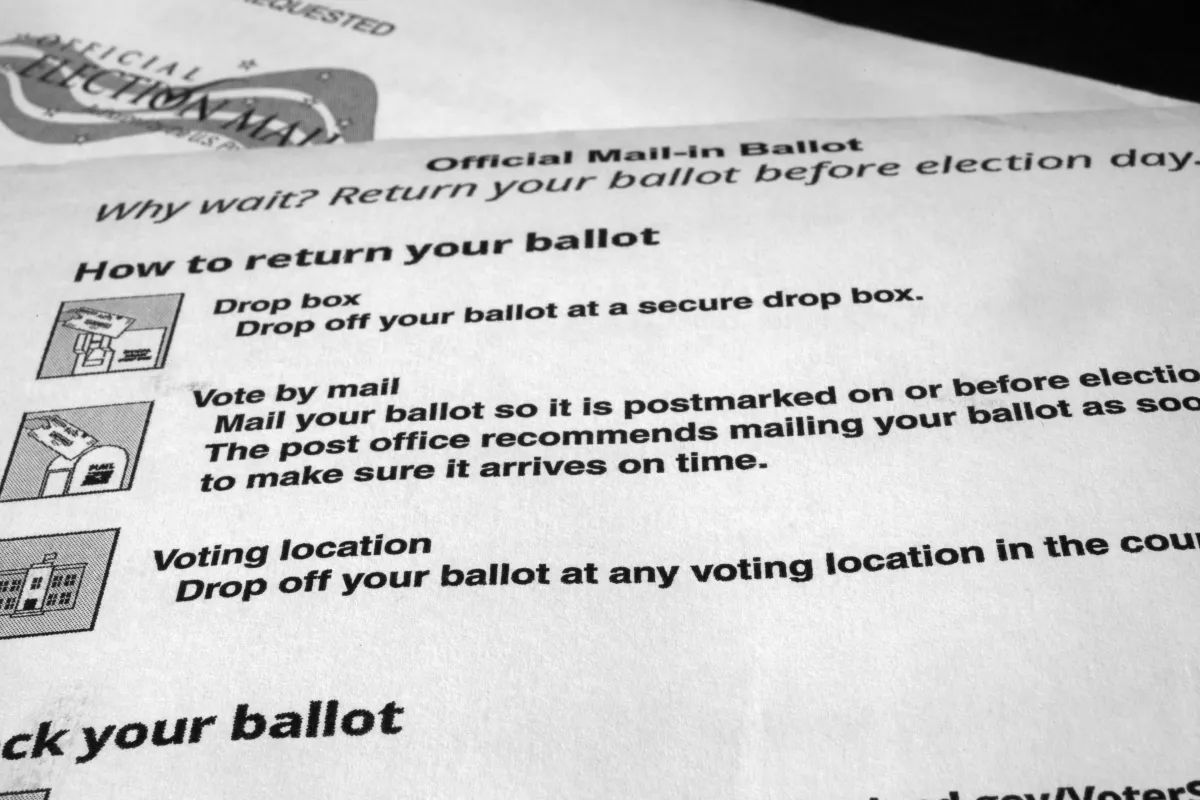
The specific demands laid out by the DHS target the very mechanics of how Americans cast and count their ballots. To secure their full share of homeland security funding, state governments must prove they verify U.S. citizenship for voter registration, utilize hand-marked paper ballots or voter-verifiable paper trails, conduct rigorous post-election audits, and aggressively clean up their voter registration rolls. While the administration frames these rules as widely accepted, common-sense safeguards designed to restore public faith in democratic institutions, voting rights advocates and state administrators point out that election management has historically been the sole constitutional domain of the states. When nationwide federal election standards are deemed necessary, they have historically been debated and passed by Congress, rather than unilaterally handed down by executive branch agencies.
To justify this unprecedented use of executive levers, the administration is leaning heavily on the argument that democratic integrity is fundamentally linked to national defense. DHS Secretary Markwayne Mullin defended the policy by asserting that election security is synonymous with national security. The administration argues that in an era of foreign disinformation campaigns, sophisticated cyberattacks, and insider threats, safeguarding the ballot box is just as critical to homeland defense as protecting physical pipelines or power grids. From the administration’s perspective, conditional grants ensure that federal taxpayer dollars are actively reinforcing public confidence in American democracy. By framing the election rules as a shield against foreign and domestic adversaries, the executive branch is attempting to create a logical bridge between counterterrorism funds and local polling place regulations.
Despite the administration’s national security framing, the policy is racing toward a minefield of legal challenges that will test the boundaries of executive power. While the U.S. Constitution allows Congress to attach strings to federal spending, federal courts have historically restricted executive agencies from inventing their own funding conditions without clear, explicit permission from lawmakers. The administration is already on shaky ground; earlier this year, a federal judge blocked key portions of a presidential executive order that attempted to mandate proof-of-citizenship registration requirements, ruling that the administration had overstepped its constitutional authority. Legal scholars expect this new DHS policy to spark a fierce courtroom battle reminiscent of previous executive attempts to withhold federal police grants from “sanctuary cities”—a high-stakes dispute that spent years winding through the justice system to determine exactly how far a president can go to make states fall in line.