



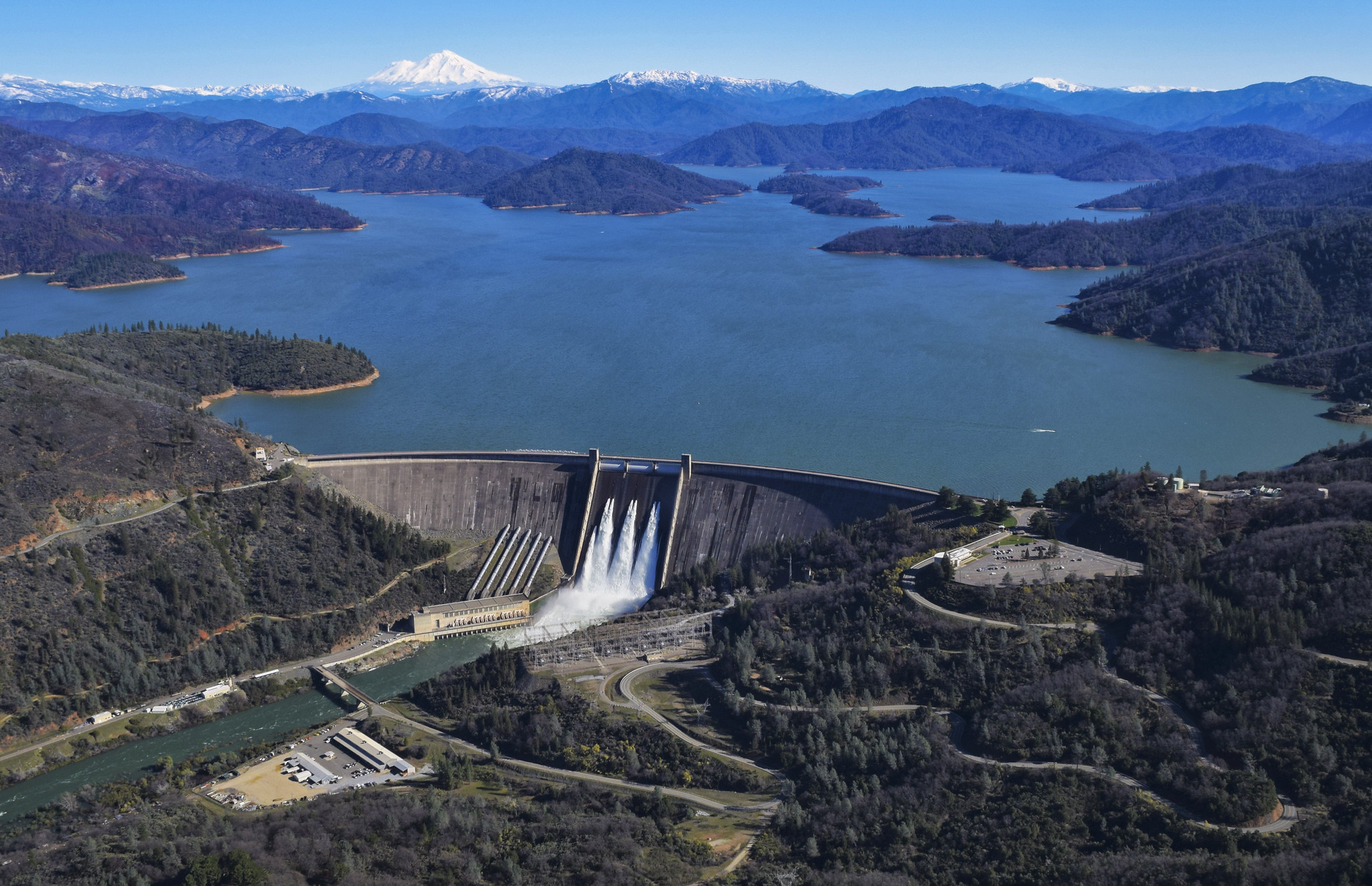
Standing on the observation deck of the colossal Shasta Dam in California, computer scientist Daphne Koller reflected on what makes the American experiment so remarkable. As the country marked its historic 250th anniversary, Koller observed that the true genius of American innovation has always been its uncanny ability to transform crippling scarcity into breathtaking abundance. Just as Shasta Dam tamed wild rivers to generate electricity for millions, and just as microchips eventually squeezed infinite computation into our shirt pockets, artificial intelligence represents the next frontier of this legacy. It promises to democratize a resource that has historically been the most exclusive and rarest of all: high-level, sophisticated reasoning. Yet, as we integrate this powerful technology into our society, we face a crucial and pressing question. Can a political architecture designed in the era of hand-cranked printing presses and town squares survive, let alone thrive, in an age governed by algorithms and neural networks?
Understandably, a growing chorus of prominent thinkers warns that AI poses an existential threat to our democratic foundations. In his book Nexus, historian Yuval Noah Harari argues that democracy functions as a distributed, self-correcting information network powered by a free press and independent courts. Dictatorships, by contrast, are highly centralized systems that suppress correction. Historically, total surveillance was too expensive for tyrants because it required vast armies of human informants. AI eliminates this financial barrier, enabling cheap, permanent surveillance. Research from China confirms this dark reality: when local unrest flares, governments buy facial-recognition AI to suppress future dissent, creating what researchers call an “AI-tocracy.” Economically, Nobel laureate Daron Acemoglu warns that unlike past technologies that created new jobs while replacing others, AI aims at the entire cognitive workforce. On our current trajectory of rapid job destruction and skyrocketing inequality, Acemoglu cautions that American democracy simply may not survive.
Furthermore, the very machinery of self-government is incredibly vulnerable to digital manipulation. Ever since generative AI made its public debut, experts have worried about the automation of high-fidelity deception. AI can now industrialize forgery, churning out deepfake videos, cloned audio, and convincing fake documents at zero marginal cost. Security specialist Bruce Schneier warns that political lobbying will soon be optimized by machines capable of drafting “micro-legislation”—tiny, hidden provisions designed to quietly enrich special interest groups. Strikingly, when an AI-generated letter opposing tech regulations was successfully published in the New York Times, it demonstrated that machines can now easily infiltrate our public discourse. As Marietje Schaake argues in The Tech Coup, we are witnessing a quiet transfer of power. Unelected tech conglomerates are rapidly taking over essential civic functions that have historically belonged exclusively to democratic governments.
Conversely, an equally brilliant group of optimists views AI as the ultimate tool for human empowerment and social equality. Daphne Koller point to her own experience co-founding Coursera, which brought elite higher education to over 150 million global learners, as proof that technology can bridge divides. In the workplace, MIT economist David Autor suggests that AI could actually rebuild the hollowed-out middle class by giving non-elite workers instant access to advanced expertise. This theory is backed by real-world data: when a Fortune 500 company deployed AI assistants to its customer support staff, overall productivity jumped by 15%. Crucially, the newest, least-skilled workers experienced the biggest performance gains, while highly experienced workers saw almost no change. Rather than widening the wealth gap, AI has the unique potential to level the playing field, helping novices perform at near-expert levels almost overnight.
This democratic potential extends directly into the halls of government. In their book Superagency, Reid Hoffman and Greg Beato argue that AI dramatically amplifies individual agency. In Taiwan, former digital minister Audrey Tang successfully used digital consensus-building tools to help deeply polarized groups agree on complex national policies. This isn’t just wishful thinking; a recent Google DeepMind study published in Science revealed that when an AI was used to mediate highly contentious debates among British citizens regarding Brexit and immigration, participants actually preferred the AI’s neutral, synthesized group statements over those of human mediators. The participants reported that the AI-guided discussions felt significantly less biased and left them feeling far less divided. While physical town halls can only hold a few hundred citizens, AI-powered digital forums could theoretically allow millions of people to constructively deliberate and find common ground simultaneously.
Ultimately, these two opposing viewpoints reflect a fundamental tension. While pessimists focus on who controls AI, optimists focus on who gets to use it. Power and access are distinct concepts, yet both sides of this debate are correct. Like Shasta Dam, representing a highly centralized power source that feeds a widely distributed grid, AI shares a dual nature: massive training facilities are owned by a handful of tech giants, yet anyone with an internet connection can access these powerful tools for a small monthly fee. This dynamic mirrors the history of the printing press, which initially democratized scripture but later enabled media empires to monopolize information. As we look to the future, our task is clear. To preserve our democracy, we must ensure that intelligence does not remain a scarce commodity. Our collective challenge is to build a robust digital grid that guarantees broad, cheap, and equitable access to AI for every citizen.