


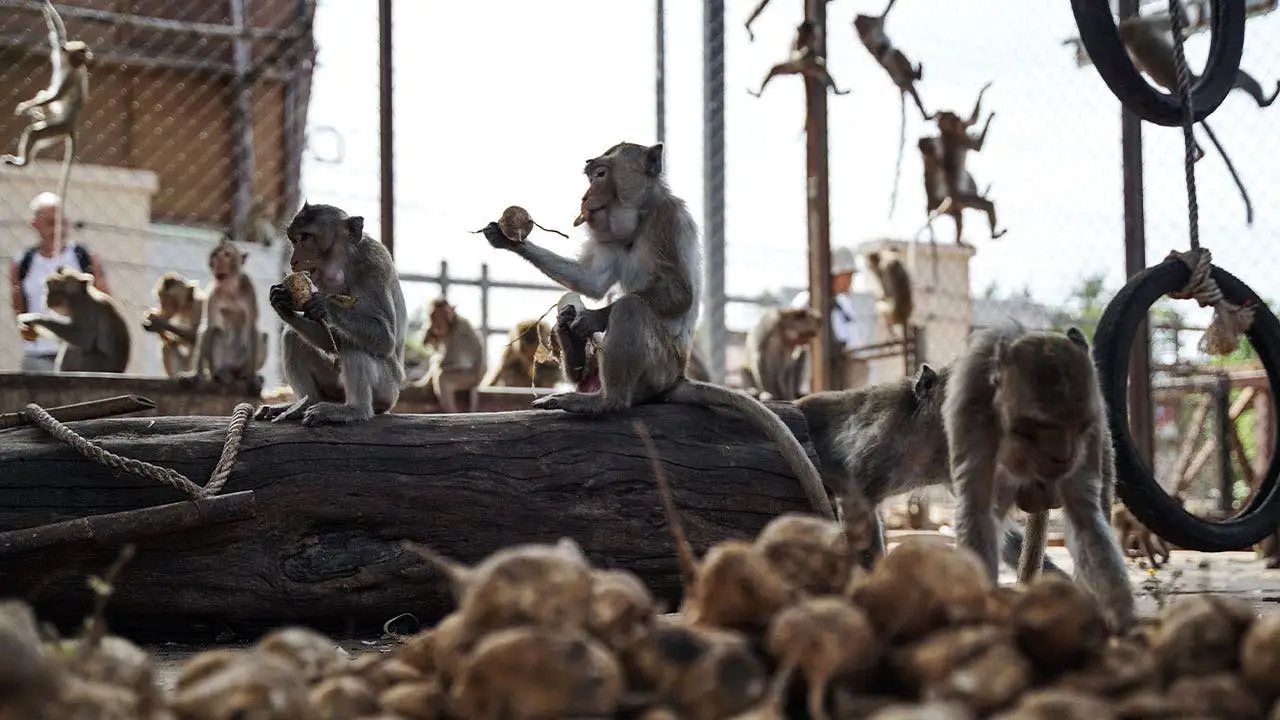
Imagine stepping outside your front door on a quiet morning, only to find your neighborhood transformed into a bustling, chaotic playground for dozens of nimble escapees. This became a sudden reality for residents in central Thailand when nearly 100 mischievous macaques broke out of a government-run sanctuary overnight, launching an extraordinary, community-wide saga. The Great Escape unfolded at the Lopburi Municipality Animal Nursery, where a damaged section of a specialized enclosure allowed the clever primates to slip away into the dark. Fortunately, quick-thinking facility workers managed to secure the perimeter just in time, preventing more than 1,000 other monkeys from joining the massive breakout.
The sudden influx of free-roaming primates sent municipal staff, provincial leaders, and wildlife conservation officials into overdrive. Teams flooded the local residential streets, launching a patient and highly coordinated recapture effort. To round up the runaway macaques, workers relied on a mix of clever strategy and gentle force, setting up cages loaded with enticing food to coax the hungry animals back inside. However, the larger, more headstrong alpha males proved to be a tougher challenge, requiring wildlife officers to use tranquilizer darts to safely subdue and transport them back to the facility.
Amid the chaos, local leaders stepped up to reassure the rattled community and lay out plans to make sure an incident like this never happens again. Lopburi Governor Weeraphong Ritrod announced that maintenance crews had quickly patched up and reinforced the damaged section of the enclosure. Looking ahead, the governor shared plans to build a highly secure, double-layered barrier specifically designed to withstand the strength and cleverness of the dominant monkeys. Recognizing that the animals’ well-being is key to preventing future escapes, the province is also setting up a dedicated foundation to help fund their food costs and elevate their overall quality of life.
The escape has sparked plenty of conversation about what drives these animals to break out in the first place. Mayor Chamroen Salacheep suggested that a mix of primal instincts and challenging conditions—such as scorching tropical heat, cramped quarters, hunger, or simply a natural urge to wander—likely pushed the macaques to find a way out. Extending a heartfelt apology to the affected neighborhood, the mayor urged residents to report any property damage caused by the monkeys so the city could assess the impact and offer financial assistance to those left cleaning up the mess.
This wild event is just the latest chapter in Lopburi’s long, complicated relationship with its famous primate residents. Known globally for its massive population of free-roaming macaques, the historic city has struggled for years to strike a balance between celebrating its wildlife and protecting its human citizens. While the monkeys are a major draw for tourists, they frequently cause severe headaches for local shopkeepers and homeowners due to aggressive behavior, food theft, and property damage. To manage the tension, officials have increasingly relied on sterilization drives and humane relocation initiatives to keep the population under control.
As the dust begins to settle and the final runaway monkeys are safely returned, the incident serves as a gentle reminder of the delicate challenges that arise when urban spaces overlap with the natural world. While government agencies work behind the scenes to secure the facility and support the community, life in Lopburi is slowly returning to its unique version of normal. For the locals, it is just another day in a city where humans and wildlife are constantly learning how to share the neighborhood, proving that coexistence often requires equal parts patience, preparation, and a good sense of humor.