



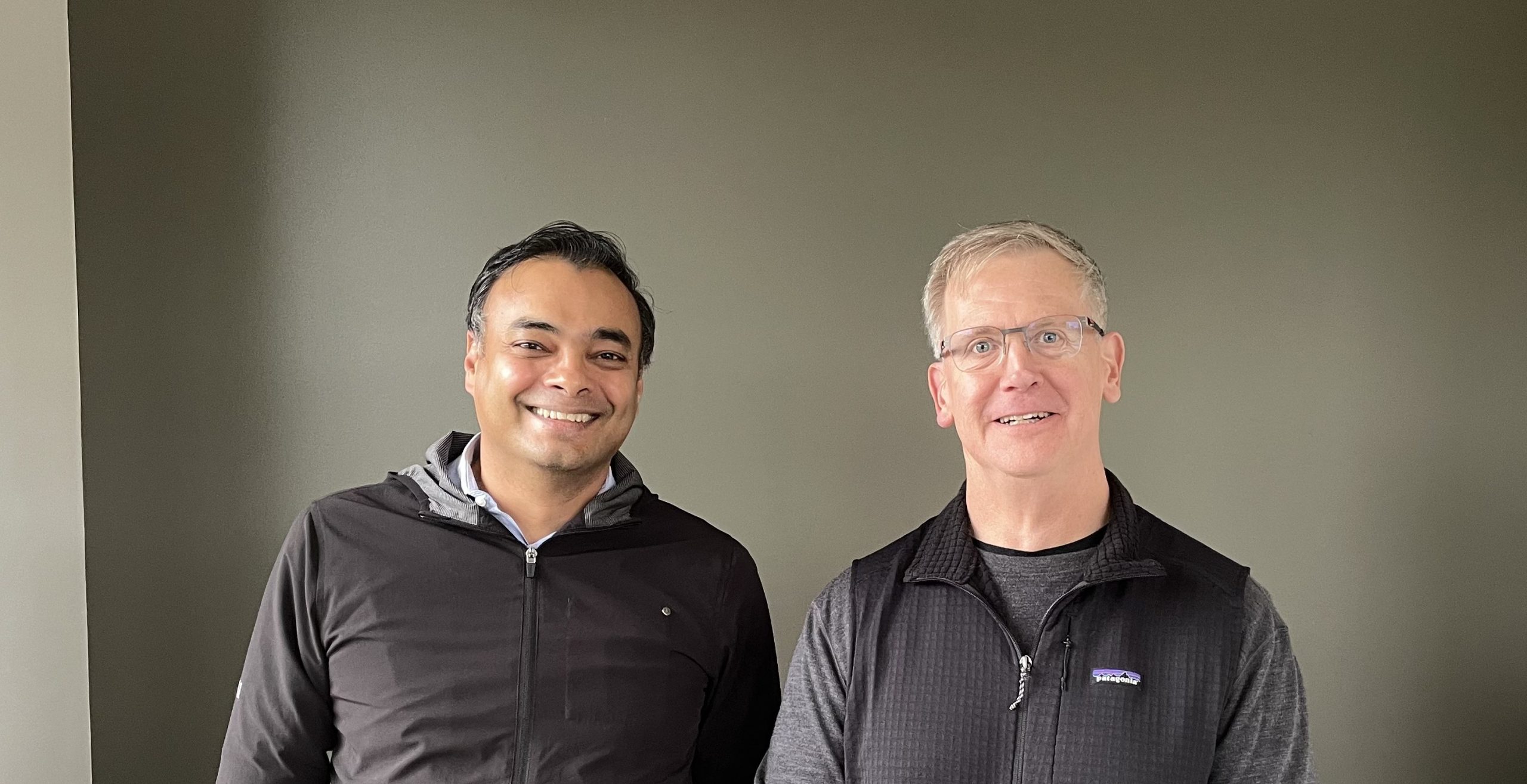
Behind every delinquent utility bill, forgotten credit card charge, or overdue auto-loan payment, there is almost always a deeply human story rather than a malicious intent to defraud. This fundamental truth is the quiet revolution driving KredosAI, a pioneering Seattle-area startup founded in 2021 by former T-Mobile executives Balaji Sridharan and Dave Thoms. For decades, the collections industry behaved like a blunt instrument, assuming that citizens who fell behind on their payments were either negligent or intentionally deceptive, leading to aggressive robocalls, threatening letters, and an immediate severing of the customer relationship. Sridharan and Thoms, operating from their headquarters in Issaquah, Washington, realized that this confrontational paradigm was built on a deeply flawed psychological premise. They recognized that the overwhelming majority of people who default or miss a payment deadline actually harbor a genuine desire to settle their debts but are temporarily paralyzed by mundane, everyday crises—such as a forgotten calendar notification, a temporary cash-flow mismatch, a sudden medical emergency, or simply a deep-seated anxiety about opening a daunting billing portal. By shifting the perspective from punitive enforcement to gentle, behavioral-science-backed support, KredosAI seeks to destigmatize the experience of debt, humanizing a process that has historically stripped vulnerable consumers of their dignity. Their philosophy rests on treating late-paying customers not as liabilities to be liquidated, but as valued human partners who simply require an empathetic, well-timed, and respectful nudge to get back on track. This humane perspective doesn’t just soothe the psychological distress of the consumer; it changes the entire conversational landscape, transforming what was once a source of bitter conflict into a collaborative, supportive dialogue that honors the customer’s intent to do the right thing when life inevitably gets complicated.
At the technical core of KredosAI’s innovative platform is a sophisticated engine that operates in the high-stakes, delicate window of time immediately after a bill becomes overdue, but long before the account is aggressively written off or banished to third-party collection agencies. Rather than deploying generic, cold warnings, the software acts as an empathetic digital interpreter, analyzing thousands of unique account characteristics—ranging from historical payment patterns and the length of the customer relationship to account balances and previous communication preferences—while carefully bypassing sensitive, legally and ethically off-limits markers such as age or gender. Once the system understands the specific context of the consumer, it dynamically customizes the wording, timing, and medium of the outreach, matching the message to the psychological state of the recipient. For example, a customer who is simply busy might receive a quick, frictionless text message or an RCS (Rich Communication Services) prompt containing an easy-to-use one-click payment link, whereas someone dealing with a more complex financial hurdle might be gently guided toward a highly personalized repayment plan through a soft, interactive email or an advanced, conversational AI voice agent. These newly introduced voice agents are designed not to badger or pressure, but to listen actively, speak with a calm and reassuring cadence, and collaboratively co-create solutions with the customer in real-time. By utilizing behavioral science and natural language processing, KredosAI ensures that the technology never feels like a menacing external pressure, but rather like a supportive personal assistant helping the customer clear a temporary hurdle, keeping the transaction comfortable, dignified, and customized.
The significant real-world potential of this behavioral approach has caught the attention of major global players, culminating in a highly successful $7 million Series A funding round led by BMW i Ventures, the independent venture capital arm of the legendary German automaker BMW Group. This funding, which brings KredosAI’s total capital raised to just over $10 million, also drew enthusiastic support from new institutional investors like Motley Fool Ventures and Walter Ventures, alongside continued backing from existing seed-stage champions including Okapi Venture Capital, StartFast Ventures, SaaS Ventures, and Stout Street Capital. The strategic alignment with BMW’s venture division is particularly noteworthy and deeply intentional, signaling a major expansion pivot for KredosAI as it enters the increasingly volatile world of automotive lending. In the current economic climate, subprime auto-loan delinquencies have quietly climbed to heights not seen since the turbulent 1990s, forcing financial institutions and automakers alike to rethink how they manage past-due car payments. Sridharan points out that car companies and subprime lenders face a balancing act that looks remarkably similar to the challenges of the telecommunications sector: they must find a way to recover essential outstanding funds without alienating the consumer or destroying the long-term value of the relationship. Repossessing a vehicle is a costly, complex, and emotionally devastating event for a family, and by partnering with BMW, KredosAI intends to demonstrate that gentle, early-stage behavioral interventions can keep families in their cars, keep accounts current, and save lenders millions in unnecessary recovery and logistical expenses. Furthermore, KredosAI’s deep integration with the FICO Platform—the analytical software suite that underpins credit risk decisions for the world’s largest banks—supercharges its reach, turning its empathetic algorithms into a standard feature of modern corporate banking.
The genesis of KredosAI can be traced directly back to the corporate hallways of Bellevue, Washington, where Balaji Sridharan and Dave Thoms spent years witnessing firsthand the massive, painful friction inherent in traditional corporate credit cycles. Sridharan, a seasoned veteran who spent eight years at T-Mobile leading corporate strategy and spearheading the carrier’s massive Internet of Things (IoT) division following a brilliant career at management consulting giant McKinsey & Company, understood the sheer mathematical scale of customer churn. His co-founder, Dave Thoms, had spent decades deeply embedded in the trenches of credit, risk mitigation, and collections departments for major telecommunications and financial services corporations, seeing the direct emotional toll that heavy-handed collections tactics took on everyday consumers. Month after month, they watched T-Mobile and other global giants grapple with millions of past-due accounts, observing a recurring tragedy: aggressive, automated dunning systems would repeatedly chase down customers, alienating them so severely that once these individuals finally recovered financially, they would immediately abandon the brand in favor of a competitor. Sridharan and Thoms realized that this was a massive self-inflicted wound for corporations, as the astronomical cost of acquiring a new customer far outweighed the price of gently nursing an existing, temporarily struggling customer back to financial health. Drawing on their combined expertise in enterprise strategy and corporate collections, they set out to establish a business that could elegantly bridge the gap between hard numbers and human empathy, proving once and for all that treating people with genuine grace and respect during their lowest financial moments is not just an ethical duty, but an incredibly lucrative corporate strategy.
In a market historically saturated with rigid legacy software and aggressive, high-pressure out-sourced call centers, KredosAI is proving that its gentler, automated alternative is dramatically more effective at recovering revenue while keeping customer relationships fully intact. The company works closely with a roster of massive enterprises, including several household names within the Fortune 50, and its real-world performance metrics are forcing the industry to pay close attention. Over the past two years, the platform has seamlessly facilitated over 200 million customer interactions, driving an extraordinary sixfold increase in the company’s own revenues while delivering concrete, undeniable financial victories for its corporate clients. Across its diverse customer base, companies implementing KredosAI’s behavioral-guided system have reported an average 11.5% decrease in total credit write-offs alongside an incredible 13.6% boost in customer lifetime value when compared to traditional, aggressive collection strategies. This dual benefit shatters the long-held corporate myth that recouping cash requires a trade-off with customer happiness; indeed, by helping people resolve their debts through kindness and optionality, KredosAI turns potential brand-detractors into incredibly loyal, lifelong advocates. This unique position allows KredosAI to stand out even when compared to larger, older, and well-funded competitors like Calgary-based Symend, showing that there is ample room for disruptive, nimble startups to redefine how global enterprises communicate with people when bills go unpaid.
Equipped with this fresh injection of Series A capital, KredosAI is poised to embark on a rapid, ambitious new phase of scaling, product development, and geographic expansion designed to further humanize digital finance. Sridharan plans to utilize this financial runway to aggressively double the startup’s current workforce of 25 employees over the coming year, expanding the engineering, product, and sales teams to 50 or more talented professionals while maintaining their core presence in the Greater Seattle area. A significant portion of this investment will be poured directly into refining their agentic AI and natural, lifelike voice technologies, creating an ultra-responsive, psychologically sound framework of interactive agents that can seamlessly guide customers through stressful debt resolution conversations without any of the judgment, shame, or hostility typically associated with human collectors. As KredosAI eyes eventual expansion into international markets, the overarching mission remains deeply anchored in the belief that financial technology should serve as a bridge to uplift consumers during times of temporary hardship, rather than a barrier that locks them out of modern society. For Sridharan, Thoms, and their growing team, this new round of funding is far more than a simple validation of their business model; it represents a powerful, highly fueled mandate to dismantle the outdated, cold-heartedly punitive apparatus of corporate collections and replace it with a system built on mutual respect, deep human understanding, and unconditional dignity.