


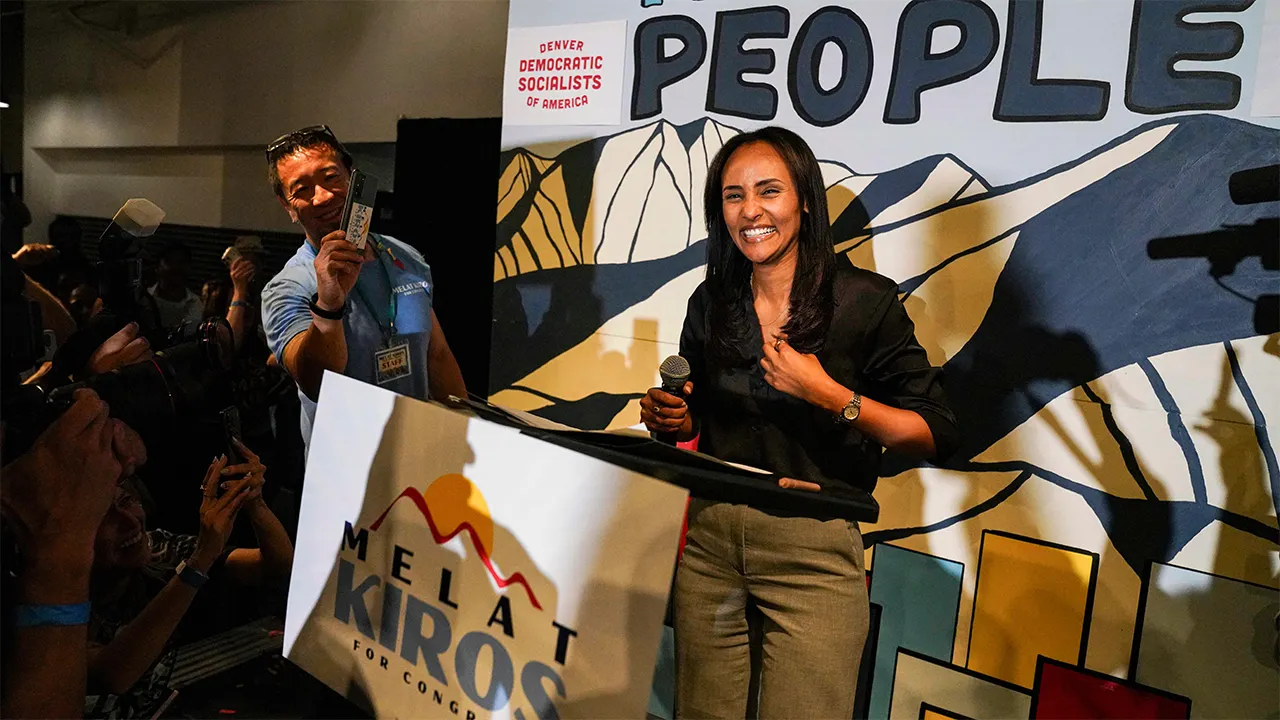
The dawn of a new day brings a stark reminder of how rapidly the American political landscape is transforming, challenging long-held assumptions about power, party loyalty, and representation in our communities. In a stunning electoral upset that has sent shockwaves through the political establishment, a grassroots socialist challenger, backed by the emboldened Democratic Socialists of America (DSA), has successfully unseated a multi-term, veteran Democratic incumbent. This monumental victory signals a major ideological shift, demonstrating that a growing segment of the electorate is no longer satisfied with moderate, incremental governance and is instead demanding bold, systemic reforms to address economic inequality and deep-seated social challenges. This progressive surge in the West stands in sharp contrast to the dramatic developments unfolding within the Republican Party, where Representative Lauren Boebert has triumphed in a highly contested primary race, effectively cementing her position as a formidable survivor among the populist, anti-establishment faction of Congress. These contrasting political victories—one expanding the reach of democratic socialism and the other reinforcing a fierce brand of conservative populism—reveal a nation that is actively redefining its identity from the outer edges of the political spectrum. As voters increasingly reject centrist complacency in favor of passion and ideological purity, the traditional middle ground of politics continues to dissolve, leaving us with a highly polarized environment where the political strategies of the past are rapidly proving obsolete in the face of a highly mobilized and demanding electorate.
On the international stage, the intricate, high-stakes game of diplomacy and foreign policy continues to dictate global dynamics, though these abstract political maneuvers are constantly contrasted with the raw, emotional reality of human survival. Recent reports indicate that Donald Trump questioned whether the United States should completely abandon its efforts to negotiate with Iran, a reflection of the deep skepticism surrounding international accords and the ongoing debate over how America should project its strength abroad. Meanwhile, in a rare moment of diplomatic alignment, the United States State Department confirmed that the Venezuelan government has achieved “total compliance” regarding key international agreements, offering a glimmer of hope for stabilized relations in a historically turbulent region. However, the true story of Venezuela this week is not found in sterile government offices, but in the ruins left by a pair of devastating twin earthquakes. Amidst the catastrophic destruction and widespread despair, search and rescue teams achieved what many believed to be impossible: pulling a two-year-old boy alive from the heavy rubble six full days after the initial tremors. This miraculous saving of a young life serves as a profoundly moving reminder of the absolute resilience of the human spirit. While nations engage in complex geopolitical chess and debate policies from afar, the instinctual drive to protect the innocent and rebuild from the ashes remains a universal truth that transcends borders and reminds us of our shared global humanity.
Back on American soil, our local communities are confronting their own harrowing safety challenges and deeply unsettling domestic mysteries that highlight the complex moral struggles of our time. In New York, federal authorities have arrested and charged a woman with funding a Palestinian terror group, a case made particularly jarring by her public pronouncements wishing that “every day were October 7th,” demonstrating how distant geopolitical hatreds can manifest as dangerous, radicalized activities within our own neighborhoods. At the same time, federal law enforcement has successfully dismantled a highly lucrative “iron pipeline,” an illegal gun trafficking ring responsible for funneling dozens of firearms from the state of Georgia straight into the hands of violent, organized gangs in Chicago. This successful bust marks a critical victory in the ongoing battle against urban gun violence, which continues to devastate families and disrupt local communities daily. Yet, amidst these large-scale law enforcement operations, a deeply bizarre and tragic occurrence at a local school has left a community in shock: the decomposing body of an unidentified person was discovered hidden inside a chimney after students and staff reported an increasingly foul odor. Together, these disturbing events illustrate the multifaceted threats currently facing our society, demanding not only vigilant policing and systemic accountability but also a collective effort to address the root causes of violence, radicalization, and societal decay.
Perhaps no issue highlights the painful friction between national law and deep human emotion more than the ongoing, highly charged debate over immigration and national identity. This division was brought into sharp focus when a grieving “Angel Mom”—a mother whose child was tragically killed by an undocumented immigrant—confronted sanctuary-city politicians, passionately asking why local leaders seem to prioritize the legal protection and welfare of undocumented individuals over the physical safety of their own taxpaying citizens. This raw, emotional plea represents a broader, global boiling point as deep-seated anxieties over national sovereignty and border control continue to rise; across several international cities, massive anti-immigration protests have erupted into violence, forcing governments to deploy thousands of riot police to maintain basic order in the streets. Back in the courts, the legal battles surrounding federal authority and enforcement are escalating, with a federal judge blocking a Virginia law that sought to prohibit Immigration and Customs Enforcement (ICE) agents from wearing protective face masks while carrying out their dangerous work. Adding fuel to this controversial fire, Senator JD Vance publicly criticized a historic Supreme Court ruling on birthright citizenship, labeling it a “major mistake” that fosters a system of birth tourism and calling for a fundamental reassessment of who gets to claim the rights of American citizenship, highlighting a deep philosophical struggle over the very definition of a nation.
As our society wrestles with these deep-seated cultural and political divisions, the powerful institutions that curate our information, control our digital algorithms, and shape our daily consumer habits are undergoing their own major reckonings. In an embarrassing blow to public broadcasting, National Public Radio (NPR) was forced to explain a massive error where a misheard announcement led the network to falsely report that Supreme Court Justice Samuel Alito was retiring, a mistake that underscores the high-stakes pressure and potential pitfalls of the continuous, twenty-four-hour news cycle. In the realm of digital media, Barstool Sports founder Dave Portnoy caused a massive stir by exposing an alleged scheme by the hosts of the highly popular “Call Her Daddy” podcast, claiming they had planned to fabricate false allegations of sexual harassment simply as a legal mechanism to break their contracts, shedding light on the often ruthless and calculated nature of high-profile entertainment deals. Simultaneously, tech giant Meta suffered a significant legal blow when a judge rejected its attempt to dismiss lawsuits brought by dozens of states, which allege that the company deliberately designed Facebook and Instagram to addict children and teenagers, exposing them to mental health risks. In response to these overwhelming digital and sensory pressures, major retail brands like Sephora are joining Walmart and Target in instituting “quiet hours” shopping experiences, offering consumers a localized, low-stimulation environment that prioritizes sensory-friendliness and mental well-being in an increasingly chaotic world.
When the dust settles on these national headlines, it is the quiet resilience of everyday community life, local economic drive, and cultural togetherness that truly sustains the fabric of our country. Representative Roger Williams recently paid tribute to the enduring spirit of American small businesses, highlighting how 250 years of continuous hard work on Main Street have built the foundational bedrock of our national economy and community life, emphasizing that local business owners remain the unsung heroes of our neighborhoods. At the same time, gun rights advocates like Erich Pratt are pushing for national concealed carry reciprocity, arguing that empowering law-abiding citizens to defend themselves across state lines is vital for public safety and the preservation of individual liberty. Amid these serious debates, the prospect of future cultural highlights offers a welcome sense of unity and anticipation, such as fans organizing to watch the live-streamed USA vs. Bosnia and Herzegovina match in the upcoming 2026 FIFA World Cup, proving that sports still have the unique power to bring diverse groups of people together. Additionally, whether it is lighthearted engagement with the American Culture Quiz about cruise standards and wedding etiquette, or simply planning your day around the local weather forecast, these traditional habits keep us grounded. They serve as a vital reminder that while the grand headlines of the day can feel overwhelming, our collective strength lies in the small routines, shared values, and enduring human connections that we nurture each and every day.