

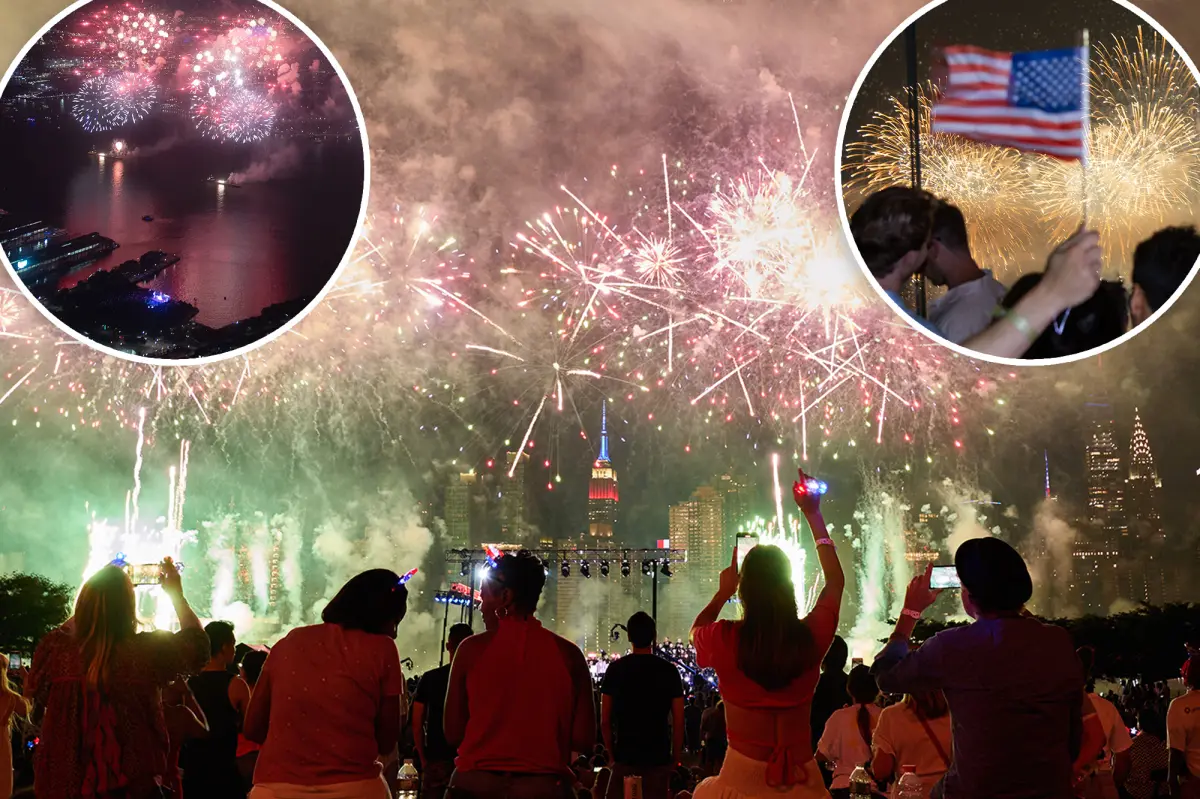
The sticky, heavy heat of a midsummer evening in New York City carries a unique kind of electricity—a quiet, collective anticipation that builds as the sun begins its slow descent behind the iconic skyline. This year, that familiar summer buzz is charged with an unprecedented level of excitement, as the city prepares to host a spectacle of historic proportions. The Macy’s Fourth of July fireworks display, a beloved institution that has captured the hearts of generations, is gearing up for a monumental double celebration: marking its own golden fifty-year anniversary while simultaneously ushering in America’s semiquincentennial, the grand 250th birthday of the nation. To honor this extraordinary alignment of milestones, organizers have envisioned a breathtaking, once-in-a-generation experience that goes far beyond a standard holiday display. Rather than restricting the pyrotechnics to a single waterfront, this year’s show will dramatically illuminate both the East River and the Hudson River in a dazzling, dual-river extravaganza. Sharon Otterman, the chief marketing officer for Macy’s, beautifully captured the spirit of the event, noting that the company is immensely proud to commemorate its half-century mark with a deeply emotional, signature experience designed to unify and connect millions of spectators watching from coast to coast. It is an ambitious promise to turn the night sky into a vast, shining canvas of shared history, uniting the bustling streets of the Big Apple with the scenic waterfronts of New Jersey under a single, brilliant umbrella of light.
To understand the sheer magnitude of this decision, one must look at the natural geography of Manhattan, a narrow island defined and cradled by its mighty surrounding waterways. Historically, the Macy’s Fourth of July fireworks have behaved like a grand, alternating pendulum, shifting their pyrotechnic heavy-machinery from one side of the island to the other in successive years, leaving residents on the losing side to crowd onto high rooftops or migrate across town. It is exceptionally rare for both the East River and the Hudson River to be lit simultaneously, making this year’s dual-river setup a true marvel of modern event planning. In fact, you would have to look back to the historic dawn of the millennium in the year 2000—when a massive global gathering of international tall ships graced the harbor—to find the last time both waterways were utilized at once. Orchestrating a synchronized show across two separate, fast-flowing rivers requires an astonishing level of artistic and technical choreography, coordination, and raw pyrotechnic power. Dozens of massive, flat-topped barges must be perfectly positioned, carrying highly complex computer-delayed firing systems that ensure a shell launched over the Hudson explodes at the exact microscopic second as one over the East River. The physical acoustics of the event will be nothing short of majestic; the deep, resonant booms will echo off the glass facades of Hudson Yards and simultaneously rumble through the historic brick warehouse districts of Brooklyn and Queens, wrapping the entire metropolitan area in a warm, physical blanket of sound and light.
Yet, translating this dream of a dual-river wonderland from a designer’s drawing board into the physical world required navigating a complex labyrinth of civic bureaucracy, security concerns, and logistical hurdles. Macy’s originally set its sights on securing permits solely from New York City to place its fireworks barges along the Hudson River, aiming to create a massive West Side show. However, New York City officials ultimately denied this request due to a massive scheduling conflict with the incoming “Sail250” fleet, a historic gathering of majestic tall ships scheduled to arrive that very morning. Underneath these administrative denials lay a stressful reality for the city’s dedicated civil servants: the New York Police Department was already staring down an incredibly grueling season. With officers already scheduled for grueling twelve-hour shifts to manage the colossal Independence Day crowds, the department was also preparing for the security demands of the upcoming World Cup, alongside rumors of massive cultural security operations. Sources close to city planning revealed that the police force simply did not have the personnel to stretch their resources safely across both coastlines of Manhattan to provide the heavy security required for such massive, simultaneous crowds. Managing millions of excited, distracted people packed tightly into narrow riverfront parks and highway overpasses is a high-stakes endeavor, and stretching the thin blue line across two parallel rivers was ultimately deemed a safety risk too great to take.
This temporary setback, however, paved the way for an inspiring display of neighborly cooperation when Macy’s turned its eyes westward across the Hudson River. In a swift, historic pivot, the company requested—and warmly received—a permit from the state of New Jersey, allowing them to anchor two massive fireworks barges directly off the shores of Jersey City. This geographical shift has sparked immense excitement among Garden State residents, who have long watched Manhattan’s iconic holiday celebrations from afar, feeling more like distant observers than active participants. Now, the West Side waterfront is no longer a secondary vantage point; it is a primary stage. Jersey City organizers have meticulously planned official public viewing access points along the bustling Hudson Street corridor and surrounding the monumental Colgate Clock—a beloved local landmark that will now stand as a vintage sentinel beneath a canopy of cascading red, gold, and blue sparks. While Exchange Place itself will remain closed to the public to facilitate safety operations, the surrounding waterfront plazas are preparing to welcome hundreds of thousands of eager families. This cross-river collaboration beautifully demonstrates how celebration can transcend political borders, turning what could have been a logistical disappointment into a vibrant, multi-state party where New Yorkers and New Jerseyans alike look out at the same water and share the exact same magical view.
Meanwhile, back on the eastern side of Manhattan, the scramble to secure a prime viewing spot has ignited its own brand of excited, localized frenzy. In an effort to make the historic East River show accessible to everyday citizens, local leaders took matters into their own hands, with Mayor Zohran Mamdani organizing a highly popular public lottery. This initiative distributed 100,000 free tickets to lucky winners, granting them coveted, up-close access to prime viewing areas nestled within the sprawling lawns of Brooklyn Bridge Park and the historic cobblestone walkways of Manhattan’s Seaport District. These golden tickets cover the highly desirable Piers 1 through 6 in Brooklyn, as well as the vibrant public plaza of Seaport Square, where the physical shockwaves of the explosions will vibrate deep in the chests of spectators. For those who did not win the lottery, the dream of witnessing the historic show in person is far from lost. Non-ticketed public viewing areas are scheduled to open along the expansive FDR Drive, allowing the general public to walk onto the highway and watch the sky explode above the East River, although city officials were still finalizing the delicate logistics of these access points just days before the event. This mixture of exclusive ticketed zones and wide-open public spaces highlights the democratic, chaotic beauty of New York life, where billionaires on private penthouse terraces and working-class families on folding chairs share the exact same patch of sky.
When the final countdown ends and the night sky finally erupts, the political disagreements over permits, the logistical headache of police shifts, and the stress of securing tickets will fade into the background. In their place will remain a profound, quiet moment of human connection—a shared gasp of wonder from millions of people looking upward at the exact same moment. In a fast-paced, modern world that can often feel hyper-individualistic and divided, there is something deeply sacred about standing shoulder-to-shoulder with thousands of complete strangers, united in silent awe by the ancient magic of fire and light. As the grand finale reaches its thunderous, chest-rumbling crescendo, sending waves of glittering gold and silver cascading from the Brooklyn Bridge to the Jersey City docks, it will serve as a glowing reminder of what we can achieve when we work together. This historic dual-river display, honoring two and a half centuries of a complex, evolving nation and fifty years of a beloved holiday tradition, proves that even when we are separated by wide, deep, and fast-flowing rivers, we can still find a way to share the same sky, the same light, and the same hopeful vision of a brighter tomorrow.