


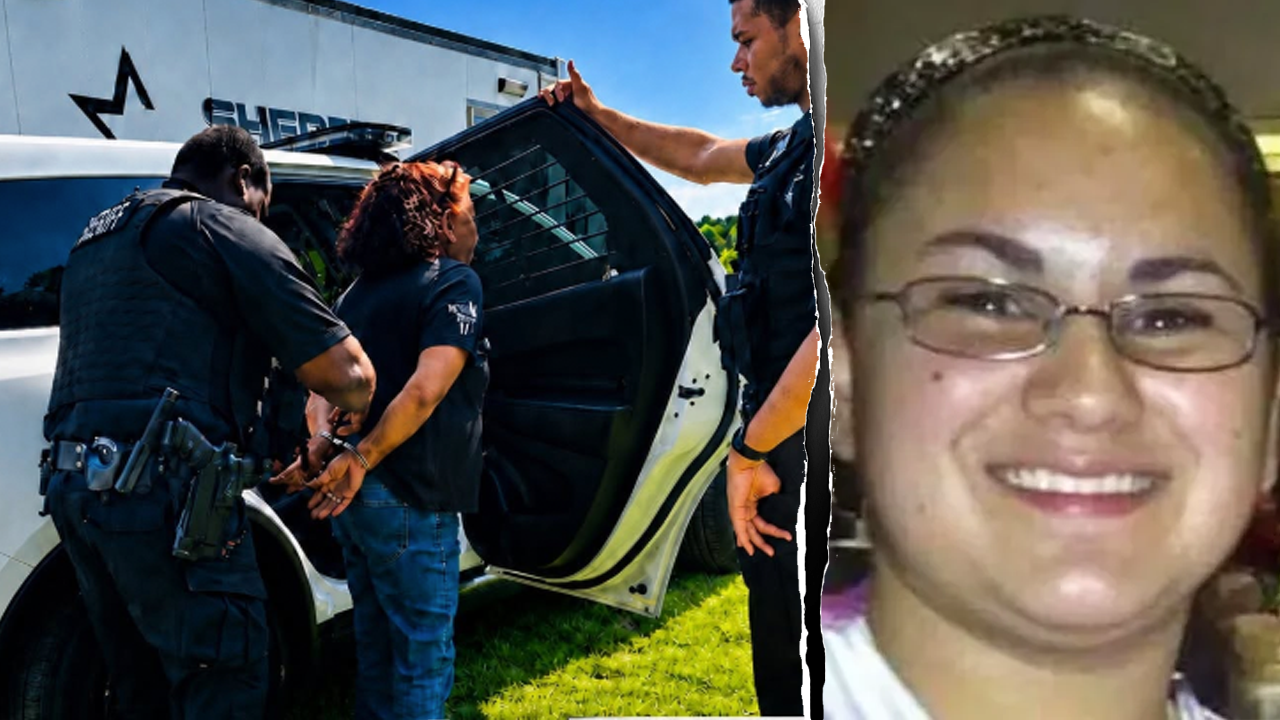
On a cold, routine morning on February 4, 2015, eighteen-year-old Sara Nicole Graham stepped out of her North Carolina home, embarking on what should have been an ordinary commute to her job at a Walmart in nearby Pembroke. She was a young woman on the cusp of adulthood, possessed of a quiet determination and a future that stretched out brightly before her. Yet, somewhere along that short, familiar route, the ordinary dissolved into a waking nightmare. Sara never arrived for her shift, and by the time the sun began to set over Robeson County, her abandoned van was discovered sitting empty in a desolate field near Interstate 95. The vehicle was there, but Sara had vanished without a trace, leaving behind a chilling void that would swallow the lives of her loved ones for more than a decade. The initial searches yielded no clues, no struggles, and no answers, leaving a community paralyzed by fear and a family anchored in sudden, inexplicable grief. For more than eleven years, this quiet stretch of highway remained a monument to an agonizing mystery, a place where a young life had seemingly evaporated into the damp Carolina air, leaving behind only the haunting whisper of what might have been.
For Catherine Armenta, Sara’s mother, those eleven years were not a mere passage of time, but an agonizing, slow-motion descent into the unique torture known to psychologists as ambiguous loss—a state of grief that can never truly begin because there is no finality to mourn. Year after year, milestones, holidays, and birthdays passed with an empty chair at the table, each calendar page turn a painful reminder of the questions that lingered in the silence. The psychological toll of wondering if her daughter was suffering, or where her body lay, became a heavy cross that Catherine and her other children carried daily. This unbearable limbo reached a bittersweet, heartbreaking climax earlier this month when a Robeson County judge legally declared Sara dead, a formal acknowledgment required after more than seven years of absence. For a mother, signing the papers to legally extinguish the hope of her daughter’s survival was an incredibly painful sacrifice, yet it was a devastating necessity. It was the only legal key capable of unlocking the gears of a homicide investigation, a trade of quiet hope for the loud pursuit of a justice that had been delayed for far too long.
The sudden breakthrough in the case, however, did not expose a random predator lurking in the shadows of the interstate, but rather a chilling betrayal that originated from within the safety of Sara’s own home. In a dramatic turn of events that sent shockwaves through the community, the Robeson County Sheriff’s Office arrested Sara’s stepmother, Connie Graham, charging her with first-degree murder, conspiracy, and the alteration or destruction of criminal evidence. The horror of the allegations deepened as authorities also arrested Connie’s two sons, Bobby Matthew McLellan and Luke Locklear, accusing them of conspiring to cover up the brutal crime and tampering with the vital evidence that could have brought Sara home years ago. This revelation recontextualized over a decade of silence, painting a sickening picture of domestic conspiracy where those who shared Sara’s living space allegedly harbored a dark, collaborative secret. The transition of Connie Graham from a protective maternal figure to a suspected murderer, flanked by her own sons in a coordinated cover-up, revealed a predatory family dynamic that had successfully outrun the law for eleven years through a shared pact of deception.
Behind this breakthrough lay the quiet, unyielding dedication of law enforcement officers who refused to let Sara’s file become just another dusty folder in a cold case cabinet. When Sheriff Burnis Wilkins took office in 2018, three years after Sara’s disappearance, he inherited a case that had stymied his predecessors, but he made a personal and professional vow that obtaining justice for the teenager would be one of his administration’s highest priorities. Sheriff Wilkins often spoke of the heavy emotional burden carried by his detectives, noting that cases involving missing children never truly leave the minds of those sworn to protect them. The sheriff’s department, working alongside the FBI, painstakingly re-examined old timelines, re-interviewed witnesses, and chipped away at the wall of silence that the Graham family had constructed. Wilkins’ recent public declarations serve as a poignant reminder that the pursuit of justice is not merely a bureaucratic process, but a deeply human endeavor driven by a moral obligation to the forgotten, proving to a grieving mother that her daughter’s life was worth every hour of tireless investigation.
Though the arrests of Connie Graham, who is currently being held without bond, and her sons, who face one-million-dollar secured bonds, represent a monumental legal victory, the physical reality of the case remains tragically incomplete. Despite the severe charges levied against the three suspects, investigators have still not recovered Sara’s body, leaving the primary objective of the search unfulfilled. The prosecution faces the complex challenge of moving forward with a homicide trial in the absence of physical remains, a task made possible only by the recent legal declaration of Sara’s death and the accumulation of circumstantial and forensic evidence that authorities have closely guarded. Meanwhile, the FBI has renewed its resolve, maintaining a active $5,000 reward for any information that leads to the recovery of Sara’s remains. The vast, rural landscapes of Robeson County, with its dense forests, swamps, and agricultural fields, still hold the final, physical secret of Sara’s resting place, urging anyone with a dormant conscience to speak up and help return the stolen girl to her mother.
Ultimately, this sudden cracking open of a decade-old case is a testament to the enduring power of maternal love and the relentless nature of truth, which refuses to remain buried even when hidden by those closest to the victim. Catherine Armenta’s enduring plea to the public is not just for the convictions of those who stole her daughter’s life, but for the simple, humane mercy of a proper burial, a physical space where she can finally lay her child to rest and weep without the torment of uncertainty. The arrests of Connie, Bobby, and Luke have stripped away the mask of normalcy they wore for eleven years, proving that while perpetrators of violence may run, they can never truly escape the persistent stride of justice. As the legal proceedings begin to unfold in the courtrooms of North Carolina, the memory of eighteen-year-old Sara Nicole Graham is resurrected in the public consciousness, no longer as a forgotten name on a missing persons poster, but as a beloved daughter whose light, though tragically extinguished, continues to guide the hand of justice toward a long-awaited peace.