




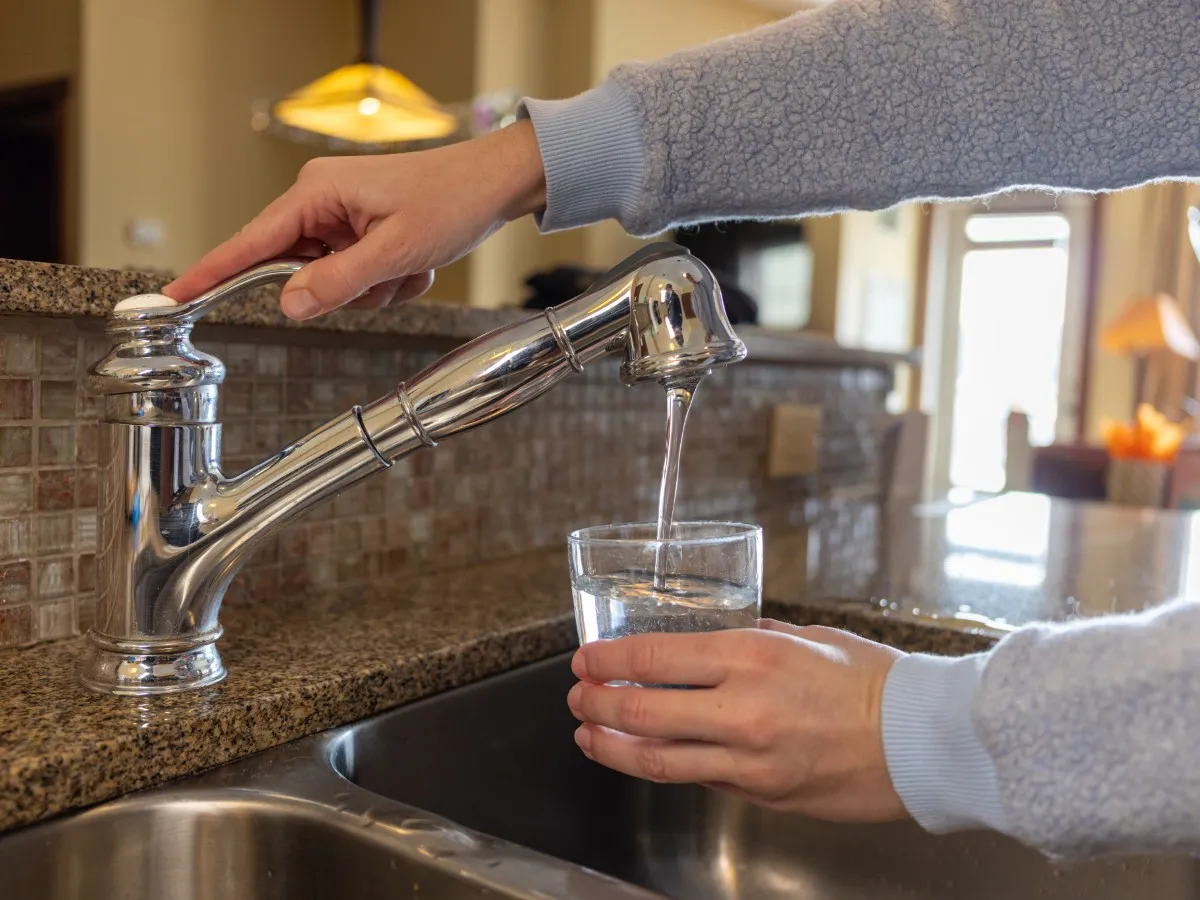
Every day, millions of people turn on their kitchen taps, expecting the water that flows out to be safe, clean, and free of invisible hazards. However, a quiet crisis is brewing beneath the surface of America’s drinking water infrastructure, highlighted by the Environmental Protection Agency’s recently released draft of its Sixth Unregulated Contaminant Monitoring Rule (UCMR 6). To the profound disappointment of scientists, public health advocates, and millions of families, this critical proposal completely excludes microplastics from the upcoming federal monitoring program, which will govern water system testing between 2028 and 2030. Because the EPA only updates this nationwide testing protocol once every five years, this glaring omission effectively delays any comprehensive national assessment of plastic particles in our drinking water until at least the next decade, unless the agency takes a dramatic step back and changes its trajectory before finalization. The decision has sparked widespread outrage, leaving many to wonder why a contaminant now found in everything from remote mountain rain to human breast milk is being treated as a secondary concern by the nation’s premier environmental regulator, especially when our daily exposure to these indestructible synthetic fragments is only increasing.
This regulatory hesitance stands in sharp and puzzling contrast to the political and medical conversations currently dominating our national landscape. The Trump administration has loudly championed its “Make America Healthy Again” (MAHA) initiative, which promises a radical focus on chronic illness prevention and environmental wellness, while simultaneously insisting that federal regulations remain anchored in validated, rigorously tested scientific processes. When EPA Administrator Lee Zeldin signed off on the proposed draft, Assistant Administrator for Water Jessica Kramer defended the decision by framing it as a commitment to “gold standard science,” arguing that national monitoring mandates must be restricted to contaminants for which laboratories already possess fully validated, highly standardized testing methods that yield precise and reliable data across thousands of municipal water systems. Yet, at the very same time, the administration has recognized the undeniable threat of plastic pollution by driving record-breaking federal investments into researching its impacts. Earlier this year, Health and Human Services Secretary Robert F. Kennedy Jr. unveiled a massive, $144 million federal research initiative dubbed STOMP (Systemic Targeting of MicroPlastics) under the Advanced Research Projects Agency for Health (ARPA-H), which aims to unravel the deep mysteries of how microplastics bypass our bodies’ defenses and damage human health. This paradox has left the public with a confusing double message: the federal government is spending hundreds of millions of dollars to study the horrific internal effects of microplastics, yet refusing to take the most basic, logical step of finding out how many of those same particles are flowingly entering our digestive systems through our drinking water pipes.
The EPA’s bypass of microplastics occurred despite an unprecedented, highly coordinated pressure campaign mounted by an alliance of states, high-profile political figures, and scientific experts. In November 2024, a massive coalition of 176 environmental and public health organizations formally petitioned the EPA to mandate microplastic monitoring, a movement that gained powerful momentum when the governors of New Jersey, Delaware, Illinois, Maryland, Wisconsin, Michigan, and Connecticut signed a joint letter echoing the demand. Led by New Jersey Attorney General Jennifer Davenport, this administrative push activated a rare and powerful legal mechanism under Section 1445 of the Safe Drinking Water Act, which legally compels the EPA to formally address petitions backed by seven or more state chief executives. Ultimately, 14 attorneys general and the representative for Washington, D.C., joined forces with more than 250 healthcare professionals to demand immediate federal baseline testing. When the draft proposal left microplastics out, the reaction from these frontline defenders was swift and blistering. Mary Grant, the Water Policy Director for Food and Water Watch, openly condemned the draft as “disgraceful,” noting that existing scientific literature has repeatedly illustrated the disastrous scope of the plastic crisis and that waiting another five years to gather basic occurrence data is a dangerous gamble with public health. Academics share this frustration; Dr. Vinka Oyanedel-Craver of the University of Rhode Island pointed out that while testing microplastics is indeed a complex task, the scientific community already knows more than enough to justify immediate national oversight, while Dr. Nathaniel Warner of Penn State University warned that without this baseline data, researchers will remain fundamentally blind when trying to calculate national exposure rates and correlate them with real-world illnesses.
To appreciate the disappointment surrounding the omission, one must understand what the EPA’s UCMR 6 proposal does choose to prioritize over the next five-year cycle. Under the proposed draft, municipal water utilities nationwide will be required to monitor for 30 specific unregulated chemical groups, which represents the agency’s primary tool for identifying emerging threats before they are officially capped by federal safety limits. The draft features a heavy and necessary focus on the notorious class of “forever chemicals” known as PFAS, alongside other emerging risks like trifluoroacetic acid (TFA), ultra-short-chain organofluorine compounds, industrial chemical byproducts, and various pesticide residues. These are contaminants that the EPA feels confident testing for because laboratories have spent years perfecting standardized, highly repeatable processes to measure them down to the part-per-trillion. While microplastics were kept off this mandatory active-monitoring list, they were placed on the draft of the Sixth Contaminant Candidate List (CCL 6), a secondary catalog of substances that the EPA recognizes as potential future hazards but does not actually require utilities to test for at the tap. To explain this strategic division and manage the resulting public outcry, the EPA has launched a 60-day public comment window and scheduled two informational webinars in August 2026, giving citizens, scientists, and local officials a brief, final opportunity to make their voices heard. The agency defends its cautious approach by insisting that forcing water treatment facilities to monitor for microplastics today would be setting them up for failure, arguing that there is currently no consensus-driven, validated protocol capable of delivering the strict quality control, accuracy, and precision needed for a massive, nationwide testing operation across communities of all sizes.
But while regulators debate the finer points of laboratory methodology, the physical reality of microplastics in our environment is moving at an alarming, compounding speed. Officially defined as plastic particles ranging from five millimeters—roughly the thickness of a standard pencil eraser—down to a microscopic single nanometer, these contaminants are categorized into two primary forms. Primary microplastics are intentionally manufactured at microscopic sizes for industrial purposes, medical applications, and cosmetics, whereas secondary microplastics are the tragic debris of our throwaway society, created as everyday items like water bottles, synthetic fabrics, single-use bags, and product packaging slowly disintegrate. These materials never truly biodegrade; instead, they fracture under the pressure of sunlight, wind, and water, crumbling into tinier and tinier pieces, eventually becoming nanoplastics that are completely invisible to the naked human eye. These particles enter our water cycle through shockingly common pathways: every time we run a load of synthetic laundry, millions of plastic microfibers are flushed into wastewater systems, while atmospheric winds carry airborne plastic dust to settle directly onto pristine drinking water reservoirs, and storm runoff washes the crumbled remains of roadside litter into our local rivers and lakes. While major, high-tech municipal water treatment plants can successfully filter out the largest plastic fragments, scientists warn that the smallest, most toxic nanoplastics are incredibly difficult to detect, let alone remove, leaving our household taps as a primary point of potential exposure.
This invisible invasion of our water systems has triggered a race against time in laboratories worldwide, where scientists are struggling to map out the catastrophic long-term consequences of chronic internal exposure to plastics. When we drink contaminated water, eat seafood, breathe in household dust, or wash our hands, these synthetic particles enter our bodies, where animal and laboratory models indicate they can trigger cellular inflammation, intense oxidative stress, immune system malfunctions, and severe disruptions to the delicate gut microbiome. A alarming review published in The Lancet Planetary Health compiled global findings to show that human exposure to microplastics and nanoplastics is closely correlated with a wide spectrum of severe struggles, including respiratory ailments, metabolic issues, neurological decline, and cardiovascular diseases, and while researchers caution that direct biological causation in living humans remains difficult to isolate, they emphasize that a lack of absolute clinical certainty must not be mistaken for safety. Compounding the physical danger of the plastic polymers themselves is the fact that microplastics act as microscopic chemical sponges; during manufacturing and environmental transit, they absorb hazardous additives like chemical stabilizers, heavy metals, plasticizers, and known carcinogens, while also collecting harmful pathogens that hitchhike on their surfaces directly into the human digestive tract. Ultimately, as public health pioneers point out, refusing to monitor our drinking water because our testing tools are not yet “perfect” is a self-defeating policy; without a comprehensive, national monitoring dataset, it is virtually impossible to locate hot spots, evaluate the effectiveness of local filtration systems, or build the epidemiological evidence required to protect future generations from this quiet, synthetic epidemic.