

On a humid summer afternoon on July 31, 1790, President George Washington sat at his desk and carefully dipped his quill, ink flowing onto a single, modest sheet of parchment. Beside him stood Attorney General Edmund Randolph and Secretary of State Thomas Jefferson—intellectual giants who, despite the overwhelming struggles of forging a shaky young republic, recognized that the true longevity of their experiment lay not in military power or vast landmasses, but in the creative fire of ordinary citizens. The document they signed was the very first United States patent, awarded to an unassuming Philadelphia inventor named Samuel Hopkins for discovering an “Improvement, not known or used before,” in the chemical processing of potash, an essential ingredient in agricultural fertilizers, soap, and candle making. For the next fourteen years, Hopkins was granted the exclusive right to construct, market, and profit from his discovery, establishing a revolutionary legal precedent that transformed intellectual property from a royal favor into a protected civil right. Unlike the class-bound monarchies of Europe, where patents were handed down as monopolies at the casual whim of a king to favored nobles, the newly ratified United States Constitution explicitly directed Congress to “promote the Progress of Science and useful Arts.” This was the first time in human history that a nation’s founding charter expressly guaranteed the protection of patents and copyrights as a fundamental right of the creator. Jefferson, an inventor himself, personally examined many early applications, viewing this system as a vital engine for national self-reliance. By democratizing the ownership of ideas, the founders unleashed an unprecedented torrent of grassroots creativity, transforming the simple, daily act of troubleshooting into a prestigious, nationwide pursuit of progress. This foundational promise established America as a unique sanctuary for dreamers, cementing the idea that any citizen, regardless of their family lineage, wealth, or proximity to power, could elevate their status through pure intellectual labor, forever tying corporate growth and personal liberty to the freedom to invent.
As the young nation pushed westward, its vast, untamed geography demanded tools that could conquer the harsh landscape, sparking a golden age of agricultural innovation that fundamentally transformed how humanity fed itself. Inventors like Cyrus McCormick, with his mechanical grain reaper patented in 1834, and John Deere, who engineered the self-scouring steel plow in 1837 to slice cleanly through the thick, notoriously stubborn prairie sod of the Midwest, turned farming from a grueling, hand-to-mouth struggle into an industrial miracle. Yet, this explosion of technical brilliance also carried deep, tragic human complexities, illustrating how technological breakthroughs can have massive, unforeseen societal consequences that rattle the core of human history. When Eli Whitney patented his mechanical cotton gin in 1794, his simple, crank-operated machine revolutionized the labor-intensive process of separating sticky seeds from short-staple cotton fibers, raising production speeds by a staggering fifty-fold. While Whitney envisioned his invention as a labor-saving device that would ease the burdens of workers, it instead made large-scale cotton cultivation extraordinarily profitable, driving a massive, voracious boom in the plantation economy of the American South. This sudden economic windfall drastically increased the demand for enslaved labor, tightening the brutal grip of the “peculiar institution” just as northern states were progressively moving to abolish slavery. Consequently, Whitney’s brilliant mechanical solution escalated the political, economic, and moral polarization between the North and South, ultimately driving the fragile union toward the catastrophic bloodshed of the Civil War. This darker dimension of the patent boom serves as a poignant reminder that human progress is rarely a straight line; the tools designed to liberate humanity can simultaneously entangle us in complicated moral crises, reminding us that every leap in efficiency carries profound social responsibilities that echo across generations.
Despite the profound injustices built into early American society, the inherently democratic nature of the patent system occasionally acted as a backdoor to freedom, dignity, and recognition for marginalized people who were otherwise excluded from the promises of the Constitution. In 1821, Thomas Jennings, a brilliantly successful tailor’s apprentice from New York City who had purchased his own freedom, became the first African American to successfully secure a patent for his innovative method of dry scouring—a pioneering dry-cleaning technique that made him a fortune, much of which he poured directly into funding the abolitionist movement. Jennings’ success opened a vital, inspiring pathway for other Black inventors who used their technical genius to permanently reshape the physical world around them. Sarah Boon became a pioneer of domestic modernization in 1892 when she patented the narrow, contoured wooden ironing board designed specifically to smooth the sleeves of women’s garments, a design that remains largely unchanged in households today. Similarly, Garrett Morgan, a self-educated entrepreneur, witnessed a horrific carriage accident on a busy street corner and went on to patent the three-position, amber-light traffic signal in 1923, an intuitive, lifesaving development that brought systematic order to chaotic urban transit. Another brilliant figure was Elijah McCoy, the son of formerly enslaved parents, who traveled to Scotland to study mechanical engineering only to be refused professional work upon returning to the United States due to racial prejudice; undeterred, McCoy earned dozens of patents for his self-regulating steam engine lubricators. His automatic devices were so vastly superior to the cheap, manual imitations of the era that seasoned engineers refused to purchase any locomotives that were not equipped with them, demanding only “the Real McCoy” and coining a phrase that stands to this day as a synonym for authentic perfection. These individuals proved that the spark of invention could not be suppressed by prejudice, using their patents to force a hostile society to acknowledge their humanity and intellect.
As the physical boundaries of the country expanded, American innovators increasingly turned their dynamic energy toward shrinking distance, defying gravity, and reshaping how human beings occupied physical space. Artist-turned-engineer Robert Fulton catalyzed this era of mobility when his commercial steamboat, the Clermont, began triumphantly churning up the Hudson River in 1807, proving that human commerce was no longer at the mercy of unpredictable winds or stubborn river currents. Fulton’s vessels soon colonized the mighty Mississippi, breathing economic life into the vast interior of the continent and transforming remote outpost towns into bustling, interconnected trade depots. On dry land, George Westinghouse patented his revolutionary automatic air brake system in 1862, which allowed roaring steam trains to stop safely and predictably, prompting a massive expansion of rail travel and enabling the rapid, secure transport of passengers and heavy goods across the Rockies. Meanwhile, Elisha Otis was busy reimagining the urban landscape; his invention of the fail-safe elevator brake in 1852 overcame the terrifying fear of falling cabs, making vertical cities possible and giving rise to the modern skyscraper. This ceaseless obsession with movement culminated in 1903 on the windswept dunes of Kitty Hawk, North Carolina, where the Wright brothers, two completely self-taught, bicycle-shop-owning brothers with no formal scientific degrees, achieved the first sustained, controlled flight of a powered aircraft. Rather than relying on brute force, Wilbur and Orville Wright meticulously constructed their own wind tunnel to master aerodynamic lift and control, illustrating the power of a disciplined, scientific mind. This egalitarian spirit was further democratized by Henry Ford, whose genius lay not in inventing the automobile itself, but in pioneering the revolutionary moving assembly line, which transformed a luxury toy for the ultra-wealthy into the rugged, affordable Model T that gave unparalleled mobility to the average family, forever shifting global culture onto wheels.
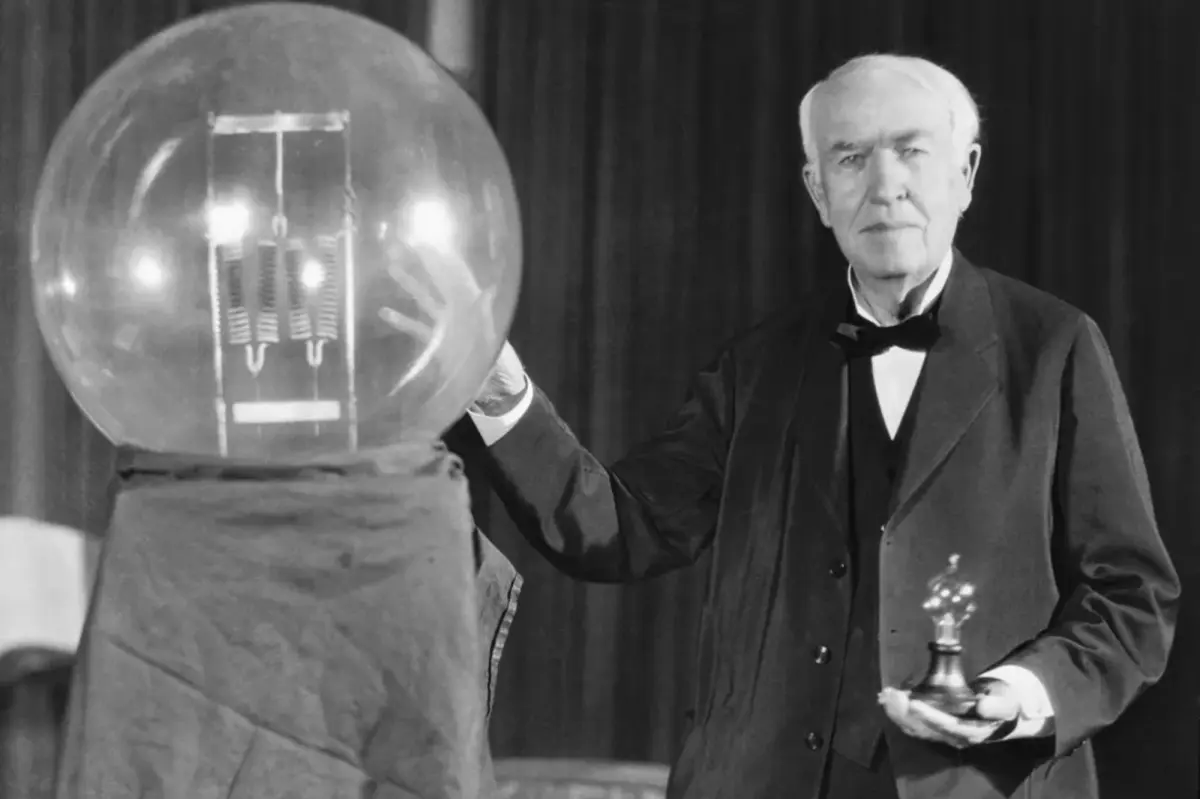
While some spent their lives manipulating steel and steam, other visionaries sought to conquer the far subtle and elusive domain of human communication, establishing the historical foundations for our modern, hyper-connected digital landscape. In 1840, Samuel Morse successfully patented a method that pulsed bursts of electricity across long copper wires, pairing this hardware with a beautiful, rhythmic binary language of dots and dashes that could compress days of travel into fractions of a second. These “lightning wires,” as Morse poetically described them, quickly stitched the sprawling nation together, but the enormous commercial stakes behind his invention dragged him into a grueling, decades-long legal odyssey to protect his patent rights, culminating in a bitter and controversial Supreme Court showdown in 1854. This dramatic theme of intellectual warfare repeated itself in 1876 when Alexander Graham Bell claimed the patent for the telephone, defeating a rival inventor who had filed a remarkably similar design on the very same afternoon, a bitter coincidence that sparked years of venomous litigation before Bell’s claims were finally vindicated. Perhaps no figure captured the obsessive, competitive spirit of this era more profoundly than Thomas Alva Edison, the famed “Wizard of Menlo Park,” who amassed more than a thousand patents, including the long-lasting incandescent lightbulb, the phonograph, and the motion-picture camera. Yet behind Edison’s public image of effortless genius was a highly pragmatic, relentlessly litigious businessman who spent massive fortunes employing armies of attorneys to wage brutal legal warfare against rival innovators like George Westinghouse and Nikola Tesla. This shift revealed a growing complexity in the culture of innovation, as the late nineteenth century became increasingly defined not just by the sweat of the laboratory, but by the calculated maneuvers of patent attorneys, demonstrating that the ownership of a breakthrough could be just as challenging, and sometimes as lucrative, as the act of creation itself.
Following the industrial triumphs of the early twentieth century and the massive collective achievements of World War II, the iconic archetype of the solitary, eccentric backyard inventor operating in a dusty workshop gradually faded, giving way to highly organized, corporate-sponsored research laboratories. In 1947, a brilliant team of physicists at Bell Laboratories synthesized decades of electrical science to invent the solid-state transistor, a tiny, elegant component crafted from silicon crystals that could manipulate electrical currents without the fragile, heat-producing vacuum tubes of the past. This subtle breakthrough sparked the explosive dawn of the Electronics Age, leading directly to the integrated circuit in 1959, which allowed engineers to pack millions of transistors onto a single, fingernail-sized piece of silicon, paving the way for the home computer revolution led by figures like Steve Jobs and Steve Wozniak in their humble garage in 1976. By the time Apple introduced the revolutionary iPhone in 2007—a sleek, single handheld device that synthesized over a century of developments in telecommunications, computing, and display technology—a single smartphone relied on more than 250,000 individual patents, illustrating a complex, highly defensive landscape of “patent thickets” that modern creators must painstakingly navigate. Today, as we stand on the precipice of a dizzying new epoch dominated by rapidly advancing generative artificial intelligence, we face a social and technical disruption every bit as profound as the steam engine or the cotton gin. AI has already begun to challenge our traditional, human-centric definitions of creativity, authorship, and intellectual property, raising urgent questions about who, or what, can truly claim the title of inventor. Yet, if the long, turbulent, and inspiring history of American innovation has taught us anything, it is that our laws and our societies possess an incredible, resilient capacity to adapt, ensuring that the restless human spirit of ingenuity will always find a way to illuminate the path forward.