


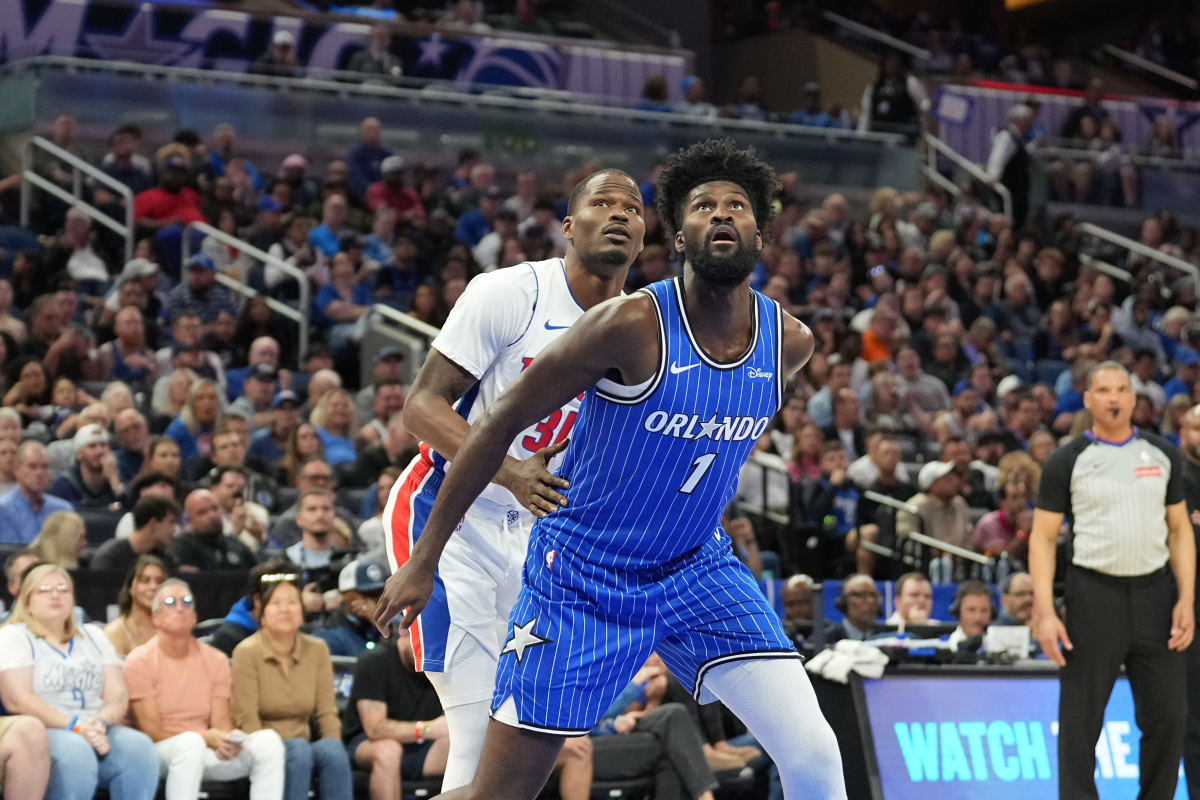
The Orlando Magic’s poignant decision on Saturday to waive veteran forward Jonathan Isaac marks the bittersweet conclusion of a nine-year journey that perfectly encapsulates both the romantic hope and the brutal realities of professional basketball. When the Magic selected Isaac as the sixth overall pick in the 2017 NBA draft, he was envisioned as the cornerstone of a new era in Central Florida—a towering, 6-foot-10 defensive phenom whose unmatched versatility and boundless athletic potential could effortlessly disrupt the league’s most potent offenses. For nearly a decade, the soft-spoken forward remained a steady, respected presence in Orlando, enduring coaching changes, front-office overhauls, and the slow, painful process of a franchise rebuilding itself from the ground up. Over time, he became the team’s longest-tenured player, serving as a vital bridge between the struggling squads of the late 2010s and the rising young contender the Magic have become today. Yet, despite his deep connection to the city and the organization’s immense investment in his development, the heavy burden of unrealized expectations ultimately broke the partnership. Waiving Isaac was not merely a routine roster adjustment; it was a deeply emotional and reluctant acknowledgment by the organization that the high-flying future they had once imagined together had finally run out of time.
At the center of Isaac’s career narrative is a prolonged, heartbreaking battle with his own body—a grueling series of injuries that would have mentally defeated a lesser athlete. The most devastating blow to his promising trajectory occurred when he suffered a torn left ACL, an injury so severe and complicated that its rehabilitation cost him back-to-back seasons in 2020-21 and 2021-22. For two agonizing years, while his peers were competing on national television and refining their skills, Isaac was confined to the isolation of training rooms, swimming pools, and physical therapy clinics, fighting a quiet, daily war just to regain the basic mechanics of running and jumping. He showed immense resilience in returning to the hardwood, but the injury gods were not done testing him. During the 2025-26 campaign, just as he was beginning to carve out a steady reserve role, Isaac suffered a severe left knee sprain in March that sidelined him for the final 17 games of the regular season. This unfortunate timing physically barred him from participating in the Magic’s highly anticipated first-round playoff battle against the top-seeded Detroit Pistons. For any elite athlete, the psychological torment of watching your teammates fight in the postseason from the bench, entirely powerless to impact the outcome, is a pain that runs much deeper than any physical injury.
Underneath the emotional weight of Isaac’s departure lies the cold, analytical business logic that relentlessly governs the modern National Basketball Association. In a league structured around strict salary caps, luxury tax aprons, and asset optimization, even the most beloved loyalty stories must eventually be weighed against a financial spreadsheet. Isaac was scheduled to earn a fully guaranteed $14.5 million for the upcoming 2026-27 season—a hefty price tag for a player whose durability remained a constant question mark. According to ESPN NBA insider Bobby Marks, the Magic front office was able to recoup a substantial $6.5 million in salary cap savings by making the difficult decision to waive him before a critical Sunday deadline. In the high-stakes environment of executive decision-making, where every dollar of cap space can be the difference between acquiring a game-changing free agent or being financially paralyzed, Orlando’s front office had to put sentimentality aside. The decision illustrates the painful dichotomy of professional sports: while the human heart wants to honor a player’s courage and longevity, the business mind must ruthlessly prioritize the overall financial health and flexibility of the franchise’s future.
As Isaac departs, his exit shines a spotlight on the dramatic transformation of the Orlando Magic’s roster, which has evolved into one of the most exciting young groups in the entire league. With Isaac’s departure, the honorary title of the team’s longest-tenured player officially passes to 29-year-old center Moritz Wagner, a fiery and passionate competitor who joined the squad midway through the 2020-21 season and has since become the emotional heartbeat of the locker room. The Magic no longer need to patiently wait for Isaac to reclaim his former glory because their frontcourt of the future has already arrived in spectacular fashion. The team is now spearheaded by the formidable tandem of Paolo Banchero and Franz Wagner, both of whom put together stellar campaigns last season by averaging over 20 points per game and proving they possess the star power to lead Orlando deep into the postseason. Backed by the reliable presence of physical center Wendell Carter Jr. and the rapid emergence of rookie contributor Tristan da Silva, the Magic’s frontcourt depth turned what was once a desperate reliance on Isaac’s defensive upside into a luxury they could simply afford to move on from.
Ultimately, the statistical reality of Isaac’s final season in Orlando highlights his transition from a projected franchise superstar to a highly specialized, short-burst defensive weapon. Over the course of the 2025-26 season, Isaac played in 52 games but logged a modest 10 minutes per contest, averaging 2.6 points and 2.5 rebounds—numbers that speak to a limited role designed to preserve his fragile lower body. Despite these modest figures, this parting of ways does not necessarily mean the final chapter of Isaac’s basketball journey has been written, nor does it completely close the door on his time in Orlando. If he clears waivers and enters the open agency market without finding a lucrative contract offer from another team, there remains a distinct, intriguing possibility that he could re-sign with the Magic on a much more modest, team-friendly veteran minimum contract. Such a scenario would allow him to continue mentoring the young roster in a reduced capacity, free from the heavy scrutiny and pressure that naturally accompanied his previous lottery-pick salary. For Isaac, this transition is a liberating opportunity to redefine himself on his own terms, stripped of the burdensome “what-ifs” that have followed him since 2017.
Jonathan Isaac’s journey in Orlando stands as a powerful testament to the fragile, unpredictable, and ultimately human nature of professional sports, where immense talent must always coexist with the physical vulnerability of the human body. He may not have met the sky-high statistical expectations of a number six overall draft pick, but his legacy among Orlando fans is firmly secured by his grace, his community involvement, and his unfaltering faith during years of relentless physical adversity. It is easy for critics to look at a box score and label a career based on missed games, but doing so ignores the incredible mental strength required to repeatedly rebuild a broken body and step back out onto the court. As the Magic look forward to a promising new era built around their youthful core, and Isaac stands at a career crossroads looking for a fresh start, both parties can move forward with immense mutual respect. Ultimately, his story is a poignant reminder that while professional basketball is a business of wins, losses, and salary caps, the human spirit that drives coaches, players, and fans to keep believing in the face of absolute adversity is what truly defines the spirit of the game.