




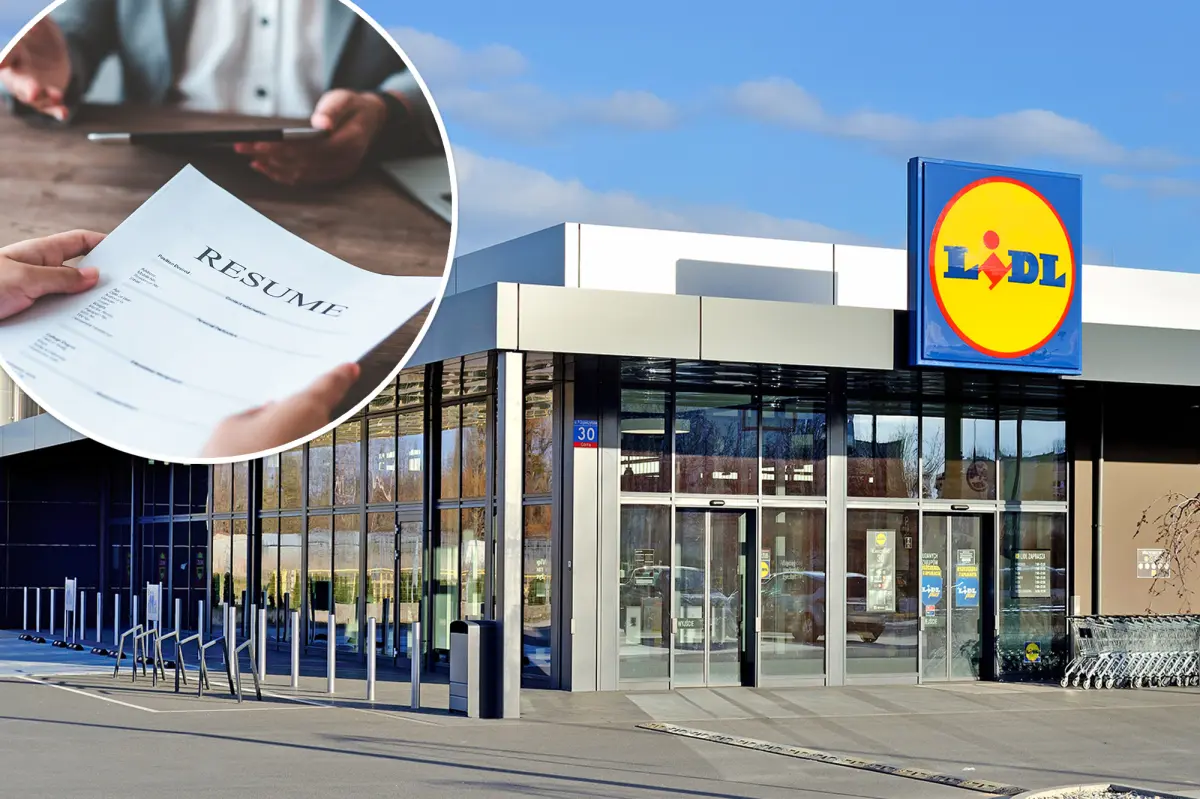
In today’s fast-paced, highly digitized job market, the process of finding employment has increasingly evolved into a sterile, exhausting ordeal dominated by automated screening algorithms and rigid standards of professional continuity. For individuals who have spent six months or more outside of the workforce, the traditional curriculum vitae (CV) often ceases to be a proud testament to their capabilities and instead becomes a source of profound anxiety, a glaring paper trail of gap-filled timelines that instantly disqualifies them in the eyes of automated applicant tracking systems. Recognizing the emotional toll, systemic isolation, and compounding difficulties associated with long-term unemployment, the European supermarket giant Lidl is launching a pioneering, deeply humanized recruitment strategy across the United Kingdom that aims to dismantle these invisible barriers. By explicitly reserving a significant portion of its vacancy interview slots for applicants who have been out of work for half a year or longer, the discount retailer is making a bold, empathetic bet: that a person’s worth, work ethic, and potential cannot be accurately measured by a piece of paper, and that a direct, face-to-face conversation is far more valuable than a flawless professional history. Under this radical scheme, eligible job seekers can entirely bypass the daunting, demoralizing process of traditional CV submission, stepping straight through the front door of the grocery chain to demonstrate their energy, enthusiasm, and character directly to hiring managers who are actively looking for reasons to say “yes” rather than excuses to filter them out. In doing so, Lidl is actively challenging the corporate status quo, demonstrating that human potential cannot be reduced to bullet points on a page, and opening a crucial door of opportunity for marginalized citizens. This compassionate shift in perspective acknowledges that behind every long-term unemployment statistic sits a real human being with a unique story, families to support, and a deep desire to contribute meaningfully to their community, representing a monumental departure from industry-standard recruitment practices that so often discard talent based on historical resume gaps alone.
To ensure this ambitious initiative translates into genuine, life-changing opportunities rather than high-minded corporate rhetoric, Lidl has structured a comprehensive, multi-tiered logistical framework designed to guide vulnerable candidates smoothly back into the workplace. Over the course of the next twelve months, the grocery giant will actively “ringfence”—or securely set aside—a dedicated percentage of its entry-level retail store roles specifically for individuals transitioning back into the labor market after prolonged absences. In tandem with these localized supermarket vacancies, the company is also opening up nearly 500 warehouse interview slots across its nationwide network of massive distribution centers, offering a wide array of physical and logistical career tracks for those who prefer dynamic, hands-on roles. Whether an individual is stocking shelves on the shop floor or operating machinery in a distribution center, every hire is met with patience, dedicated training, and respect. Crucially, Lidl is not expecting these applicants to navigate this high-stakes bridge back to employment entirely on their own; instead, the supermarket chain has forged an active, collaborative partnership with the British government’s Department for Work and Pensions (DWP). Through this strategic alliance, local job coaches and employment experts within the DWP will work directly alongside participants, providing them with targeted preparation, personalized coaching, mock interview practice, and the foundational self-assurance needed to succeed in their face-to-face evaluations. This collaborative ecosystem addresses one of the most persistent failures of contemporary social welfare: the tragic reality that simply telling a person to get a job is rarely enough if they lack the practical support systems, psychological encouragement, and tailored pathways necessary to cross the threshold of a modern corporate workplace. By replacing automated screening with a structured, empathetic process, Lidl is establishing a blueprint for how large-scale corporations can actively heal local economies, proving that investing in grassroots human potential pays dividends beyond basic productivity metrics.
The implementation of this localized recruitment pipeline arrives at a critical, deeply unsettling juncture for the United Kingdom’s domestic labor market, which has shown persistent, worrying signs of systemic vulnerability and structural decay. The Confederation of British Industry (CBI) recently issued a stark, sobering warning to the public, predicting that national employment indicators are highly likely to deteriorate further as businesses across the country continue to grapple with stagnant economic growth, high inflation, and rapidly climbing operational overheads. These macroeconomic anxieties are illustrated by recent data from the Office for National Statistics (ONS), which revealed that job vacancies across Britain have plunged to a five-year low of 707,000 open positions during the March to May period. This steep contraction in available work means that competition for even the most basic entry-level roles has intensified dramatically, leaving those with less-than-perfect resumes at an even greater structural disadvantage. Complicating matters further, the nation is facing a critical social emergency with more than one million young people aged 16 to 24 currently classified as NEET—not in education, employment, or training—a demographic crisis that threatens to leave an entire generation economically marginalized and socially disconnected. Concurrently, businesses are finding themselves caught in a difficult financial vice, squeezed by sharp increases to employer National Insurance contributions and statutory hikes in the National Living Wage, operational realities that have understandably made many mid-market employers highly risk-averse and hesitant to extend job offers to candidates who require additional training or onboarding support. In this fraught economic landscape, where traditional employment avenues have dried up and the cost-of-living crisis persists, Lidl’s willingness to absorb the risks of hiring the long-term unemployed represents an essential lifeline, offering structural stability, essential financial support, and newfound confidence at a time when the wider macroeconomic market continues to pull back.
At the heart of this corporate endeavor is a profound philosophical realization: that secure, meaningful employment is not merely a financial transaction, but a foundational pillar of human dignity, mental health, and community stability. Highlighting this perspective, Stephanie Rogers, the Chief People Officer for Lidl Great Britain, emphasized in an official company briefing that unemployment is a direct, heavy burden affecting vulnerable communities right across the nation, compounding the daily economic pressures and anxieties that countless families are already struggling to manage. Rogers articulated a fundamental truth of the modern job hunt, noting that for those facing steep societal, physical, or personal barriers, simply getting that first foot through the door is often the most difficult obstacle to overcome—a barrier made worse by months of automated rejection emails. Her sentiments are strongly echoed by the UK’s newly appointed Employment Minister, Dame Diana Johnson, who has lauded the supermarket’s proactive intervention as a vital, transformative bridge helping people break free from the cycle of systemic dependency. Minister Johnson remarked that the initiative plays a critical national role by actively transitioning citizens from state welfare back into the active workforce, providing individuals who have been sidelined for months, or even years, with a clear, predictable, and supportive pathway back into productive society. This policy serves as a powerful model of public-private cooperation that addresses the root causes of unemployment rather than simply treating its outward symptoms. Both corporate and political leaders are acknowledging that the solution to long-term unemployment requires empathy, deliberate policy shifts, and a collective willingness to look past paper-thin historical gaps to see the real, untapped human potential and raw talent of the individual standing before them, validating their inherent drive to work, survive, and ultimately thrive.
This commitment to societal welfare coincides with a period of massive physical expansion and commercial success for Lidl within the United Kingdom, proving that corporate conscience and profitability do not have to be mutually exclusive. Since first establishing its presence in the competitive British retail sector back in 1994, the German-headquartered company has grown exponentially, now operating a vast network of more than 1,000 stores nationwide and providing employment to a dedicated, diverse workforce of over 35,000 people. Central to Lidl’s business model is a simple yet powerful mission: to deliver high-quality, ethically produced everyday products at the lowest possible prices, a feat they achieve by heavily investing in domestic supply chains, with more than two-thirds of their extensive inventory sourced directly from British farmers and local suppliers. However, their contribution to British society extends even deeper through a significant £50,000 donation to the esteemed homelessness charity, Standing Tall. This generous financial contribution follows a highly successful collaborative pilot program conducted last year, which focused on connecting individuals experiencing severe housing instability and homelessness directly with stable, supportive, and well-paying retail jobs inside Lidl stores. The success of this pilot lies in understanding that housing and employment are deeply interconnected; one cannot easily maintain a job without a stable place to sleep, nor secure a stable home without dependable income. By expanding this partnership, Lidl aims to lift more unhoused people out of poverty over the coming year, providing them with the steady income, daily structure, and social connection that only secure employment can bring. This multi-layered approach to corporate social responsibility highlights a major business that views itself not merely as a commercial entity extracting profit from the communities it occupies, but as an active, nurturing neighbor dedicated to building a stronger, more inclusive, and resilient society for everyone.
Ultimately, what elevates Lidl’s recruitment initiative from a simple public relations exercise to a truly transformative, life-altering program is the substantial financial dignity and tangible support systems extended to these new hires from their very first day on the job. Recognizing that securing a position is only half the battle during an ongoing cost-of-living crisis, the supermarket chain has made sure that these entry-level, non-CV roles are backed by some of the most competitive starting compensation rates found anywhere in the retail sector. New employees will begin on an industry-leading wage of £13.45 per hour nationwide, a rate that represents a significant premium over many high street competitors and automatically scales up to £14.45 per hour as workers generate length of service and gain experience with the brand. Beyond this generous hourly pay, which provides immediate, life-stabilizing economic relief, employees will also have direct access to a robust, holistic suite of wellness benefits, including substantial instore staff discounts, comprehensive mental and physical health support systems, and specialized professional development resources designed to foster long-term upward mobility. As this initiative rolls out across the United Kingdom, global industry observers—including in the United States, where job seekers face their own sets of economic hurdles and frustrating automated hiring biases—are watching closely to see if this human-centric model will expand internationally. In an increasingly automated world where human interaction is constantly being replaced by lifeless digital interfaces, Lidl’s refreshing focus on direct, human-to-human engagement reminds us that the primary asset of any economy is, and always will be, its people. By treating applicants as whole human beings rather than data points, Lidl is setting a gold standard for compassionate employment, proving that when you remove barriers and invest in people, you build a loyal, productive workforce ready to face the future with pride.