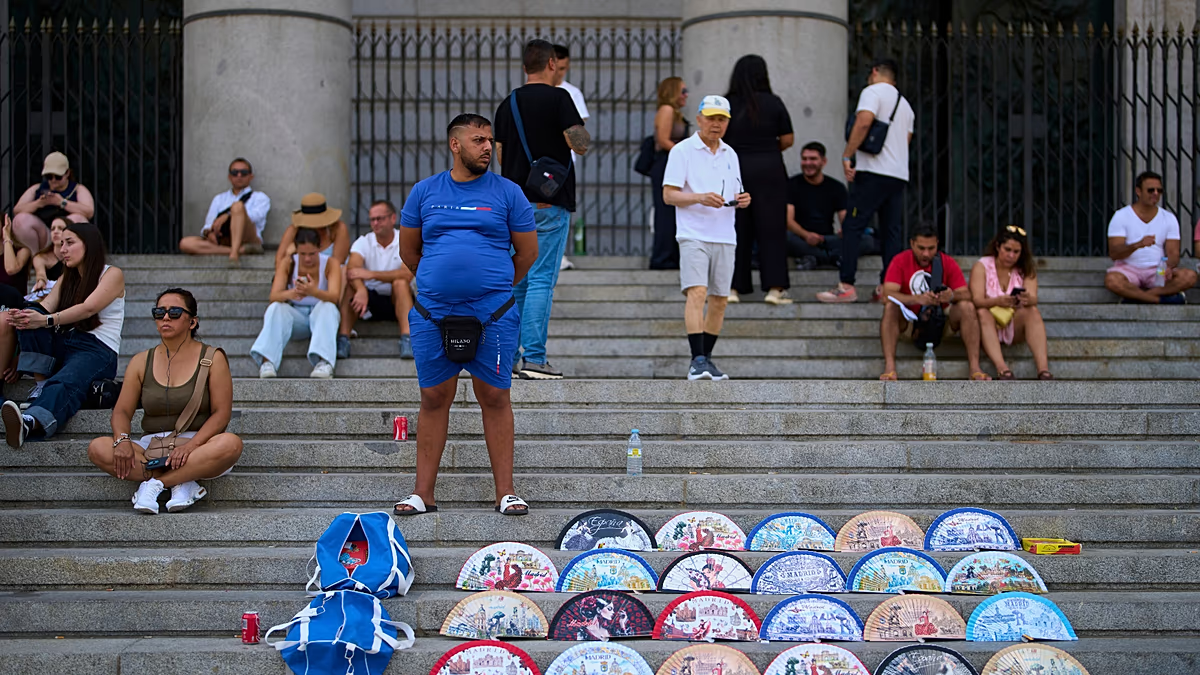



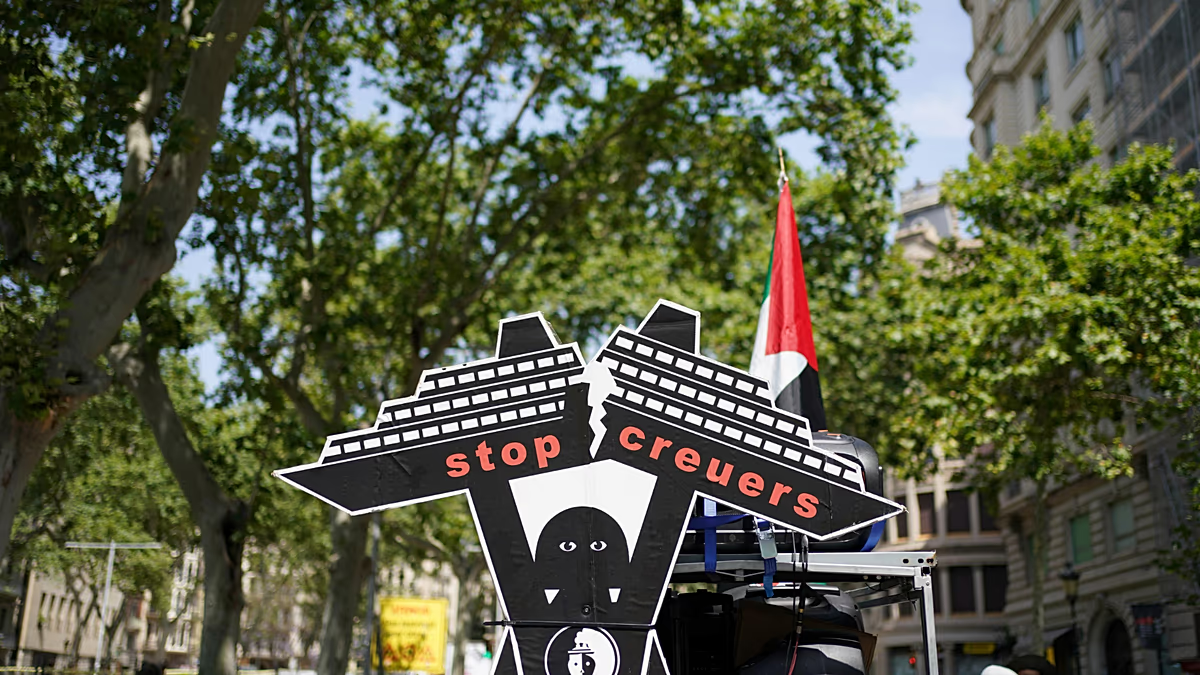
Barcelona, a city celebrated globally for its whimsical Antoni Gaudí architecture, sun-drenched Mediterranean beaches, and the irrepressible energy of its historic neighborhoods, is currently navigating a profound internal identity crisis. For years, the romantic streets of the Catalan capital have felt less like a lived-in neighborhood and more like an overcapacity amusement park, leaving local residents to contend with skyrocketing rents, overcrowded public squares, and the constant hum of rolling suitcases. In a direct and passionate bid to reclaim their city from this tide of overtourism, municipal politicians in Barcelona have rallied behind a bold, highly debated proposal: a dramatic hike in the tourist tax targeted specifically at short-stay cruise ship passengers. This major policy initiative has successfully united various political parties within the Barcelona City Council, who are collective in their belief that the current fiscal framework does not do enough to mitigate the strain placed on the city. However, before this proposal can have the teeth of law, it must secure approval from the regional Parliament of Catalonia, which holds the ultimate legislative authority. If signed off, the new law would see the current daily fee nearly triple, raising the fiscal barrier to entry from €11 to a robust €30 per day, indicating a stark shift in how the city values its temporary visitors.
The mechanics of this proposed tax increase reveal a highly calculated strategy designed to combat a very specific type of traveler, rather than tourism as a whole. Under the current system, cruise ship passengers making short-term calls pay an €11 fee, which is comprised of a €5 municipal surcharge and a €6 regional levy. The proposed €30 daily tax would specifically target cruise liners that dock in Barcelona’s harbor for less than 12 hours, a category of travel often referred to by local critics as “flash tourism.” These hit-and-run visits are highly controversial among residents and local business owners alike, who argue that these fleeting visitors put an immense strain on public infrastructure—congesting transit networks, overcrowding historical sites, and leaving behind literal tons of waste—without leaving any meaningful economic footprint. Because these travelers sleep and eat their primary meals aboard their luxury vessels, they rarely patronize local hotels or high-end restaurants. Conversely, itineraries that officially begin or end in Barcelona—known within the maritime industry as “homeports”—would remain entirely exempt from this steep tax increase. This deliberate distinction is rooted in economic pragmatism, as homeport travelers are far more likely to book multiple nights in local accommodations, dine extensively at Catalan taverns, utilize regional transport, and spend money in small boutiques, thereby truly feeding the local economy rather than just consuming its public spaces.
Within the grand halls of City Council, the debate has evolved from simple economics into a profound philosophical discussion about what the tax hike is ultimately designed to achieve. Many left-wing policymakers, most notably Marc Serra of the Barcelona en Comú (BComú) party, have been vocal in their insistence that this measure must not be treated as a cynical, lucrative cash grab or an extra revenue stream to quietly pad municipal coffers. Instead, Serra and his colleagues argue that the tax must function as an active, deliberate psychological and financial deterrent to send an unequivocal message to global cruise operators regarding the boundaries Barcelona expects them to respect. Some factions within the council are pushing for even more radical interventions, such as implementing a legally binding, hard cap on the total number of cruise passengers permitted to disembark in the city annually, though council officials admit this is a far more complex legal hurdle to navigate. Peak-season statistics demonstrate why tensions have reached a boiling point: cruise passengers currently constitute a heavy 7.5 percent of the city’s daily visitors during the busiest months, yet they spend an average of just 5.7 hours on land. This fleeting window of time leaves these visitors with barely enough time to truly appreciate Catalonia’s rich cultural tapestry, transforming their visit into a rushed, transactional exercise that leaves locals feeling increasingly like background actors in a living theme park.
Unsurprisingly, this aggressive proposal has triggered a fierce backlash from major representatives of the global travel and hospitality sectors, who warn that the city is playing a risky game of economic chicken. Leading the charge against the policy is the World Travel & Tourism Council (WTTC), a powerful global organization representing the voice of the private travel sector. Gloria Guevara, the President and CEO of the WTTC, has publicly expressed deep concern over the proposal, warning that a sudden, heavy tax hike could place Barcelona at a severe competitive disadvantage compared to other major Mediterranean ports. The cruise industry is famously agile; if docking in Barcelona becomes too financially prohibitive or politically hostile, cruise lines can easily adjust their shipping routes to favor rival coastal hubs like Marseille, Genoa, Valencia, or Civitavecchia. Guevara emphasizes that historical data gathered from other destinations globally proves that sharp, unexpected fee increases rarely yield the ideal social outcomes policymakers hope for. Instead of discouraging crowds, she argues, the increased cost would likely compress visitor spending ashore, prompting tourists to tighten their wallets and skip dining at independent cafes or buying artisanal souvenirs, thereby directly harming the local merchants the tax is ostensibly designed to protect.
To fully appreciate the high stakes of this policy debate, one must look closely at the massive economic scale of Barcelona’s cruise sector, which is widely considered one of the crown jewels of the Mediterranean maritime economy. The city is not merely a scenic stop on a cruise map; it is one of the world’s leading homeports, welcoming roughly four million passengers to its docks each year. According to data highlighted by the WTTC, homeport passengers spend an impressive average of €255 per person during their stays in Barcelona, a spending level that ranks among the highest in the global travel industry. This constant influx of high-value travelers breathes life into diverse sectors of the local economy, supporting hospitality workers, taxi driver families, and independent tour guides. Additionally, the direct fiscal contributions of the cruise industry are monumental; in 2024 alone, the sector poured €11.9 million in tax revenue directly into the Barcelona City Council’s accounts. Proponents of the cruise industry warn that disrupting this delicate economic ecosystem could trigger painful, unintended ripple effects throughout the region, threatening thousands of local livelihoods and stripping the municipal government of essential funds used to maintain public infrastructure and services.
Ultimately, the high-stakes confrontation unfolding on the docks of Barcelona is a vivid microcosm of a much larger, global paradigm shift in how modern societies view tourism in the twenty-first century. From the canals of Venice to the historic historic core of Amsterdam, beloved hotspots around the world are desperately attempting to navigate the delicate tightrope between economic dependency and community survival. Barcelona’s aggressive tax proposal represents an ambitious, albeit highly controversial, social experiment in destination management—a bold statement that a city is not a product to be endlessly consumed, but a shared home that must be protected. Whether the Parliament of Catalonia ultimately signs this proposal into law or bends to the economic warnings of global commerce, the debate itself has dramatically redefined the conversation. It serves as a powerful reminder that the future of travel cannot rely on unchecked growth and volume, but must instead prioritize sustainable harmony, ensuring that the beautiful places we dream of visiting remain vibrant, livable homes for the people who reside there.