


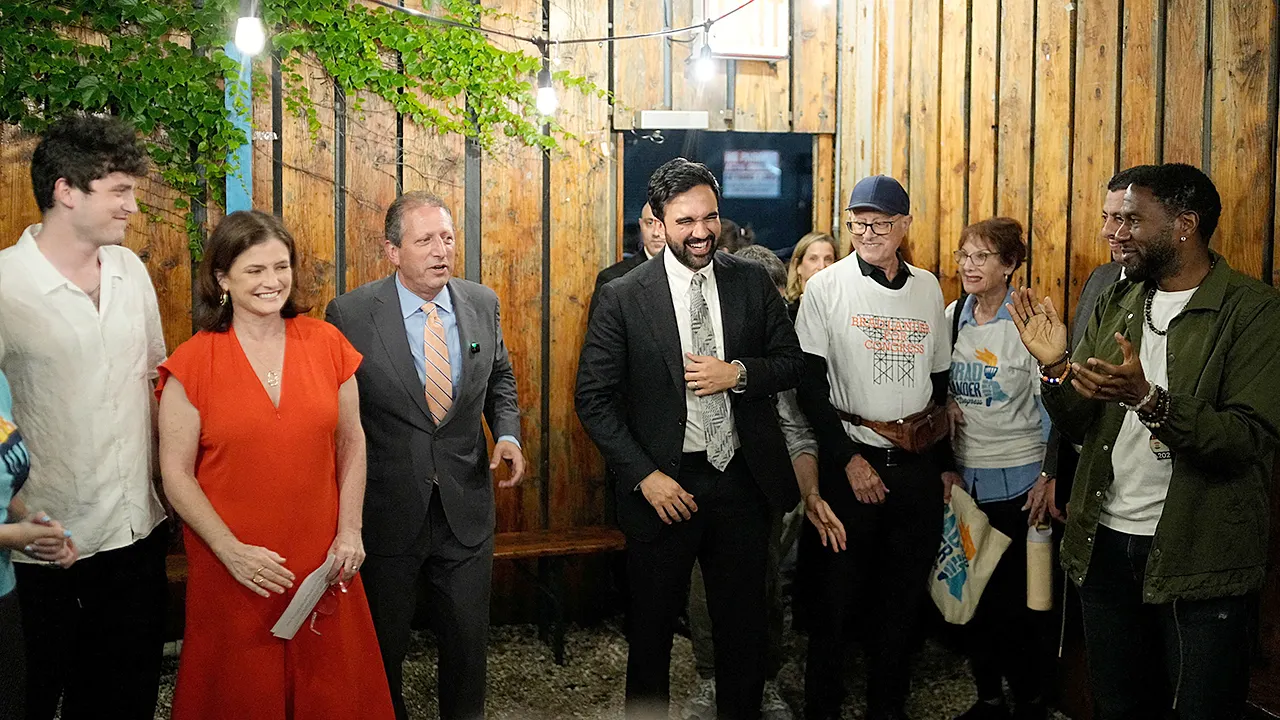
The modern American political landscape is undergoing a profound and highly visible seismic shift, and nowhere is this intense ideological tug-of-war more apparent than in the heart of New York’s Democratic establishment, where a powerful progressive wave recently swept through primary elections and left party insiders deeply rattled. To start your morning, it is essential to understand that this grassroots surge is not merely a localized phenomenon but a signal of a fundamental realignment in voter sentiment that is actively challenging centrist strongholds across the nation. At the vanguard of this movement is Representative Alexandria Ocasio-Cortez, who effortlessly dismantled a heavily funded primary challenge from a Wall Street adversary, demonstrating the enduring strength of her grassroots coalition and solidifying her status as an untouchable force in modern progressive politics. Naturally, this crushing victory has supercharged national discussions and speculation regarding her potential 2028 presidential aspirations, an ambitious path that has veteran Democratic campaign strategists and traditional party power brokers deeply divided. A seasoned duo of Democratic insiders has already issued a sobering and brutal verdict on her national viability, arguing that her polarizing political identity and left-wing policies could ultimately alienate moderate voters in crucial swing states when the stakes are at their highest. This internal party tension and the high-stakes pressure of the spotlight are further exacerbated by the volatile nature of some progressive candidates, exemplified recently by a New York socialist who abruptly walked out of a live radio interview when pressed about past controversial social media posts. As the national Democratic Party attempts to navigate these internal ideological rifts, party leaders must find a way to reconcile the uncompromising moral fervor of their furthest-left members with the practical, pragmatic realities of winning over a broader, more moderate American electorate that feels increasingly alienated by partisan extremes on both sides of the aisle.
At the same time, the fundamental obligations of governance—specifically public safety, national security, and the rule of law—remain at the forefront of the national consciousness as federal and local authorities grapple with complex crises. On the southern border, the United States Border Patrol has shattered a historic, 102-year staffing record by deploying 21,471 active-duty agents to secure the nation’s boundaries, with aggressive plans already in place to recruit and deploy even more personnel in the coming months. This massive surge in border security resources comes at a crucial time, mirroring federal efforts elsewhere to curb organized crime and rampant exploitation. In a major triumph for federal law enforcement, prosecutors recently executed a massive healthcare crackdown, netting several hospice operators and pharmacy schemers who were allegedly involved in a predatory taxpayer rip-off scheme designed to divert critical medical resources for personal gain. Meanwhile, local communities are dealing with their own tragic reminders of the fragility of safety, exemplified by a heartbreaking incident in which a recently paroled man allegedly set fire to a hotel serving as a temporary homeless shelter, claiming six innocent lives and leaving a community searching for answers. In Florida, deputies executed a chilling rescue after a man allegedly kidnapped a teenager and hid her inside a clothes dryer, providing a stark reminder of the everyday dangers lurking in quiet neighborhoods and the heroic efforts required of local law enforcement to protect the vulnerable. Simultaneously, forensic investigators in a rural area are painstakingly excavating a ranch in hopes of unearthing long-buried answers to a decades-old serial murder case, proving that the pursuit of justice is tireless and never truly sleeps, even as Congress attempts to alleviate broader societal stressors by passing the largest federal housing overhaul package in decades to help stabilize vulnerable families.
Beyond the realms of structural policy and active law enforcement lies a deeply divided cultural landscape where personal values, religious beliefs, and medical practices are constantly being litigated in both the public square and the halls of government. A recent and highly detailed report has exposed a significant, hot-button controversy surrounding reproductive healthcare, revealing that nearly 330,000 medical abortion pills have been shipped directly into conservative, anti-abortion red states under the protection of progressive blue state “shield laws” that legally insulate out-of-state medical providers from prosecution. This mail-order loophole has ignited a furious legal and ethical debate across the country, highlighting the dramatic limitations of state-level abortion bans in our modern, digitally interconnected age and setting up an inevitable constitutional showdown over interstate commerce, medical sovereignty, and federal authority. This cultural friction is further reflected in our political discourse, where a progressive Senate hopeful in Texas found himself caught in a massive public relations firestorm after audio emerged of him candidly expressing a deep dislike for Christianity during an appearance on a progressive podcast. In a state like Texas, where faith, family, and religious community are deeply intertwined for millions of everyday voters, such dismissive remarks have raised serious questions about his electoral viability and his ability to build a broad coalition, illustrating the steep political cost of alienating traditional religious demographics. As Americans struggle to navigate these shifting moral boundaries, the persistent tension between modern secular progression and deeply rooted religious values continues to define our social fabric, proving that the battles being fought today are not merely about economic policies or political power, but about the very cultural identity of the nation. To combat some of these deep-seated anxieties, communities are looking toward structural fixes, yet the persistent divide over lifestyle, religion, and bodily autonomy suggests that legislative solutions alone cannot easily heal the deep ideological fractures that run through our neighborhoods.
While national cultural debates often dominate the headlines, some of the most impactful changes are quietly taking place within our educational institutions and public budget offices, where active reformers are working desperately to ensure financial accountability and academic success for the next generation. Under the diligent leadership of Linda McMahon, a massive federal crackdown targeting the exploitation of “ghost students”—fictitious or truant individuals enrolled in programs solely to collect federal financial aid without actually attending classes—is projected to save hard-working American taxpayers well over a billion dollars. This long-overdue auditing effort represents a major victory for fiscal responsibility, proving that rigorous oversight can dismantle systemic waste and return hard-earned dollars to the public treasury where they can be utilized far more effectively. Meanwhile, at the state level, a parallel revolution in local education is currently unfolding in Arkansas, where student test scores have remarkably soared following the implementation of expansive, choice-based school voucher reforms. These highly successful educational initiatives, which allow state funding to directly follow students to the alternative and private schools of their families’ choosing, were achieved despite fierce, protracted campaigns from powerful teachers’ unions who fought aggressively to kill the legislation. As noted by legal experts and scholars like Jonathan Turley, the tangible academic improvements seen in Arkansas serve as a powerful testament to the benefits of educational competition, challenging the long-held monopoly of traditional school districts. By shifting the focus of education policy toward individual student outcomes rather than protecting entrenched bureaucratic systems, these financial and academic reforms are redrawing the blueprint for how we prepare the young minds of today for a highly competitive world. These initiatives reveal a growing public appetite for disrupting outdated, sluggish government models in favor of streamlined, outcome-based programs that prioritize the well-being of families over the self-preservation of administrative systems.
The world of media, entertainment, and global diplomacy is similarly reflecting these deep societal tensions, as public figures and international bodies navigate an increasingly polarized and often hostile cultural landscape. Beloved television icon Kelsey Grammer recently made waves by publicly offering heartfelt prayers for his critics, whom he described as being “consumed by hatred” amid growing polarization in the entertainment industry and public spaces like the Washington Reflecting Pool. Grammer’s call for grace, divine intervention, and mutual respect stands as a rare and incredibly refreshing plea for civility in an era where digital public discourse is often defined by anger, cancel culture, and division. In another corner of the media universe, the resilient, recently laid-off staff of Stephen Colbert’s axed “Late Show” spin-off has launched a highly creative, do-it-yourself bid for an Emmy Award, turning a sudden corporate cancellation into an inspiring story of professional perseverance and independent creative defiance. Beyond the distracting glitter of Hollywood, serious geopolitical and scientific questions are forcing their way to the forefront of national policy, as evidenced by a growing coalition of global leaders offering new and significant backing for Donald Trump’s strategic and demanding vision for the future of the NATO alliance. Simultaneously, national security experts like retired Lt. Col. Robert Maginnis are urging the federal government to aggressively investigate lingering claims surrounding Unidentified Anomalous Phenomena (UAPs), warning that uncovering the truth behind these mysterious aerial sightings is only the beginning of safeguarding our sovereign airspace. Even the intimate, personal dramas of global figures continue to captivate the public, with royal experts noting a deepening rift within the British royal family as Prince Harry plans a high-stakes, tense trip back to the United Kingdom with his young children, Archie and Lilibet, proving that family fractures remain a universal pain. This ongoing estrangement serves as a poignant reminder that under the immense pressure of public life, fame, and royal duty, the basic human struggle to find belonging, reconciliation, and internal peace remains a universal battle that transcends borders, titles, and social standings.
Finally, as we look to the ground level of daily life, everyday Americans are navigating a complex and demanding mix of persistent economic anxieties, technological revolutions, and the simple, unifying joys found in sports and local culture. The ongoing struggle with rising inflation has hit home directly at the grocery store and local restaurants, leaving shoppers experiencing intense sticker shock over premium seafood favorites that once seemed affordable but now command eye-popping prices, such as a popular delicacy hitting an unprecedented $120 per pound before experiencing yet another dramatic price hike. Fortunately, even amidst these daily financial stressors, sports continue to provide a welcome, dramatic, and exhilarating escape from reality, as exemplified by the Philadelphia Phillies, who, while down to their very last strike, produced a legendary and shocking eight-run ninth-inning rally to stun the Washington Nationals on the road in a game that baseball fans will talk about for years. Looking toward the horizon, our collective future is being rapidly shaped by evolving technology, as massive, energy-guzzling digital data centers quickly emerge as the next major political and environmental flashpoint, forcing local communities to balance the insatiable demands of our virtual world with grid reliability. Whether you are testing your historical knowledge with the weekly American Culture Quiz, tuning into the latest FOX Nation specials celebrating America’s upcoming 250th anniversary with historical programs like “The Patriot War,” or simply checking the local weather forecast to plan your morning commute, these diverse stories remind us of our shared resilience. In a world defined by constant change, economic hurdles, and political debate, it is these shared human experiences—the thrill of an unlikely sporting comeback, the pursuit of scientific truth, and the simple desire to build a stable home—that keep us moving forward together, looking toward tomorrow with hope. By embracing the diverse, daily tapestry of news—from political shakeups to local triumphs—we are better equipped to face each morning with the clarity, empathy, and strength needed to shape a brighter future for the communities we call home.