

The absolute devastation of losing a child is a quiet, suffocating grief that rarely aligns with the loud, public circus of the modern justice system. For Jeff Metcalf, this unbearable reality became his everyday life in April 2025, when his seventeen-year-old son, Austin, went to a high school track meet in Frisco, Texas, and never came home. Austin was young, full of future potential, and surrounded by peers when his life was violently cut short by Karmelo Anthony, a peer who was later convicted of his murder. The swiftness of the violence was shocking, leaving a family in perpetual mourning and a community demand for answers. Yet, as the state sought to hold the killer accountable, the grieving father was forced to navigate the deeply painful reality of his son’s final, terrifying moments being laid bare for the entire world to see. Every dynamic of the crime became fodder for public consumption, forcing Jeff to confront not only the physical absence of his child but also the sterile, cold clinicalization of Austin’s death. The human heart is not designed to withstand the sight of a child’s fatal injuries digitized and published online, and Jeff Metcalf’s protective instincts as a father remained fiercely active even after Austin’s passing, prompting him to shield his eyes from the horrific visual evidence that the public could freely access.
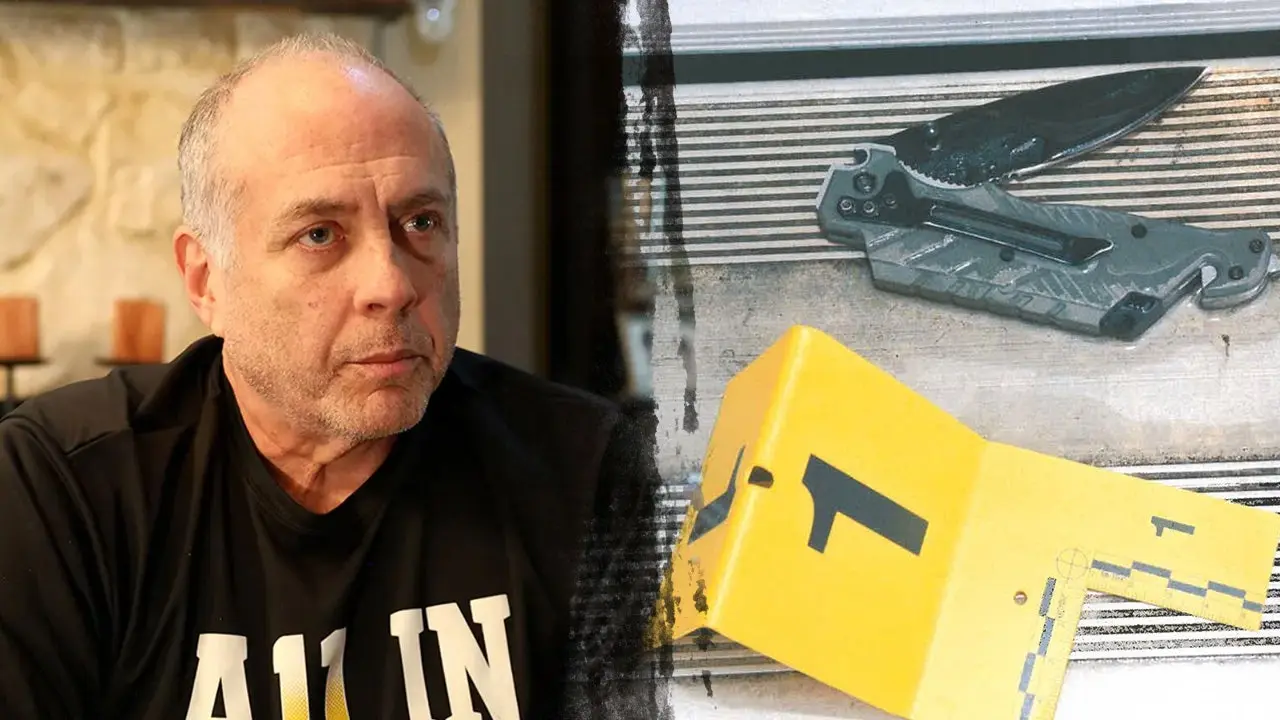
This tension between public information and private torment defines the ongoing aftermath of the high-profile trial that ultimately saw Karmelo Anthony sentenced to thirty-five years in prison. Following the conviction, Collin County Courts made the graphic evidence from the trial accessible to the public, a decision that forced the Metcalf family to grapple with a second wave of trauma. When asked about the public availability of these graphic images and audio, Jeff Metcalf expressed a profound weariness, explaining that during the most graphic portions of the trial testimony, he and his family had to be escorted out of the courtroom to preserve what little emotional peace they had left. While he acknowledges the legal reality that court records are public domain, he deeply questions the moral integrity of distributing such intimate, devastating imagery to the masses. Jeff points out that the sheer brutality of the chest wound—which was not a simple puncture but a deliberate, violent stab, twist, and pull measuring two inches in length—had no bearing on the actual public interest of the trials, but serves only as a sensationalized centerpiece for onlookers. For a father, seeing his son reduced to a medical diagram of trauma is an indignity that no system of justice can ever truly justify or heal.
Adding to the family’s profound emotional burden is the defense narrative that emerged during the trial, which attempted to recast the murderer as a victim acting in self-defense. Karmelo Anthony’s legal team painted a picture of a chaotic, threatening environment, claiming their client was forced to use lethal force to protect himself from an impending assault. This version of events, however, is a distortion of reality that Jeff Metcalf has firmly and consistently refuted using the actual sequence of events under the track meet tent. Jeff emphasizes that there was no escalating brawl, no exchange of punches, and absolutely no gang environment cornering Anthony before the attack. Instead, the violence occurred with a horrifying, quiet speed; Austin was attacked so quickly that the onlookers sitting nearby only stood up after the stabbing occurred, startled by the suddenness of the tragedy. For the Metcalfs, watching the defense attempt to rewrite the narrative of Austin’s final moments to save his killer from prison was a painful exercise in revisionist history, forcing them to repeatedly defend the character and memory of their teenage son against baseless courtroom insinuations.
The legal saga, however, did not conclude with the thirty-five-year prison sentence, as the battle has now shifted aggressively into the appellate courts. In a surprising turn of events just weeks after the sentencing, a powerhouse coalition of civil rights and criminal defense lawyers mobilized to appeal Anthony’s conviction. The court-appointed appellate attorney, Lara Bracamonte Davila, was substituted out of the case to make room for a team of legal heavyweights working entirely pro bono. This formidable group includes veteran criminal defense attorney Russell Wilson II, Texas NAACP President Gary Bledsoe, Michael L. Ware, Sean Dardia, Justin A. Moore, and Brooke Cluse, who represents the prominent national firm Ben Crump Law. The sudden involvement of such highly influential legal figures has transformed what was initially a local tragedy into a national civil rights battleground. For the Metcalf family, this massive escalation of legal resources on behalf of the convicted murderer feels like an overwhelming wave, threatening to overshadow the simple, devastating fact of Austin’s death with broader systemic debates.
This influx of elite, pro bono legal talent creates a deeply painful paradox for the Metcalf family, who must watch a major, well-funded advocacy campaign rally behind the person who took their son’s life. Despite the extensive resources of the “Stand with Karmelo Coalition” and the participation of nationally recognized legal figures, Anthony continues to claim in official court records that he is entirely “penniless” and lacks the personal funds to support his appeal. To the grieving family, this assertion feels incredibly disingenuous, as the sheer scale of the legal machinery currently fighting to overturn Anthony’s thirty-five-year sentence operates with the financial and logistical support of significant donors and influential organizations. This stark asymmetry leaves the Metcalfs feeling isolated in their grief, pitted against a highly coordinated public relations and legal apparatus designed to minimize Anthony’s actions. The struggle of a single family trying to preserve the memory of their murdered teenager against a powerful, nationally backed legal defense highlights the stark inequalities that often emerge when a local crime becomes a political and social cause celebre.
Ultimately, the Metcalfs are left trying to piece their shattered lives back together while the legal system threatens to reopen their deepest wounds through the appeals process. For Jeff Metcalf, moving forward does not mean forgetting Austin, but rather fighting to keep the focus of this entire tragedy on the beautiful seventeen-year-old boy who had his whole life ahead of him. The family is learning to survive in a world where closure is built on shifting sand, knowing that at any moment, the appeals process could force them to relive the harrowing details of that April day in Frisco. They choose to remember Austin not for the violent details in the coroner’s report or the clinical terms debated by defense attorneys, but for his laughter, his athletic passion, and the warmth he brought into their home. As the legal battle rages on in the public eye, the Metcalfs remain committed to holding onto the human truth of their loss, quietly carrying the memory of their beloved son through the noise, hoping that one day they will find the peace that the justice system has so far failed to provide.