

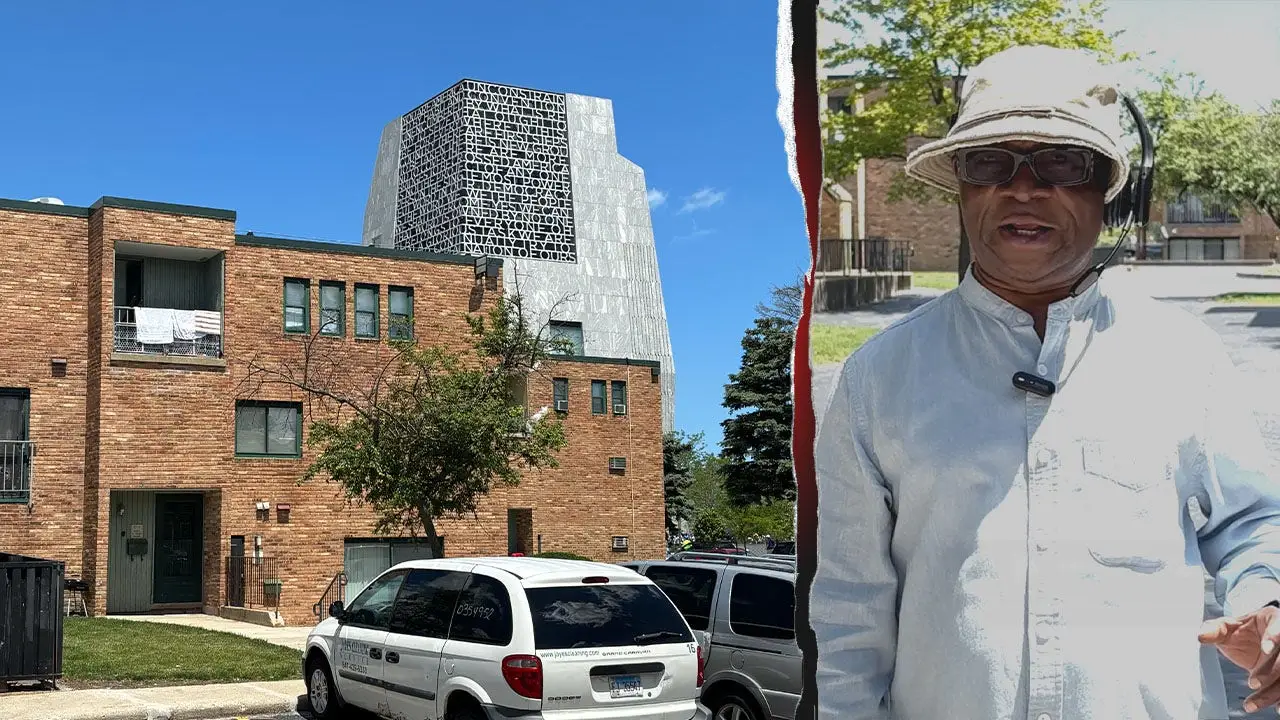
On the historic South Side of Chicago, where the winds sweeping off Lake Michigan carry both the legacy of industrial labor and the echoes of struggle, a grand transformation has taken root. Here, amidst the bustling streets and community blocks, stands the newly opened Barack Obama Presidential Center, a sprawling 19.3-acre architectural marvel dedicated to celebrating the historic tenure of the nation’s 44th president. Yet, directly across the street from this gleaming monument of glass, stone, and curated greenery sits Jackson Park Terrace, a modest low-income housing complex that has long sheltered the working-class families of the neighborhood. For eighteen years, Akoma Amanze, a dedicated local cab driver, has called this complex home, watching the neighborhood evolve from his modest apartment window. Recently, as thousands of visitors, high-profile celebrities, media crews, and curious tourists descended upon the area to celebrate the center’s grand opening, Amanze watched the spectacle with a complex mixture of profound personal pride and exhaustion. While the world looked on at the shiny new museum, library, athletic center, and recreational parks, Amanze and his fellow neighbors were left to reflect on the quiet, unvarnished realities of what it actually cost to live in the shadow of such monumental progress, enduring years of construction that fundamentally disrupted their daily lives and challenged their sense of stability.
The relentless process of constructing this massive presidential legacy project, which officially broke ground in 2021, transformed the peaceful routine of the neighborhood into an ongoing, multi-year ordeal that Amanze describes as deeply troubling and physically invasive. As heavy earth-moving equipment tore into the South Side soil to excavate the lower levels of the sprawling campus, the local infrastructure grooved and buckled under the strain, leading to disastrous consequences for those living immediately adjacent to the site. On two separate occurrences during the deep excavation process, Amanze returned to his apartment only to find his home completely submerged in water, a direct result of the disrupted water tables and construction-related drainage failures occurring right across the street. The flooding was not merely an inconvenience; it was a deeply personal devastation, destroying decades of accumulated belongings, including cherished clothing, essential documents, irreplaceable family papers, and storage boxes filled with memories that had been resting on his floors. Amidst this domestic disaster, the systemic indifference of the institutions around him became painfully clear, as neither the management of Jackson Park Terrace nor any representatives from the heavily funded Obama Presidential Center stepped forward to offer financial restitution, physical cleanup assistance, or even a simple apology. Left entirely to his own devices, the exhausted cab driver was forced to spend his grueling off-hours manually sucking the water from his carpets and scrubbing away the damp ruins of his domestic life, enduring the physical and emotional burden of the disaster completely alone.
Beyond the sudden crises of the floods, the daily sensory assault of the construction became a persistent, inescapable tax on the physical and mental well-being of the residents of Jackson Park Terrace. For years, the steady, rhythmic pounding of excavators and the deep-bore drilling required to anchor the massive structures reverberated directly through the earth and into the structural bones of Amanze’s apartment. He recalls countless nights and early mornings where the very frame of his bed would tremble violently as heavy machinery dug deep into the earth across the street, making restful sleep a rare luxury for a man who spent his days navigating the stressful, chaotic traffic of Chicago’s streets to earn a living. This mechanical vibration was a constant, tactile reminder that his personal space and sanctuary were no longer entirely his own, having been co-opted by a grand public design that felt entirely indifferent to the quiet lives of the individuals living on the periphery. The irony was not lost on many in the community: a project built to honor a leader who championed community organizing and the empowerment of the common citizen was, in its physical creation, actively shaking the homes and disrupting the peace of the very working-class people who formed the backbone of that community.
Perhaps the most heartbreaking casualty of this grand urban development was the loss of a simple, cherished neighborhood park that once stood directly across the street from Amanze’s home, a green space that held the intimate history of his family’s life. It was in this humble community park that Amanze raised his children, watching them grow, play, and interact with the neighborhood over nearly two decades of residency. He speaks with particular tenderness of his youngest child, who is now fourteen years old, recalling a specific, favorite swing set that sat in the heart of the park where he would take his son during the difficult years of infancy and early childhood. Whenever the boy would cry, show signs of stress, or struggle to fall asleep, Amanze would gently walk him across the street, place him in the swing, and push him back and forth beneath the shade of the trees until the rhythmic motion worked its magic, allowing the child to drift into a peaceful slumber before being carried back home. Today, that swing, those trees, and the modest park are completely gone, paved over and replaced by the sophisticated, highly manicured, and strictly monitored grounds of the presidential campus—a stark reminder of how easily the small, sacred landmarks of ordinary lives can be erased to make room for the grand monuments of history.
Despite the heavy material losses, the sleepless nights, and the erasure of his family’s personal landmarks, Amanze harbors a striking lack of resentment or bitterness toward the project or the former president himself. In fact, he speaks of Barack Obama with a warm, fraternal affection, proudly calling him “my man” and emphasizing his genuine excitement and pride in seeing a historic Black leader build such a massive, permanent institution right in the heart of Chicago’s South Side. This complex perspective highlights a profound paradox often found within marginalized urban communities, where the collective pride of historic representation and the symbolic triumph of a shared cultural figure can coexist with the very real, material grievances of displacement, neglect, and daily disruption. For Amanze, the presence of the Obama Center is a source of cultural validation that transcends his personal hardships, allowing him to view his own struggles not as a series of unfair grievances, but as a necessary, quiet sacrifice in the service of a much larger, historic legacy. He willingly balances his frustration over his ruined belongings and shaken home with the profound pride of knowing that his neighborhood—a place regularly overlooked by the broader city—has become a global focal point of hope, leadership, and historical memory.
Ultimately, Akoma Amanze’s journey through the years of construction embodies a quiet, resilient philosophy of survival and acceptance that defines so much of the working-class spirit of Chicago. He reflects on his experiences with a calm, stoic wisdom, noting that when massive historical forces are in motion—forces far greater than any single individual has the power to halt—the only viable path forward is to learn to adapt, survive, and find peace within the changing landscape. Rather than allowing himself to be consumed by anger over what was lost, Amanze chooses to frame his narrative through a lens of active participation, proudly declaring that, through his endurance of the disruptions and his witnessing of the transformation, he has earned his own small place in the history of the neighborhood and the nation. His story serves as a vital, deeply humanizing reminder that behind every grand monument, shimmering skyscraper, and legacy project, there are ordinary, hardworking people living in the shadows, quietly bearing the costs of progress and infusing the grand narratives of history with their own unsung dignity and grace.