

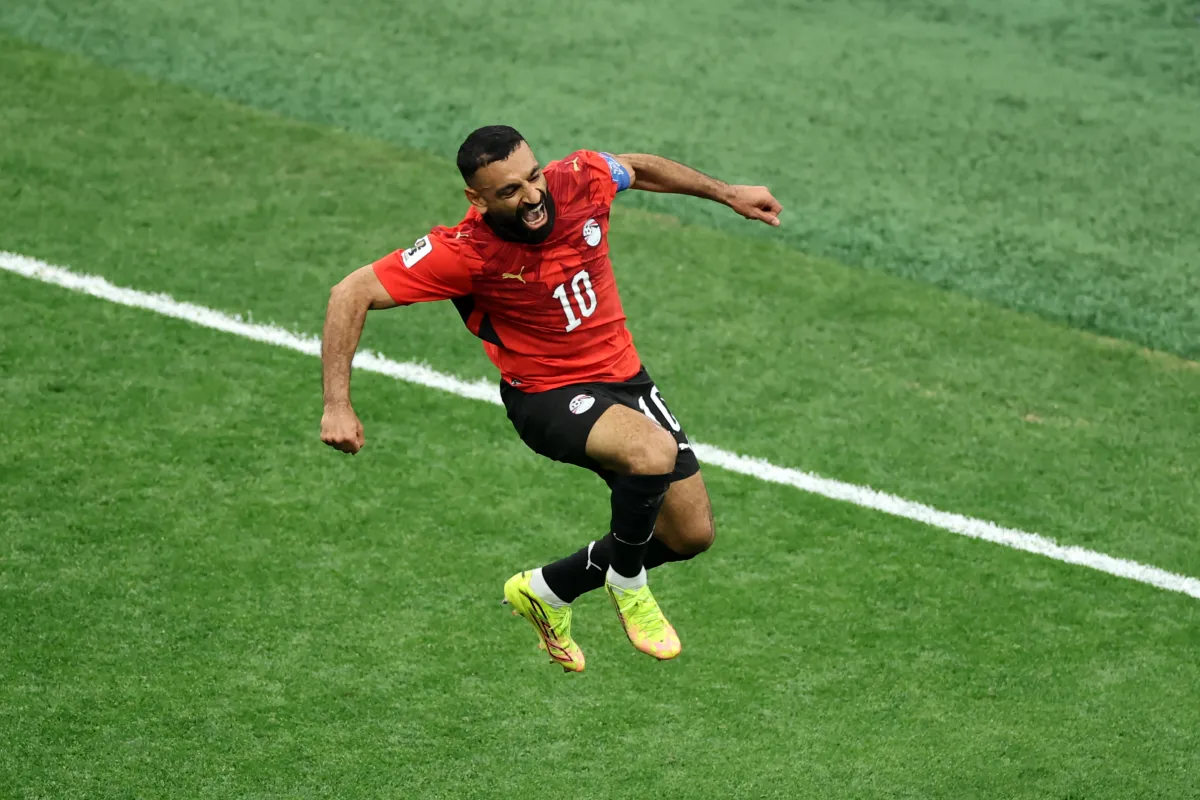
When Mohamed Salah took his seat at the press conference ahead of the 2026 FIFA Men’s World Cup, his demeanor was strikingly serene, almost detached from the astronomical level of expectation that has followed him throughout his career. To the assembled global media, the veteran forward offered a modest, grounded perspective, suggesting that his squad simply needed to focus on their training camp, work hard, and see what the group stage would bring. He emphasized that the ultimate goal was simply to make the Egyptian people proud and to leave everything on the pitch. To many skeptics, this was merely a masterclass in media training—a cautious shield erected to protect himself and his teammates from the suffocating pressure of a demanding nation. Yet, to those who have closely followed Salah’s tumultuous journey with the national team, it felt like the honest reflection of a wiser, battle-weary talisman who had learned to relinquish the heavy burden of chasing elusive World Cup glory. The history of Egypt’s national football team, affectionately known as the Pharaohs, has been defined by dramatic highs and devastating heartbreaks. It was Salah’s own ice-cold, 95th-minute penalty against Congo in October 2017 that famously qualified Egypt for the 2018 World Cup in Russia, ending a painful twenty-eight-year tournament drought and sparking nationwide celebrations. However, that tournament in Russia turned into a nightmare of lingering shoulder injuries and three consecutive group-stage defeats. The disappointment deepened in 2022 when Egypt failed to even qualify for the tournament in Qatar, leaving many to wonder if Salah would ever get another chance to showcase his genius on the sport’s ultimate stage. Now, at Vancouver’s BC Place on a historic Sunday afternoon, Salah stepped onto the pitch for what could very well be his international swan song, ready to finally banish the ghosts of tournaments past and rewrite the sporting history of his country.
The match against New Zealand on Sunday, June 21, began in a manner that seemed all too familiar to the cynical fans who had braced themselves for another chapter of Egyptian heartbreak. Far from the fairytale opening many had hoped for, the Pharaohs found themselves in an early hole when New Zealand’s young defender Finn Surman pierced their defense to score a stunning goal in just the 15th minute, deflating the vibrant contingent of Egyptian supporters in the stadium. As the first half progressed, Egypt looked like a team bogged down by historical anxiety, struggling to find their rhythm against a highly disciplined and physically imposing New Zealand side. The haunting memories of previous World Cup failures seemed to linger over the pitch, paralyzing the players and forcing them into uncharacteristic errors. However, as the teams emerged from the halftime tunnel, a palpable shift in energy occurred, spearheaded by Salah’s relentless encouragement and tactical leadership. The turning point arrived in the 58th minute when Mostafa Zico capitalised on a brilliantly constructed offensive play to slot home the equalizer, throwing a lifeline to the struggling Pharaohs. This crucial equalizing goal did far more than simply level the scoreline; it shattered the psychological barrier that had long held the team back, setting the perfect tactical and emotional stage for what would soon become an unforgettable masterclass of football excellence.
With the score locked at 1-1 and the momentum swinging wildly, the match transitioned into what can only be described as the “Mo Salah Show,” a dazzling display of world-class athleticism and footballing intelligence that reminded fans why the veteran forward remains one of the most revered figures in the history of the sport. In the 67th minute, Salah conjured a moment of pure individual magic, utilizing his trademark acceleration and devastatingly precise left foot to curl the ball past the outstretched Kiwi goalkeeper, putting Egypt ahead 2-1 and triggering absolute delirium in the stands. Rather than retreating into a defensive shell to protect their fragile lead, Egypt pressed forward with newfound confidence, guided by Salah’s masterful ability to dictate the tempo of the game and exploit the gaps left behind by a chasing New Zealand side. The crowning moment of this spectacular comeback came in the 82nd minute when Salah turned provider, delivering a beautifully weighted, archetypal pass to Trezeguet, who calmly slotted the ball home to seal a comprehensive 3-1 victory. As the final whistle echoed throughout the stadium, a wave of profound emotion washed over the players and coaching staff. This was not just a typical victory in a tournament; it was Egypt’s first-ever win in the history of the FIFA World Cup, a historic milestone that instantly washed away decades of athletic frustration and unfulfilled promises.
Clutching his well-deserved Man of the Match trophy, an emotional Salah spoke to the media with a vulnerability and deep humility that contrasted sharply with his reserved pre-tournament comments. He noted that while winning a single match might seem like a routine, ordinary occurrence to elite footballing nations that register victories as standard business, for Egyptians, such a moment represents a rare, monumental piece of history that does not happen often. This candid admission humanized the superstar, reminding the world that despite his years of enjoying astronomical success and winning every major club trophy with Liverpool, the joy of representing his homeland and bringing happiness to his compatriots remains unparalleled. For nearly a decade, fans in Anfield had watched him perform weekly miracles in the English Premier League, yet witnessing him wear the captain’s armband and lead his national team to such heights carried a completely different, far more intense emotional weight. This was a man playing not for individual honors, commercial accolades, or contract negotiations, but rather for the collective pride, identity, and shared joy of more than a hundred million people back home who view him as a beacon of hope and determination.
This historic comeback against New Zealand was no isolated fluke, but rather the continuation of a sensational and highly disciplined tournament run that had begun just days earlier. Egypt had opened their 2026 World Cup campaign with a gritty, unexpected 1-1 draw against a formidable and heavily favored Belgium side, a match in which Salah had also found the back of the net to secure a vital point. Following their victory over New Zealand, the Pharaohs found themselves sitting proudly at the top of Group G with four points, a shocking development that completely disrupted the pre-tournament predictions of sports analysts worldwide. According to analytical data published by The Athletic, Egypt’s mathematical probability of advancing to the coveted knockout stage shot up to an astounding 99%, with a highly favorable 61% chance of winning Group G outright. To fully comprehend the scale of this achievement, one must look back to 1934, the only other time Egypt had ever reached the knockout stage of a World Cup, a distant era when the tournament featured a vastly different structure. This analytical reality check highlights the historic nature of what Salah and his teammates are on the verge of accomplishing, turning a generational dream into an imminent, tangible reality that has galvanized football fans across the entire African continent and Arab world.
The path toward securing this legendary achievement now leads to Lumen Field in Seattle, where Egypt is scheduled to face Iran on Friday, June 26, in their final and most anticipated group-stage match. This upcoming encounter is far more than a simple quest for three points; it represents a golden opportunity for Salah to guide his country into entirely uncharted sporting territory and solidify a fairytale narrative that has been decades in the making. As fans from all over the world prepare to descend upon Seattle, the prevailing narrative surrounding Mohamed Salah has shifted from that of an aging superstar seeking a final, quiet curtain call, to that of a triumphant, inspirational leader orchestrating a historic national renaissance. His journey at the 2026 World Cup serves as a beautiful and powerful reminder of why we fall in love with sports in the first place: the pursuit of something far greater than individual glory, the redemption of past heartbreaks, and the profound beauty of shared national joy. Regardless of how far the Pharaohs ultimately go in the knockout rounds, Salah has already succeeded in his primary, self-stated mission of making his people incredibly proud, cementing his legacy as not just a footballing icon, but a true national hero.