



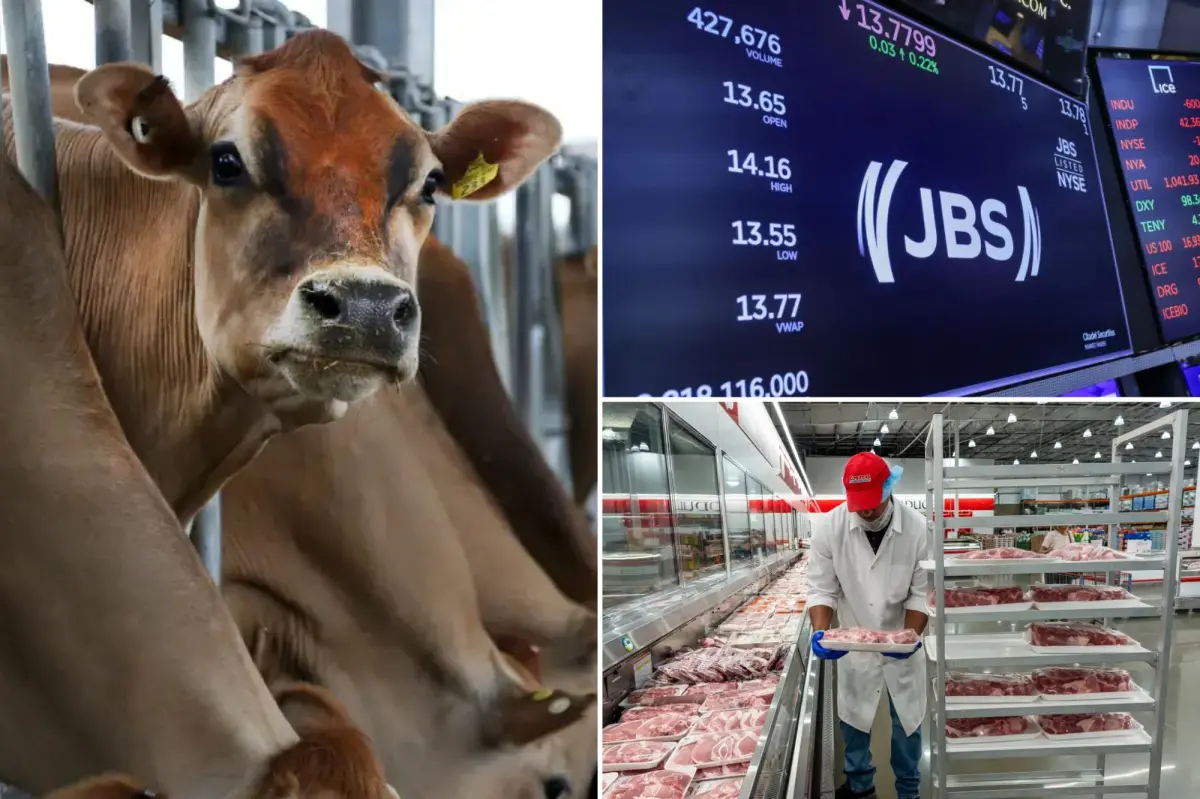
In the quiet, early morning hours in working-class neighborhoods across Philadelphia and Memphis, a familiar rhythm of life has suddenly been broken. For decades, the steady hum of local meat-processing facilities served as an anchor of economic stability, providing generations of families with reliable wages, close-knit workplace communities, and a profound sense of pride in helping feed the nation. That stability shattered when JBS USA, the massive multinational meat-processing conglomerate, unexpectedly announced the permanent closure of these two major beef plants. The corporate decision carries a heavy human toll, instantly eliminating 2,000 jobs and leaving local families to navigate an uncertain job market. JBS is a silent giant whose vast distribution network directly stocks the shelves of national warehouse clubs like Costco and BJ’s, alongside beloved regional supermarket chains including Food Lion, Weis Markets, WinCo, and Stop & Shop. When a company of this magnitude pulls the plug on entire regional operations, the ripples are felt far beyond the factory gates. Although JBS Chief Executive Officer Wesley Batista Filho expressed deep corporate gratitude toward the affected workforce and promised to support employees with transparency, respect, and transition opportunities, such corporate sentiments do little to soothe the immediate panic of workers wondering how they will pay their mortgages, secure healthcare, or put food on their own family tables in the coming months.
To fully comprehend the systemic forces driving these painful closures, one must look far beyond the urban factory floors to the arid, weather-beaten pastures of America’s agricultural heartland. The domestic beef industry is currently grappling with a severe environmental and ecological crisis, as prolonged, historic droughts have scorched grazing lands and dried up natural watering holes across the Great Plains. Left with barren pastures and facing astronomical prices for hay and supplemental grain, independent cattle ranchers have been forced into the heartbreaking position of selling off their breeding herds prematurely. This desperate sell-off has driven the national cattle herd down to a staggering 75-year low, creating a physical shortage of mature cattle ready for processing. Within this highly consolidated industry, just four monolithic corporations—JBS, Tyson, Cargill, and National Beef—manage approximately 85 percent of the country’s grain-fed cattle processing. While this concentrated structure has historically allowed these agricultural giants to maximize corporate profits, it has also created an incredibly brittle supply chain. With fewer cattle available, the massive industrial slaughterhouses owned by JBS cannot run at their optimal, cost-effective capacities. When these multi-acre facilities operate below peak volume, their overhead costs skyrocket, ultimately forcing executives to consolidate operations and sacrifice historic regional plants to keep the broader corporate machinery afloat.
This dramatic contraction in livestock supply has triggered a fascinating, highly stressful economic paradox at local grocery checkout lanes across the United States. For everyday shoppers trying to balance their household checkbooks, the meat counter has become a source of profound sticker shock, with prices climbing to historic heights. According to official data from the US Department of Agriculture, the average price of beef surged from roughly $8.70 per pound in March 2025 to a breathtaking $10.08 per pound just twelve months later, representing a sharp 16 percent increase in a remarkably short window of time. Yet, despite these punishing prices, American consumers have demonstrated an extraordinarily resilient, almost stubborn appetite for beef. In 2025 alone, shoppers across the nation spent a mammoth $45 billion on beef products, taking home more than 6.2 billion pounds of meat. This data reveals that household spending rose by about 12 percent, while the actual physical volume of meat purchased grew by more than 4 percent, indicating that consumers are not merely tolerating high prices, but are actively choosing to spend more of their hard-earned dollars on beef. This phenomenon highlights a deep cultural and psychological attachment to meat in the American diet, where backyard barbecues and family steak nights are viewed as vital comforts and symbols of prosperity that families are reluctant to abandon, even when forced to cut back on other areas of their household budgets.
However, this robust consumer demand has proved insufficient to shield JBS from a severe financial crisis back in its corporate boardrooms. The harsh reality of modern global food logistics is that record-high retail prices do not automatically translate to healthy corporate balance sheets when the underlying costs of livestock, labor, fuel, and regulatory compliance are rising even faster. During the opening quarter of 2026, JBS reported a devastating net loss of $279 million, a financial blow that nearly doubled the $158 million net loss recorded during the first quarter of 2025. This escalating financial bleeding has forced JBS executives to make swift, unsentimental decisions to protect their profit margins and satisfy shareholders. Corporate strategists have implemented an aggressive consolidation plan aimed at merging their beef and case-ready processing divisions into a more centralized, streamlined operation. In executive presentations, these plant closures are framed in sterile, aspirational language as necessary sacrifices within a broader, forward-looking strategy focused on long-term competitiveness, technological modernization, and structural growth. Yet, for the average observer, this corporate restructuring highlights a profound disconnect in the modern economy, where a company that controls a fifth of the nation’s beef processing can suffer massive monetary losses while everyday families pay record prices at the cash register.
The painful friction of this corporate restructuring is not isolated to the beef industry; its cold logic is simultaneously transforming the poultry sector, bringing similar economic disruption to communities in the South. Pilgrim’s Pride, a prominent chicken-producing branch under the JBS corporate umbrella, recently announced its own major strategic shift, deciding to transition its poultry operations away from its long-running facility in Chattanooga, Tennessee. JBS plans to redirect these production efforts to an existing plant in Ellijay, Georgia, where the company is injecting a massive $75 million investment to expand and modernize the facility. While corporate spokespeople eagerly emphasized that this massive capital infusion will significantly boost local production and focus heavily on high-demand, high-margin items like boneless chicken, this regional victory for Georgia comes as a direct tragedy for Tennessee, where 348 poultry workers are losing their livelihoods. This shifting of capital from Chattanooga to Ellijay serves as a vivid illustration of how modern food manufacturing operates like a high-stakes chess game, where physical factories are easily relocated, and working-class families are left to deal with the immediate fallout of corporate self-preservation masquerading as technological progress.
Ultimately, these sweeping plant closures and regional consolidations serve as a sobering reminder of the structural fragility of our highly centralized national food supply chain. When a tiny handful of multinational corporations control the vast majority of the meat that reaches our grocery shelves, any internal corporate strain, environmental disaster, or geopolitical shock can instantly jeopardize food security for millions of citizens. This systemic vulnerability was starkly demonstrated in 2021, when a sophisticated global cyberattack completely paralyzed JBS’s entire United States beef processing infrastructure, causing immediate panic, disrupting grocery store deliveries, and exposing how easily a single point of failure can disrupt the nation’s food supply. As JBS and its major competitors continue to streamline their facilities, automate production lines, and narrow the distribution funnel to maximize efficiency, independent industry experts warn that consumers may soon face fewer product choices and permanently elevated prices at the grocery store. The unfolding reality of disappearing factory jobs and rising food bills encourages us to look past the packaged meat on supermarket shelves and recognize the deep, complex connections between environmental sustainability, corporate accountability, and the human hands that work tirelessly every day to keep our nation fed.