



The Great Blue Wave: How Cape Verde’s Historic World Cup Debut Redefined African Football and Captured Global Hearts
The Dawn of a Giant-Killing Era on the Volcanic Archipelago
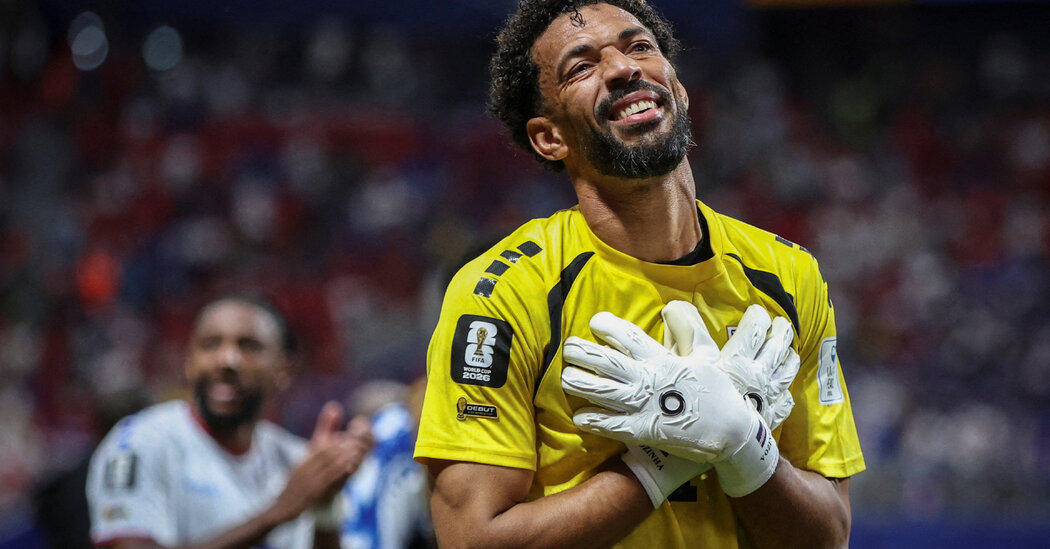
It was not recorded as a victory in the official tournament ledger, yet for the citizens of Cape Verde—a volcanic archipelago of ten islands scattered across the Atlantic Ocean and Africa’s third-smallest nation—holding the formidable, star-studded Spanish national team to a scoreless draw in their World Cup debut was a triumph of historic proportions. The collective gasp that echoed across the islands when the final whistle blew in Atlanta reverberated far beyond the geographic borders of this modest nation of just over half a million people, sparking a wave of euphoria that has quickly morphed into an anxious, hopeful countdown to their next monumental challenge against Uruguay. The upcoming fixture has plunged the streets of Mindelo, Praia, and the vast global Cape Verdean diaspora into a fever pitch of anticipation, with fans desperately wishing for a repeat performance of the defensive masterclass that neutralized the reigning European champions. At the absolute center of this unfolding sporting fairy tale is the team’s veteran goalkeeper, Josimar José Évora Dias, who went from a respected local journeyman to an overnight international sensation after executing seven world-class, acrobatic saves to deny Spain’s elite frontline. The sheer scale of the achievement cannot be overstated; the Blue Sharks soccer team, historically dismissed as afterthought competitors on the international stage, have announced their arrival to the world not with glamorous, high-priced stars, but with an unyielding collective work ethic, physical resilience, and an organizational discipline that completely disrupted the free-flowing, high-tempo offensive schemes of one of football’s absolute superpowers.
The Extraordinary Rise of ‘Vozinha’: The Guardian of the Blue Sharks
To understand the soul of this Cape Verde soccer team is to understand the journey of its forty-year-old goalkeeper, Josimar José Évora Dias, affectionately and universally known as “Vozinha”—the Portuguese word for Granny. This distinctive moniker, which stands in stark contrast to his imposing physical presence in the penalty box, was born from a childhood of quiet hardship and deep familial devotion, raised in an environment where his mother, Ana Cândida Évora, pulled grueling back-to-back shifts as a nursing home caregiver, leaving his beloved, late grandmother to shepherd him through his formidable years with an abundance of love and grounded values. Vozinha’s rise to international prominence mirrors Cape Verde’s own slow, grinding ascent up the international football ladder, a journey that saw the nation largely ignored by continental powerhouses until 2013, when they shocked the region by reaching the African Cup of Nations quarterfinals, a feat they magnificently repeated in 2023 to prove their longevity. Against Spain, the veteran goalie put on a clinic in positional awareness and lightning-fast reflexes, defying his status as one of the oldest active players in the tournament to systematically frustrate a Spanish attack valued in the hundreds of millions of euros. His performance was characterized not by theatrical diving for the cameras, but by a quiet, calculating calmness that settled his backline, embodying the pragmatic, blue-collar philosophy of a national squad that has embraced a no-nonsense, defensive-first approach to survive in a tournament designed to favor traditional footballing aristocrats.
Redefining the Global Game: FIFA’s Expansion and the African Football Rise
The stunning defensive display by the Blue Sharks serves as a powerful, living rebuttal to the chorus of traditionalist critics who loudly condemned FIFA’s controversial decision to expand the World Cup field from thirty-two to forty-eight teams, a structural adjustment that effectively doubled Africa’s direct qualification slots from five to ten. Skeptics had long warned that widening the gateway to smaller, developing nations would inevitably dilute the tournament’s competitive quality, leading to lopsided blowouts and uninspiring matches that would tarnish the prestige of the world’s greatest sporting event. However, the opening round of matches has completely flipped that elitist narrative on its head, with six of the ten African nations either securing definitive victories or hard-fought, courageous draws against established, heritage powers of global football, signaling a dramatic shift in the geopolitical balance of the sport. This rapid maturation of African football highlights how increased resource investment, tactical modernization, and international exposure have leveled the playing field, turning erstwhile minnows into highly disciplined, tactically sophisticated units capable of neutralizing any offensive juggernaut. For Cape Verde, this expanded tournament format has provided a global megaphone to broadcast their national identity, proving that footballing intelligence and system-based cohesion can easily bridge the chasm created by vast disparities in infrastructure, wealth, and population size.
Borders, Bonds, and the Bittersweet Reality of Global Migration
Yet, the magic of Cape Verde’s World Cup run has also shone a harsh, unforgiving spotlight on the complex geopolitical realities and systemic inequalities that govern international travel for African citizens, specifically regarding the rigid U.S. visa policies that nearly kept the country’s most famous mother from witnessing her son’s finest hour. In the emotional aftermath of the historic draw against Spain, a visibly moved Vozinha expressed his deep personal sorrow that his mother could not be present in the Atlanta stadium, revealing that his family had been caught in a bureaucratic nightmare trying to secure a United States visitor visa, a process compounded by the exorbitant demand for a travel bond of up to $15,000—a fortune for working-class Cape Verdean families. The public disclosure of Ana Cândida Évora’s struggle quickly ignited a fierce wave of criticism across social media and media outlets, drawing attention to how stringent immigration restrictions, which have disproportionately targeted African nationals in recent years, systematically strip families of the opportunity to celebrate historic achievements on American soil. The story took a dramatic, heartwarming turn when public outcry prompted high-level diplomatic intervention from the U.S. State Department, allowing Ms. Évora to finally secure her passport, board a flight from Praia, and depart for Miami just in time to rejoin her son’s journey. Her departure was marked by tears, laughter, and a poignant reminder to the waiting press that while her nation may be small in geographical scale, the heart, resilience, and spirit of its people remain undeniably boundless.
A Nation Suspended Between Cautious Realism and Unbridled Euphoria
Back home across the wind-swept islands of the archipelago, the historic performance has sparked a fascinating cultural dichotomy, splitting the local population between those who see the draw as proof of a divine mandate and those whose life experiences have taught them to approach sudden success with deep caution. In the cultural hub of Mindelo, on the island of São Vicente, local resident Nuno Martins captured the spiritual ecstasy gripping many fans, passionately arguing that the team’s success was a combination of flawless defensive execution and literal divine intervention, humorously declaring that “God is Cape Verdean, even though he lives in other lands.” Conversely, in the bustling capital city of Praia, taxi driver José Eduardo Cardoso offered a more grounded perspective, admitting that his anxiety was so severe during the match against Spain that he could only bear to listen to the first half on his car radio while navigating passengers through the city streets before rushing home to watch the final, tense minutes of the historic shutout. This protective skepticism is highly common among older generations who have watched the country struggle against economic isolation, but even the most cautious citizens find themselves swept up in the collective pride, as voices like economist Erika Soares harmonize the national sentiment by asserting that regardless of what happens in the upcoming matches, the team has already achieved its ultimate goal: putting the dignity and talent of Cape Verde on the world map.
The Horizon at Sea: Preparing for Uruguay and the Ultimate Definition of Victory
As the Blue Sharks prepare to take the pitch against Uruguay—a historic powerhouse possessing two World Cup trophies and a legendary pedigree of relentless, aggressive football—the tactical conversation on the islands has slowly shifted from desperate defense to calculated ambition, with local experts and fans alike calling for a touch of strategic daring. Prominent Praia lawyer Carlos Brazão Monteiro summarized this national yearning by noting that while a disciplined defensive block was sufficient to survive Spain, “a little boldness is needed” if the team hopes to score their first-ever World Cup goal and secure a pathway to the prestigious knockout rounds. To achieve this, Cape Verde’s coaching staff must find a delicate, high-stakes balance, keeping their defensive defensive lines intact while unleashing quick, decisive counter-attacks to test the South American giants. Yet, whatever the outcome on the scoreboard on Sunday, the cultural victory has already been permanently claimed by this small, vibrant island nation, which has used the world’s biggest sporting stage to showcase their collective pride, dismantle geopolitical barriers, and prove that in the beautiful game, passion and preparation can equalize any deficit.