

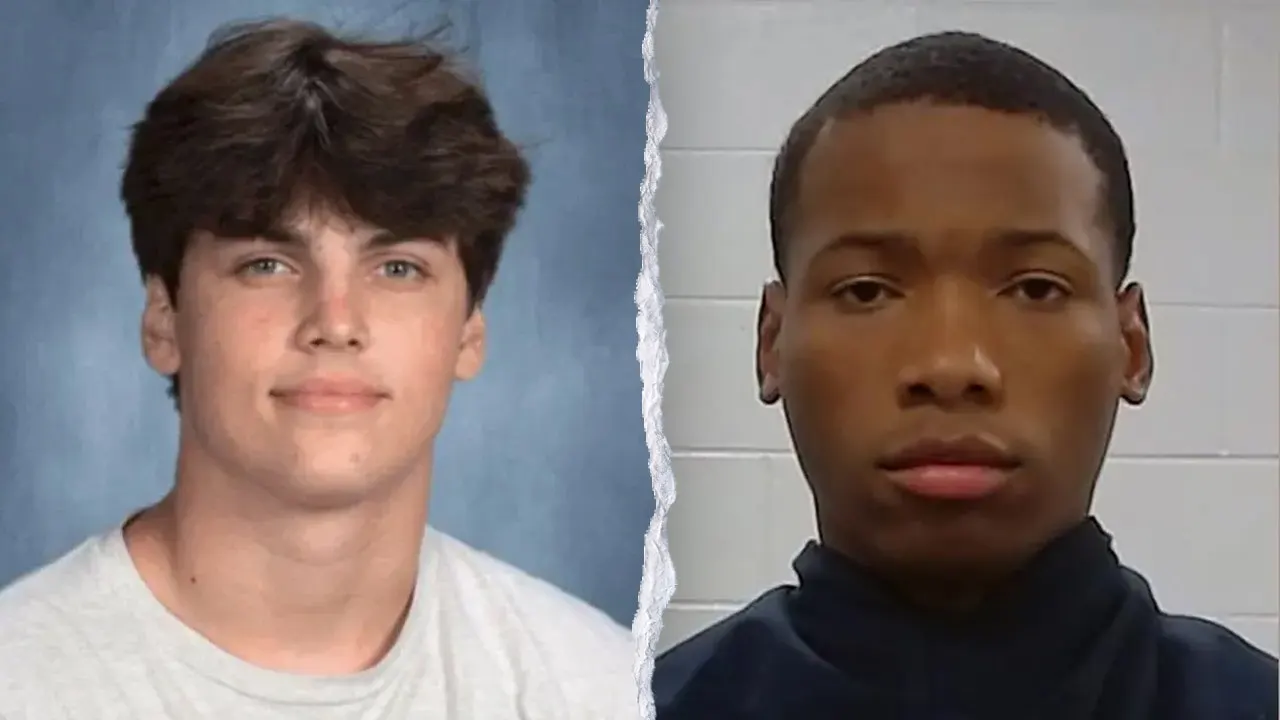
On what should have been a vibrant, sunlit afternoon of athletic achievement, physical excellence, and community spirit, David Kuykendall Stadium in Frisco, Texas, instead became the backdrop for an unspeakable tragedy that shattered multiple families and shook an entire suburban community to its core. On April 2, 2025, the stadium was buzzing with the unique, bright energy of a high school track meet—a space typically reserved for young athletes pushing their physical limits, cheered on by proud parents, enthusiastic classmates, and dedicated coaches. It was a place of high hopes, innocent competition, and adolescent camaraderie. Yet, this atmosphere of healthy rivalry and youthful optimism was violently and abruptly ruptured in a matter of moments, leaving Austin Metcalf fatally wounded and forever altering the course of several young lives. The sudden transition from a celebratory sporting event to a chaotic, active crime scene left onlookers, students, and parents in a state of absolute, traumatized disbelief, as the supportive cheers of competition were instantly replaced by screams of panic, the wail of sirens, and the desperate, frantic cries of those attempting to save a dying teenager on the bleachers. For the family of Austin Metcalf, what was supposed to be a routine, proud spring day transformed into an eternal, living nightmare, highlighting the incredibly fragile nature of human life and how quickly a routine afternoon can be swallowed by senseless violence. The loss of a young man with his entire future, dreams, and aspirations ahead of him cast a long, somber shadow over the city of Frisco, forcing residents to confront the deeply disturbing reality of how a simple athletic gathering could dissolve into such a devastating, irreversible loss of life.
The fatal encounter began over a seemingly minor, insignificant dispute that quickly spiraled out of control within the crowded confines of an athletic tent belonging to the Memorial High School team. Karmelo Anthony, who was only seventeen years old at the time of the incident, was sitting inside the team’s tent when Austin Metcalf and his brother approached him to confront him about his unauthorized presence in their designated team space. What began as a relatively minor verbal disagreement over turf, boundaries, and adolescent pride rapidly escalated into a highly charged physical confrontation as teenage tempers flared and reason was pushed aside. In the heat of this chaotic and high-stakes moment, Anthony drew a folding Ozark Trail multi-tool knife, unfolding the blade and using it to stab Austin Metcalf in what he would later desperately claim in court was an act of survival and self-defense. The defense team argued that a panicked, overwhelmed teenager, feeling physically cornered and outnumbered by the Metcalf brothers inside the enclosed tent, reacted out of instinctual fear rather than calculating malice. This claim of self-defense was echoed in the immediate, raw aftermath of the stabbing, captured vividly on police body-camera footage as responding officers took the distressed seventeen-year-old into custody near the scene. In the recording, Anthony’s voice is filled with a frantic, breathless urgency as he repeatedly pleads his case to the arresting officers, insisting, “He put his hands on me. I told him not to. He put his hands on me.” This haunting audio provides a raw, unfiltered glimpse into the immediate terror and confusion of the moment, showing a young boy who seemed to only then be realizing the immense gravity, finality, and horror of the violent act he had just committed.
Following Anthony’s first-degree murder conviction, the Collin County court made the decision to release a series of incredibly raw visual exhibits that stripped away the cold abstraction of legal proceedings and laid bare the devastating physical reality of the crime. Among these newly public materials were crime scene photographs, agonizing 911 emergency calls, and graphic police body-camera footage that the jurors had been required to carefully analyze during their deliberations. The released images included a chilling, close-up look at the blood-soaked jacket worn during the confrontation, a stark and heartbreaking visual testament to the sheer volume of life lost on the stadium bleachers that spring afternoon. Perhaps the most sobering of these exhibits was the photo of the folding Ozark Trail multi-tool knife itself—a common and otherwise ordinary camping utensil turned into a weapon of absolute destruction—alongside highly graphic photographic documentation of the final, fatal wound that claimed Austin Metcalf’s life. These pieces of heavy evidence served as a grim, undeniable reminder to the public of the physical brutality of violence, illustrating how a single split-second decision can leave behind an indelible trail of blood, broken evidence, and permanent grief. For the family, friends, and community members who viewed these newly released exhibits, the items represented much more than mere legal proof in a docket; they were the visceral, painful remnants of a family’s worst day, rendering the intellectual concepts of justice and defense into concrete, heartbreaking artifacts of metal, blood, and stolen potential.
Throughout the emotionally exhausting trial in Collin County, the prosecution fought aggressively to prove that Anthony’s actions went far beyond the legally acceptable boundaries of reasonable self-defense, ultimately convincing the jury to hand down a conviction of first-degree murder. The state’s attorneys argued passionately that introducing a deadly weapon, specifically a folding knife, into a schoolyard physical altercation was an excessive, highly lethal escalation that transformed a typical teenage fight into an act of murder. The defense’s portrayal of a terrified minority youth trying to protect himself in a hostile environment was weighed against the graphic reality of the stab wound and the fatal potential of the multi-tool weapon, leading the jury to ultimately reject the self-defense argument after careful deliberation. Consequently, the court handed down a demanding thirty-five-year prison sentence to the young defendant, a ruling that guarantees Anthony will spend the majority of his youth and prime adult years behind the walls of a state penitentiary. Under Texas law, the severity of a first-degree murder conviction requires that he must serve at least half of this extensive sentence—amounting to nearly eighteen years—before he can even begin to be considered eligible for parole. This lengthy and severe sentence reflects the judicial system’s severe condemnation of the offense, but it also represents another young life completely shattered, leaving two separate families to mourn the loss of their sons—one taken forever to the grave, and the other lost to the cold, unforgiving machinery of the state prison system.
The conclusion of the high-profile trial did not bring immediate peace or closure to the community, as the guilty verdict and subsequent thirty-five-year sentence ignited a fierce, polarizing wave of public criticism and debate, particularly among Karmelo Anthony’s supporters and family. Many of his advocates voiced deep-seated concerns, frustration, and anger over the demographic makeup of the jury that convicted him, raising difficult questions about whether a young African American teenager could truly receive an unbiased and empathetic trial in Collin County. This aspect of the legal battle tapped into much larger, ongoing national conversations surrounding racial disparities in the criminal justice system, the critical importance of jury representation, and how the courts perceive and judge minority youth who claim self-defense during violent encounters. Supporters argued that a more diverse jury, reflective of different life experiences, might have had a deeper, more nuanced understanding of the paralyzing fear and survival instincts that can dictate a teenager’s reactions in a high-pressure confrontation. They viewed the severe sentence not as justice, but as an overly punitive and systemic failure to recognize a tragic, panicked mistake made by a minor. This layer of social controversy transformed the local high school tragedy into a complex symbol of systemic friction, demonstrating how deeply rooted suspicions of institutional bias can complicate even the most definitive legal outcomes, leaving a fractured community to debate whether true fairness was achieved or if another layer of tragedy had been needlessly introduced.
Ultimately, when the court exhibits are filed away into cold storage, the judicial records are closed, and the intense media attention inevitably fades, the true legacy of the tragedy at David Kuykendall Stadium remains one of profound, universal human loss that time can never fully heal. No amount of rigorous legal debate, lengthy prison sentences, or passionate social media controversy can ever restore Austin Metcalf to the warm embrace of his grieving family, who must now navigate a lifetime of milestone events, holidays, and quiet, ordinary days marked by his permanent, aching absence. Simultaneously, the family of Karmelo Anthony is forced to endure the agonizing reality of watching their son, who was just a child himself when the fatal incident occurred, spend his transition into manhood locked away in a prison cell, his potential and future completely extinguished by a single day’s terrible choices. The empty spaces left behind in both of these homes serve as a devastating, cautionary illustration of the irreversible, destructive consequences of carrying weapons and allowing anger to dictate human actions. As the Frisco community slowly and painfully attempts to move forward, the memory of that fateful April afternoon remains permanently etched into its collective consciousness, serving as a stark, sobering warning of how quickly youthful pride and hot-headed conflict can escalate into fatal violence, forever shattering the lives of everyone involved and leaving behind a painful trail of sorrow that no courtroom verdict can ever truly resolve.