


The highly anticipated public opening of the Obama Presidential Center on Chicago’s historic South Side marks the culmination of an arduous, decade-long saga that has proved to be as financially grueling as it has been deeply controversial. When the ambitious project was first announced, it was envisioned as an unprecedented tribute to the nation’s first African American president, strategically located in the very city where Barack Obama’s political career took flight. Rather than constructing a traditional, solitary presidential library designed to quietly house archival documents under lock and key, the Obama Foundation proposed an expansive, multi-dimensional civic campus. Plans detailed a vibrant, forward-looking public space featuring a state-of-the-art museum, green public plazas, a new branch of the Chicago Public Library, athletic facilities, and community gardens. However, the lofty, hopeful idealism of the initial blueprints quickly collided with the harsh realities of bureaucratic gridlock, legal standoffs, and massive construction delays. Over years of setbacks, the center’s projected budget systematically ballooned from an initial estimate of $350 million to an astronomical, eye-watering sum of over $850 million. This massive doubling of costs became a physical manifestation of the growing disconnect between the project’s grand global ambitions and the gritty, everyday realities of the South Side, transforming what should have been a moment of shared triumph into a source of community resentment and exhausting debate for the very people it was built to inspire.
Among the most painful ironies of the project is the profound anxiety and displacement it has brought upon the surrounding historic neighborhoods, particularly Woodlawn and Jackson Park. Though the center proudly features extensive exhibits dedicated to the civil rights movement, the fight against systemic racism, and the preservation of Black history, its physical construction has inadvertently acted as a powerful agent of modern gentrification. For generations, these South Side communities served as a cultural haven for Black families, but the announcement of a massive, billion-dollar tourist destination in their backyard sent shockwaves through the local real estate market. Property speculators and landlords rapidly seized the opportunity, driving rents up to heights that the neighborhood’s long-term, working-class residents simply could not afford. Families who had lived in the area for decades suddenly found themselves handed steep lease renewals demanding thousands of dollars more per month, forcing many to pack up and abandon their beloved homes. One resident described the transition as a painful “washing away of the neighborhood and culture that used to be here,” laments that forced the city of Chicago to intervene with a modest $6 million housing fund to buffer the displacement. For many who had to move, the center feels less like an economic engine of empowerment and more like a gentrifying force that sterilized a neighborhood previously deemed unworthy of city investment until a presidential monument arrived.
The internal operations of the construction site did little to ease these community anxieties, particularly as lofty promises regarding diversity, equity, and inclusion (DEI) became entangled in a bitter, high-profile legal battle. The Obama Foundation had initially set unprecedented goals for minority participation, aiming to use the massive construction budget to empower local, Black-owned subcontracting firms and create a more equitable pathway within Chicago’s notoriously exclusive building trades. However, this progressive vision was severely compromised when an African American-owned concrete and rebar company filed a devastating $40 million lawsuit against the primary joint-venture management firm overseeing the project. The lawsuit alleged that project managers systematically targeted minority contractors for minor structural errors, holding them to punitive standards while ignoring similar mistakes made by white-owned firms. According to the plaintiffs, this discriminatory treatment directly undermined the Foundation’s stated DEI goals, revealing a deep-seated disconnect between corporate rhetoric and site-level management. When the project managers countered by claiming several minority subcontractors were “questionably qualified” or plagued by persistent inexperience, it only deepened the sting, exposing a patronizing undercurrent that critics argued weaponized the very system meant to empower them to justify the project’s soaring expenses and administrative failures.
Compounding this legal turmoil is a quiet crisis of unpaid construction bills that has left several local subcontractors on the brink of total financial collapse. Investigations revealed that numerous small, minority-owned firms that performed critical work on the campus have yet to receive millions of dollars in outstanding payments for their labor and materials. For these small business owners, the financial strain is not just a corporate balance-sheet issue; it is a deeply personal, emotionally exhausting crisis that threatens their families and the livelihoods of their employees. One subcontractor described himself as feeling “cooked emotionally” and crushed like “an aluminum can that’s been thrown in front of a steamroller” after dedicating his business to a project he believed in. Leaders within the local business community have warned that high-profile projects of this nature can act as a “Trojan horse” for small businesses, drawing them in with the promise of historic prestige only to destroy them through administrative delays and unpaid debt. As the Obama Foundation shifts the blame to its primary contracting partner, the Lakeside Alliance, and the Alliance points to the inherent complexities of managing a project of this scale, the vulnerable local business owners are left waiting, wondering how a project designed to offer hope to the South Side could leave its local workforce so utterly devastated.
While the actual construction of the presidential center was funded primarily through private donations, the immense cost of updating the surrounding public infrastructure fell squarely on the shoulders of Illinois taxpayers. To accommodate the massive influx of tourists and visitors expected to flock to the South Side campus, the state of Illinois has already spent over $120 million on extensive roadway reconfigurations, park updates, and utility modernizations, with the total public infrastructure cost expected to eventually exceed $200 million. This allocation of massive public resources has sparked intense scrutiny from local civic groups who point out the glaring contrast between the state’s rapid funding of the center’s surroundings and its chronic underinvestment in basic neighborhood needs. For decades, residents of the South Side have begged for basic municipal services, reliable public transit, well-funded public schools, and community safety measures, only to be repeatedly told that the city and state lacked the budget to fulfill these requests. Witnessing hundreds of millions of public dollars materialize almost overnight to pave the way for a high-profile presidential monument has left many engagement groups deeply cynical about the government’s true priorities, reinforcing the perception that public funds are readily available for gentrifying tourist attractions but entirely out of reach for the daily survival of the area’s existing residents.
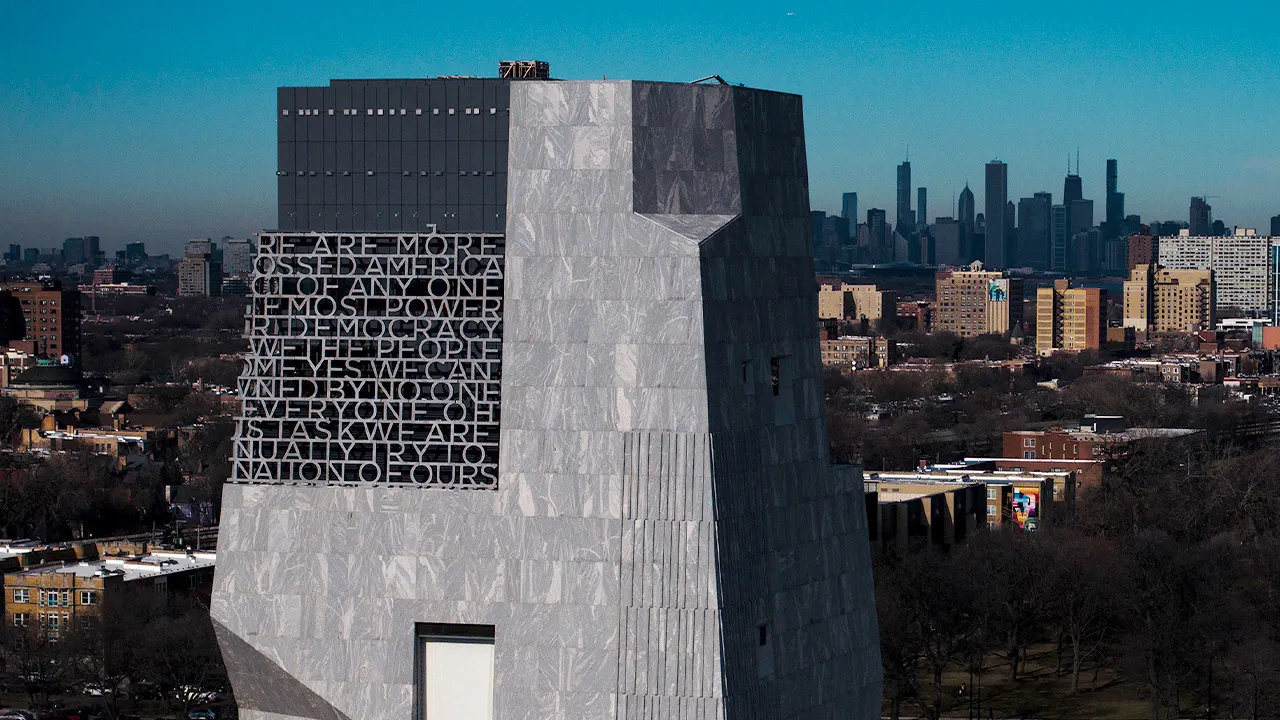
This friction between the monument and its host community is physically mirrored in the architectural design of the main building, which has drawn fierce criticism and polarized aesthetic debates across the city. The towering, largely windowless stone structure has been criticized by architecture enthusiasts and local residents alike, with critics comparing its imposing, heavy silhouette to a maximum-security prison, a giant garbage can, or a menacing, futuristic sci-fi headquarters. Detractors have mockingly dubbed the building the “Obamalisk,” arguing that its sheer scale and fortress-like appearance feel clinical, uninviting, and out of touch with the natural, open beauty of Jackson Park. Yet, despite the widespread architectural and social pushback, some urban planning experts urge patience, suggesting that controversial civic monuments often require decades to be fully understood and integrated into the cultural fabric of a city. They argue that the center’s innovative blending of modern architectural forms with public green spaces, community classrooms, and cultural exhibits may eventually transform the controversial campus into a cherished, irreplaceable civic treasure. As the gates finally open and the first waves of visitors wander through its plazas, the Obama Presidential Center stands as a complex, deeply complicated monument—one that represents an undeniable milestone in historic representation, but one that is also permanently marked by the high human, financial, and emotional costs of its creation.