



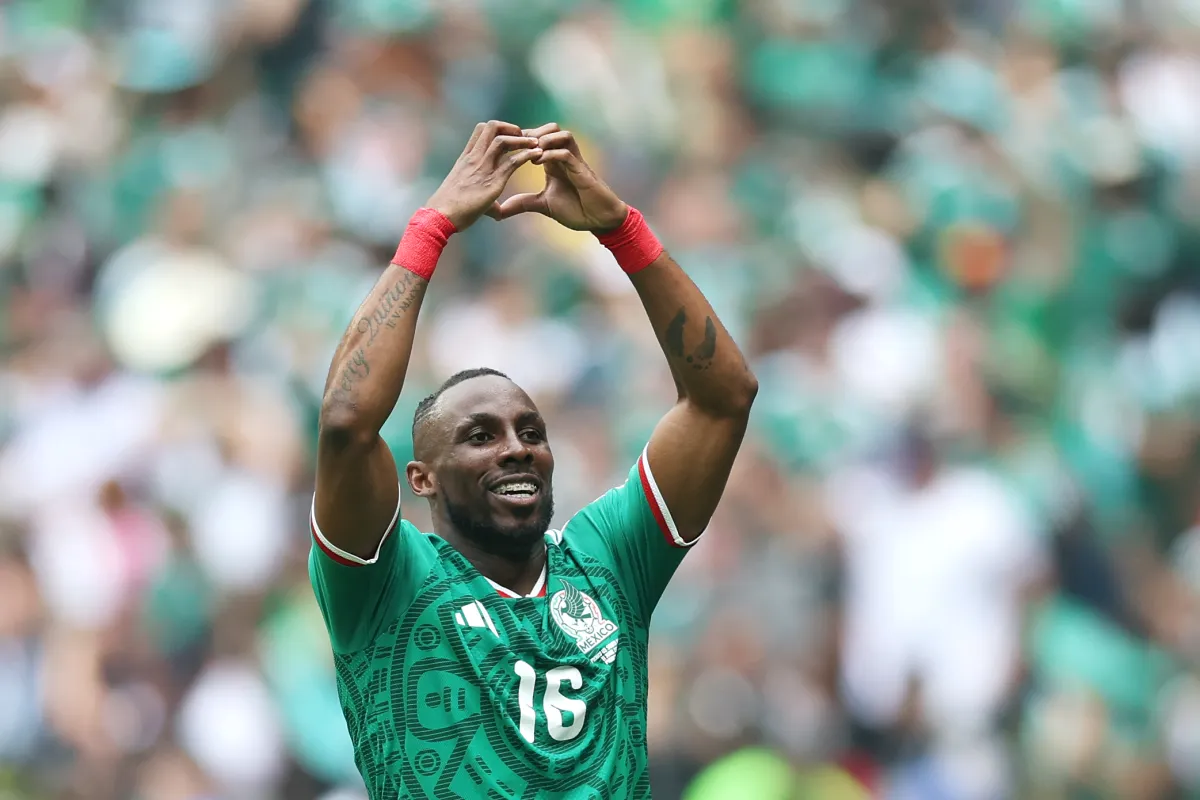
The collective sigh of relief and burst of pure, unadulterated joy that rippled through the streets of Mexico, from the historic Zócalo to the quietest coastal neighborhoods, was nothing short of magical when the final whistle blew on Thursday night. Emerging from a grueling, heart-stopping ninety minutes against a notoriously disciplined and relentless South Korean squad, Mexico secured a hard-fought 1-0 victory that felt like a national holiday in its own right. This crucial win did far more than simply book their ticket into the high-stakes pressure cooker of the Round of 32; it triumphantly confirmed their position as the undisputed kings of Group A. In the grand tapestry of international football, securing the top spot is a golden ticket, a strategic masterstroke that rewards their stellar group-stage performance with the ultimate home-field advantage. El Tri will host their next match in Mexico City, a sprawling metropolis that has long served as the beating heart of the country’s sporting soul. For decades, the national team has transformed their home turf into a terrifying coliseum for visiting opponents, drawing on the immense, suffocating passion of millions of fans who view football not as a pastime, but as an essential element of their cultural identity. This monumental victory has suddenly banished the dark clouds of skepticism that prior to the tournament hung over the team, replacing them with a surging wave of optimism, national unity, and soccer fever. As the party spilled out into the plazas, the immediate celebration quickly gave way to a deeper, more thrilling anticipation of what lies ahead. With their destiny firmly in their own hands and the unmatched power of their home crowd at their backs, the Mexican players and their faithful supporters now stand together on the precipice of history, eagerly waiting to see who will be brave enough to step into their territory for the first knockout match.
To understand the sheer magnitude of playing a World Cup knockout match in Mexico City, one must understand the mythical status of the Coloso de Santa Úrsula, the legendary Estadio Azteca. Sitting majestically at an oxygen-depleting altitude of over 7,200 feet, this iconic cathedral of football is more than just concrete, steel, and grass; it is a living, breathing monument where soccer history has been written in gold. Azteca is the sacred ground where Pelé lifted the Jules Rimet trophy in 1970, and where Diego Maradona conjured the both infamous and sublime moments of the 1986 tournament, forever embedding the stadium into the folklore of global sports. When nearly one hundred thousand fans pack into its steep, towering stands, the venue transforms into a roaring volcano of sound, color, and intense psychological pressure that can make even the most seasoned international superstars lose their footing. The thin air saps the energy from visiting players’ lungs, while the deafening, rhythmic chants of “Cielito Lindo” and the thunderous bellows of support create an acoustic wave that physicalizes the hopes of an entire nation. For visiting teams, playing here is an exhausting physical trial and a grueling psychological test, where every pass is scrutinized by a sea of green jerseys and every corner kick is met with an intimidating wall of noise. Mexico has carefully cultivated this fortress over generations, utilizing the unique atmospheric and emotional conditions to tilt the playing field in their favor, making the stadium a place where giants stumble and dreams go to die. As the Round of 32 approaches, the knowledge that their next fight for survival will take place within these hallowed, intimidating walls gives Mexico an invaluable psychological edge, turning their home stadium into a powerful, invisible twelfth player on the pitch.
Among the potential challengers who might dare to enter this intimidating arena, the mathematics of probability point directly to one of the most passionate, colorful, and beloved fanbases in the entire landscape of international sport: Scotland. According to the sophisticated statistical engines of Fusion Football, which meticulously simulated the remaining tournament scenarios over 10,000 times to project the most realistic outcomes, there is a striking 27.5% probability that the Tartan Army will be the ones booking their flights to Mexico City. The mere prospect of a Scotland versus Mexico clash in the high-stakes environment of the Round of 32 is a dream come true for sport romanticists and football purists worldwide, promising an unforgettable cultural exchange both on and off the pitch. The passionate supporters of Scotland, renowned globally for their boisterous songs, traditional kilts, good-natured humor, and unyielding loyalty, would inevitably descend upon the historic avenues of Mexico City, creating a vibrant, beer-fueled, and friendly invasion that would linger in the city’s collective memory for decades. On the pitch, this matchup presents a fascinating, unpredictable clash of contrasting footballing philosophies and physical temperaments. Scotland, underdogs who are battle-tested in the highly competitive, physical, and relentless environments of European football, poses a unique tactical headache with their industrious work rate, aerial strength, and compact defensive shape. Their path to this specific matchup remains fluid, of course, as an unexpected, heroic upset against footballing giants like Brazil or a highly disciplined and technical Morocco could alter the mathematical equations and send a different challenger to Mexico. Yet, as the analytical models stand right now, the narrative of Scotland taking on Mexico at the majestic Azteca remains the most probable destiny, a tantalizing fixture of raw, heart-on-the-sleeve passion meeting Latin American football artistry.
If the mathematical wheel of fortune spins slightly differently in the coming days, Mexico could find themselves facing a much more familiar, yet equally dangerous, opponent from their own longitudinal hemisphere: the resilient national team of Ecuador. The statistical simulations currently place the probability of this highly anticipated all-Americas showdown at a substantial 21.7%, a figure high enough to keep the Mexican scouting network working overtime to analyze the tactical nuances of this formidable South American side. Ecuador, widely recognized on the global stage for producing incredibly robust, athletic, and disciplined defensive units, represents a classic CONMEBOL threat that thrives in high-stakes, physically punishing matches. They entered this tournament with a quiet, earned confidence, harboring legitimate desires of winning a tough group that included European powerhouse Germany. However, those lofty dreams of group dominance were abruptly shattered in their very first game, when a highly organized and clinical Ivory Coast team managed to breach their vaunted defense and hand them a devastating, narrow 1-0 defeat. This sudden, agonizing setback has transformed the Ecuadorian squad into a wounded, extremely dangerous animal—a team that is now playing with a sense of desperate urgency and a fierce desire to prove to the world that their initial slip-up was nothing more than an unfortunate aberration. For Mexico, facing a veteran South American side like Ecuador in a do-or-die elimination match would be a grueling, tactical chess match of epic proportions. It would pit El Tri’s quick signature passing, wing-focused fluidity, and creative flair against a physically imposing, seasoned Ecuadorian defense that excels at absorbing pressure and launching devastating, lightning-fast counter-attacks. The inherent intensity of regional rivalry would only be magnified tenfold by the supreme stakes of World Cup knockout football, ensuring a dramatic, nail-biting encounter where a single defensive lapse could define careers.
While the analytical mind naturally tends to focus its attention on established footballing territories like Scotland or Ecuador, the true, beating heart of the World Cup has always thrived in the romantic realm of the absolute underdog, beautifully exemplified by the tiny island nation of Cape Verde. Holding a modest but incredibly significant 10% mathematical probability of facing Mexico in the Round of 32, this vibrant West African archipelago of just over half a million people has already established itself as one of the most heartwarming and inspiring narratives of the entire global tournament. Before the first whistle of the group stage ever blew, the humble players, coaches, and passionate citizens of Cape Verde would have been absolutely ecstatic with just scoring a single, historic goal on the world stage, celebrating the mere privilege of participating in a tournament of this breathtaking scale. Yet, soccer, in its infinite and beautiful capacity for chaos, magic, and theatrical surprise, clearly harbored far grander, more poetic plans for them. By securing a shocking, hard-fought, and disciplined draw against global powerhouse and former champion Spain in their opening match, this tiny nation proved to the world that they possess the tactical discipline, defensive organization, and sheer fearlessness to stand toe-to-toe with the elite. Mexico’s tactical masterminds might spend countless sleepless nights analyzing how to defend against predictable global superstars like Lionel Messi or Lamine Yamal, but a different, far more psychological question now lingers: are they truly prepared to face the unheralded, heroic figure of veteran goalkeeper Josimar “Vozinha” Dias? His legendary, gravity-defying saves have turned him into an international folk hero. Facing Cape Verde would represent a delicate psychological minefield for Mexico, where they must avoid complacency against a team playing with absolute freedom and nothing left to lose.
As the final whistles of the group stage wind down and the knockout brackets slowly crystallize into reality, the heavy air across Mexico is thick with a potent, almost electric mixture of nervous energy, fierce national pride, and historic ambition. For El Tri, this upcoming Round of 32 match represents far more than just another highly publicized fixture on a sports calendar; it is the critical threshold, the vital gateway to the legendary and long-elusive “quinto partido”—the fifth game of the World Cup that has haunted the dreams, hopes, and collective psyche of Mexican football fans for an entire generation. Having the unprecedented, precious luxury of contesting this high-stakes elimination match on home soil, backed by the thunderous, earth-shaking roar of nearly one hundred thousand passionate compatriots inside the mythical, pressure-cooker walls of Estadio Azteca, offers this current crop of players their absolute best opportunity in decades to forever rewrite their nation’s sporting destiny. Whether they ultimately find themselves standing across the pitch from the colorful, bagpipe-playing Tartan Army of Scotland, the physically imposing, defensively resolute warriors of Ecuador, or the ultimate fairytale, giant-killing heroes of the Cape Verde islands, the stage in Mexico City is set for an unforgettable, emotionally charged night of human drama. The beautiful game remains the absolute pinnacle of global sports precisely because of these unscripted, deeply human stories—the shared gasps of breathless anticipation, the tears of pure joy or crushing heartbreak, and the profound, beautiful solidarity of a nation of 130 million people united behind a single rolling ball. As the clock steadily ticks down to the kickoff of the knockout phase, the immense weight of history, expectation, and collective dreams are all converging on the sacred grass of the Azteca, where eleven men will step out under the floodlights to touch immortality.