



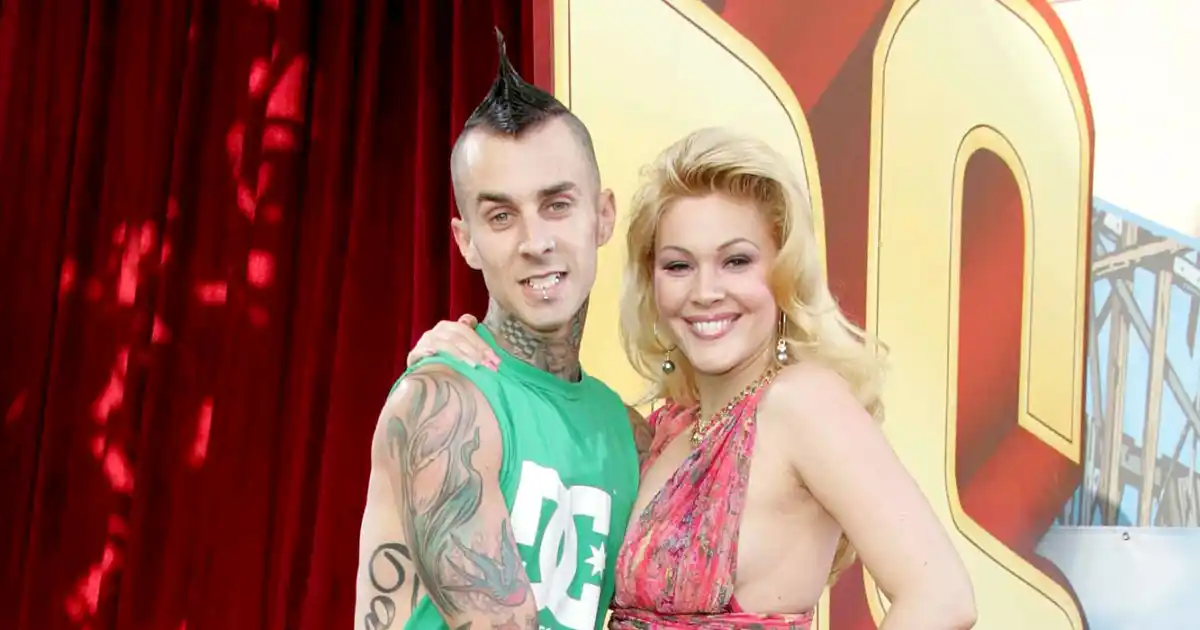
The early 2000s marked a cultural moment defined by high-intensity celebrity relationships, and few burned as brightly or as volatilely as the union between Blink-182 drummer Travis Barker and former Miss USA Shanna Moakler. When they first crossed paths, their connection was almost electric, fusing the worlds of punk rock rebellion and pageant-world glamour into a lifestyle that captivated millions. They quickly became the epitome of an edgy, passionate power couple, a dynamic that was broadcast directly into living rooms across the globe via their hit MTV reality show, Meet the Barkers. Behind the stylized television editing, rock-and-roll lifestyle, and red-carpet appearances, however, lay a much more fragile reality. The birth of their two children, Landon and Alabama, brought immense joy but also added layers of domestic pressure onto a foundation that was already showing signs of stress. By 2006, after only two years of marriage, the intense spotlight, coupled with deeply rooted personal differences, caused their fragile union to splinter. The declaration of their separation shocked the public, introducing a painful narrative that would soon be dominated not by rock-and-roll romance, but by the slow, agonizing dissolution of a family unit struggling to survive under the harsh glare of public scrutiny.
Following their initial separation in 2006, Travis and Shanna embarked on a tumultuous, two-year emotional odyssey characterized by an on-and-off cycle that left family, friends, and fans constantly guessing. This period of painful ambiguity was a testament to the complex, often contradictory nature of human relationships; it was a desperate, exhausting attempt to salvage the love they once shared and to preserve a traditional household for Landon and Alabama. They repeatedly tried to reconcile, desperately hoping that the magnetic attraction that had brought them together could overcome the fundamental incompatibilities driving them apart. Tragically, each attempt to rebuild ended in the same familiar patterns of heartbreak, proving that love alone is sometimes not enough to heal deep-seated psychological wounds, communication breakdowns, and trust issues. By 2008, the emotional exhaustion peaked, and the former couple finalized their divorce, officially ending their legal partnership but inaugurating an even more challenging phase of their lives: co-parenting through a minefield of lingering resentment and unresolved anger.
While the public often craves the narrative of a peaceful, harmonious co-parenting relationship post-divorce, the reality for many high-profile couples is far more destructive, as evidenced by the escalating tensions between Travis and Shanna. The transition from spouses to cooperative co-parents requires an extraordinary level of emotional maturity, selflessness, and the ability to completely compartmentalize one’s past grievances for the sake of the children. For the Barker-Moakler family, this delicate balance proved near-impossible to maintain, as old wounds simmered just beneath the surface, waiting for a catalyst to ignite them. In 2014, the fragile peace shattered completely, giving rise to a bitter, knock-down custody battle that laid bare the raw, unfiltered animosity that had been brewing for years. This was not merely a disagreement over schedules or holiday custody; it was a deeply personal, toxic war of attrition in which both parents, driven by a mixture of intense love for their kids and profound resentment toward each other, resorted to mudslinging and character assassination, proving how easily parental protective instincts can be warped into weaponized anger when trauma remains unaddressed.
The sheer depth of this animosity was laid bare for the world to see in May 2021, when unsealed court documents from their 2014 legal battle revealed a series of incredibly hostile and damaging text messages exchanged between the two. In these raw, unedited communications, Shanna expressed intense anxiety regarding the stability of her children’s lives, demanding that Travis keep his “drug addict girlfriends” away from Landon and Alabama, while lamenting the severe emotional distress that children of divorced parents experience during transitional periods. Travis, deeply stung by these accusations and the attack on his personal life, responded with equal venom, expressing his outright hatred for his ex-wife, calling her a “f–king call girl,” and accusing her of being an absent parent. To counter her narrative, Travis detailed his highly involved, hands-on parenting style, stressing that he was the one actively participating in their daily routines—regularly driving them to school, preparing meals, guiding homework sessions, planning birthday parties, and even purchasing a home in Cheviot Hills specifically to be closer to their school. He counter-claimed that he harbored deep worries for his children’s safety and well-being whenever they were under Shanna’s roof, turning the custody dispute into a tragic stalemate.
Behind the sensationalized headlines and court filings lies a heartbreaking truth about the collateral damage of public celebrity divorces: the profound impact on the children caught in the crossfire. Landon and Alabama grew up in an environment where their parents’ private pain was repeatedly transformed into public entertainment, a reality that complicates the already challenging process of adolescent development. When parents engage in such high-stakes emotional warfare, children are often forced to navigate a minefield of loyalty conflicts, internalizing the stress, anger, and resentment of the two people they love most in the world. The transition periods between homes, which Shanna rightly pointed out as inherently difficult, become exponentially more traumatic when accompanied by accusations of drug use, parental neglect, and mutual contempt. This toxic dynamic forces children to grow up too fast, stripping them of the safety and simplicity of childhood and replacing it with the heavy burden of managing their parents’ unresolved conflicts.
Ultimately, the turbulent saga of Travis Barker and Shanna Moakler serves as a somber, deeply human cautionary tale about the toxic intersections of fame, pride, and unresolved relational trauma. Years have passed since the darkest days of their 2014 custody battles, and both individuals have walked down vastly different paths, with Travis recently finding a new chapter of high-profile domesticity with Kourtney Kardashian, and Shanna continuing to carve out her own identity away from her ex-husband’s shadow. While the physical scars of their marriage may have faded, the emotional echoes of their bitter public feud remain a permanent part of their family history. It reminds us that underneath the glamorous veils of celebrity lies the same messy, complicated, and often painful human struggle to love, protect, and let go. The journey toward healing from such profound marital devastation is rarely linear, but it represents the ultimate hope for this family—that through forgiveness, maturity, and a shared, unwavering commitment to the wellness of Landon and Alabama, they can find a way to quiet the storms of the past and build a more peaceful, supportive future.