


The transition from a routine, sun-drenched Southern California afternoon to a high-stakes tactical emergency occurred in the blink of an eye, shattering the peaceful coastal atmosphere that typically blankets San Diego County. It began as a frantic, high-speed pursuit on the busy local roads of Orange County, where law enforcement officers strained to keep pace with a vehicle driving with reckless and life-threatening urgency. The suspects behind the wheel, driven by an overwhelming desire to escape the clutches of local police, pushed their vehicle to its absolute physical limits, weaving dangerously through traffic, ignoring stop signals, and endangering countless civilian lives on the open highway. As the chase reached a fever pitch near the southern edge of the county, the fleeing vehicle tore directly toward the formidable, heavily guarded perimeter of Marine Corps Base Camp Pendleton, a massive coastal installation that serves as a cornerstone of the nation’s military readiness and training. Rather than surrendering to the flashing lights in their rearview mirror or seeking an exit, the driver made an incredibly dangerous, split-second decision to breach the federal military installation. With a deafening crash, the suspect vehicle pulverized a security gate at one of the base’s main access points, tearing through the heavily monitored entrance in a spectacular display of twisted metal, screeching tires, and flying debris. This sudden, violent intrusion shattered the quiet routine of the military police on duty and instantly triggered a base-wide emergency response. The incident transformed what had been a standard county police pursuit into an active, high-priority security threat on classified federal military property. Sirens began to wail across the surrounding sectors, security barriers were instantly deployed at secondary intersections, and the base’s law enforcement network lit up with urgent radio traffic as the rogue vehicle disappeared into the sprawling, hilly terrain of the historic base, leaving gate guards and pursuing officers stunned by the sheer audacity of the breach.
Deep inside the gates of Camp Pendleton, the atmosphere shifted instantly from a quiet, late-summer afternoon to one of tense and calculated apprehension. While Camp Pendleton is historically renowned as a major, rugged training ground for thousands of infantry Marines preparing for overseas deployments, it is also a vibrant, close-knit community. The base serves as a home to thousands of military families, including young mothers, playing children, off-duty service members, and civilian contractors who look to the secure base as a safe haven from the chaos of the outside world. The gravity of the situation hit close to home when the fleeing suspects suddenly abandoned their battered vehicle right in the heart of a quiet military housing area. Fleeing on foot into the neighboring backyards and the thick, dry brushland that borders the residential sectors, the suspects left behind a vacuum of uncertainty and danger. This prompted base commanders to issue an immediate, strict shelter-in-place order for all personnel and residents. For the families living on the base, the sudden command to lock their doors, close their windows, and stay away from all exterior openings was met with a mixture of natural anxiety and disciplined resolve. Parents hurriedly gathered their children from neighborhood playgrounds and front yards, locking heavy deadbolts, drawing blinds, and comforting confused pets. They watched in quiet suspense as the shadows of tactical helicopters began to sweep rhythmically across their lawns and rooftops. The eerie silence that fell over the normally bustling neighborhoods was punctuated only by the distant, heavy thrum of rotor blades and the occasional wail of emergency vehicles, bringing the harsh realities of criminal desperation directly to the doorsteps of those who dedicate their lives to protecting the nation.
To quickly resolve a crisis of this scale on a base encompassing more than 125,000 acres of rugged, mountainous terrain, canyons, and training fields, a massive and highly coordinated multi-agency response was launched immediately. A formidable coalition of approximately thirty highly trained tactical and law enforcement personnel assembled within minutes, representing a diverse array of local, state, and federal entities determined to secure the facility. This was not a localized effort, but rather a seamless fusion of specialized forces, including investigators from the Naval Criminal Investigative Service (NCIS), deputies from the Orange County Sheriff’s Department, military police from the Camp Pendleton Provost Marshal’s Office, federal agents from the Drug Enforcement Administration (DEA), and officers from the United States Border Patrol. For six grueling hours, these highly disciplined search teams worked in perfect lockstep, navigating the difficult, unpredictable, and potentially hazardous landscape of the military installation. Their ground efforts were enhanced by cutting-edge, real-time intelligence and tactical tracking support provided by the NCIS Multiple Threat Alert Center (MTAC) and the Regional Enforcement Action Capabilities Team (REACT). Using a combination of sophisticated aerial infrared sensors, highly trained tracking K-9 units, and coordinated ground patrols, the search teams methodically sliced through the base’s vast expanses. Every individual involved in the manhunt understood that time was of the essence; two desperate individuals on the run could easily find deep hiding places in the undeveloped ravines or attempt to hotwire another vehicle to continue their flight, making the coordinated pressure of the search grid absolutely vital to keeping the suspects contained and preventing an escape.
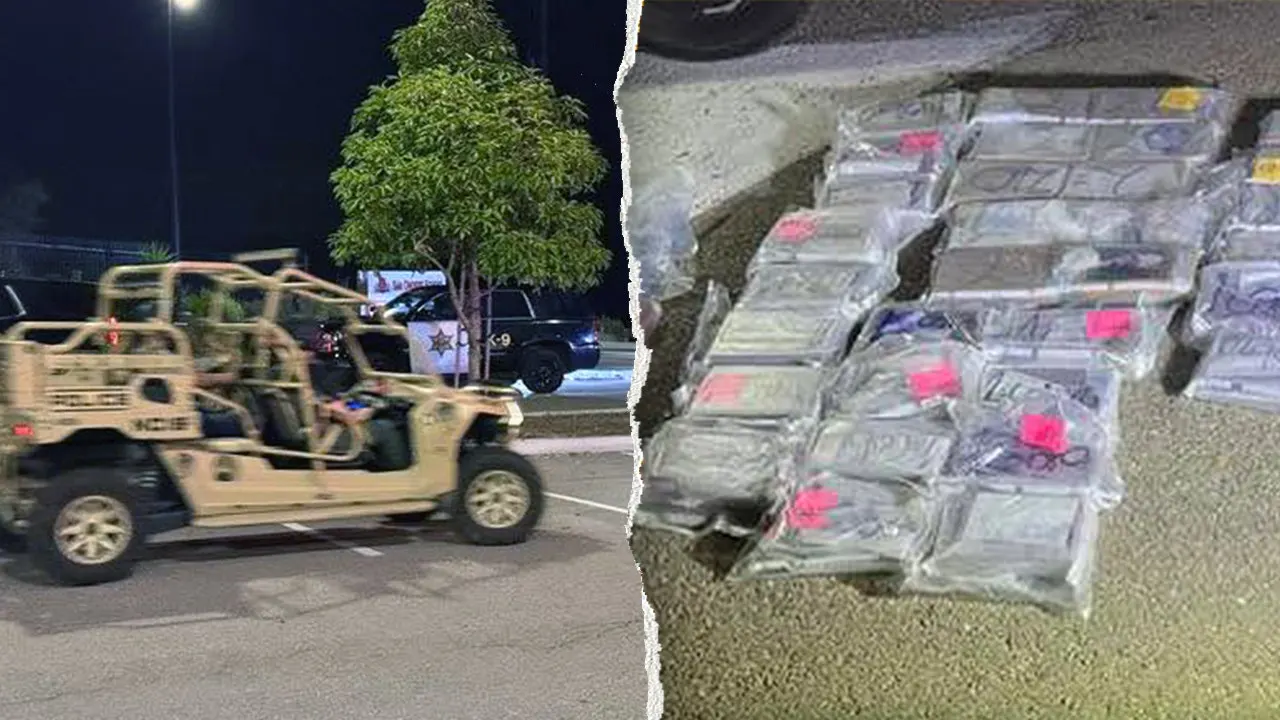
While the heavily armed search teams combed the rugged hillsides and residential corners of the base, investigators who had secured the abandoned vehicle in the housing area made a chilling discovery that underscored the true, deadly stakes of the afternoon’s events. Inside the trunk and passenger compartment of the abandoned car lay a cargo of terrifying proportions: approximately 51 kilograms, which translates to more than 112 pounds, of highly concentrated cocaine and fentanyl. The sheer volume of these illicit substances represented not only a massive financial fortune on the black market but also a catastrophic threat to public health. Fentanyl, a synthetic opioid so incredibly potent that even microscopic, passive exposure can be instantly fatal, was packed alongside dense bricks of cocaine in a vehicle that had been left wide open in a residential neighborhood where children regularly play. The devastating human toll of these substances is felt daily in communities across the United States, and the realization that such a lethal payload of poison had been driven directly into a sanctuary of military families added a profound layer of gravity and anger to the ongoing operation. It became immediately clear to the federal investigators on the scene that they were not merely dealing with desperate local joyriders or low-level evaders, but rather with heavily armed or highly dangerous drug trafficking suspects carrying a cargo capable of causing thousands of deaths. This dark discovery galvanized the search teams even further, replacing any growing physical exhaustion with a renewed, fierce determination to ensure that the individuals responsible were captured before they could pose any further risk to the community.
As the grueling, high-pressure manhunt wore on into its sixth hour and the afternoon sun began to set behind the Pacific Ocean, the physical and mental stamina of the search teams was put to the ultimate test. Tracing faint footsteps through the dry California chaparral, scanning dark crawlspaces, and maintaining a tight, impenetrable cordon around the search zone required unwavering focus and immense discipline from every deputy, agent, and Marine involved. The breakthrough in the search did not come with a dramatic, chaotic exchange of gunfire, but through the patient, methodical application of tactical pressure and superior electronic positioning. Utilizing the real-time tracking intelligence funneled directly to the field from the NCIS alert centers and the collaborative tracking efforts of the expert K-9 units, authorities successfully narrowed the search grid and cornered the suspects. Surrounded on all sides and realizing they had absolutely no escape route left on the heavily fortified base, both suspects surrendered and were taken into custody without further incident. The peaceful resolution of such a highly volatile and potentially explosive situation was a phenomenal testament to the training, discipline, and restraint of the responding agencies. As the handcuffs clicked shut on the wrists of the suspects, a palpable, collective sigh of relief swept through the tactical command posts and the quiet military neighborhoods that had been locked down for hours on end, allowing families to finally breathe a sigh of relief.
In the aftermath of the chaotic breach and the subsequent arrests, the focus of the operation has transitioned from immediate crisis management to a massive, multi-jurisdictional federal investigation. Although the identities of the two suspects and the specific state and federal charges they will face have not yet been formally released to the public, the sheer scale of the drug seizure guarantees severe, life-altering legal consequences. NCIS quickly took to social media to express its profound gratitude for the seamless teamwork and tireless dedication demonstrated by the Orange County Sheriff’s Department, the Camp Pendleton Provost Marshal’s Office, the DEA, the US Border Patrol, and all other cooperating agencies. This high-stakes incident serves as an intense reminder of the unpredictable vulnerabilities that modern law enforcement faces daily and the critical importance of maintaining uncompromising security standards on our nation’s military bases. It also highlights the quiet, often unseen heroism of the emergency responders and military personnel who stand watch at our gates, ready at a moment’s notice to protect their communities from external threats. Ultimately, what began as a reckless, localized police pursuit ended as a resounding victory for public safety, resulting in the removal of over 112 pounds of lethal narcotics from the streets and proving that through robust inter-agency cooperation and unwavering vigilance, even the most chaotic crises can be resolved with justice firmly served.