



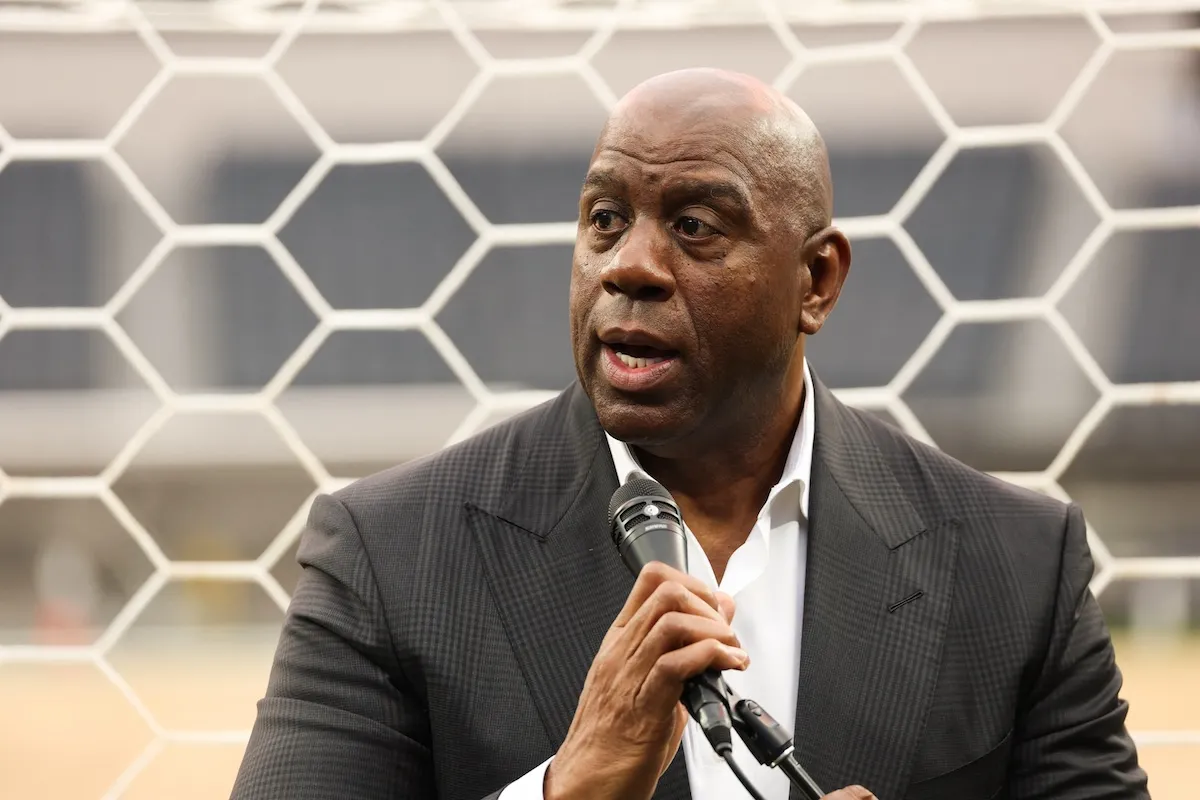
The atmosphere of the NBA Finals is a pressure cooker unlike any other in professional sports, where a single blown possession or a momentary lapse in concentration can dismantle months of meticulous preparation and alter the course of basketball history. This harsh reality was thrust upon the young, ascending San Antonio Spurs in their agonizing 107-106 Game 4 loss to the New York Knicks, a defeat that transformed what should have been a triumphant walkover into a haunting cautionary tale of missed opportunities. Standing amidst the post-game wreckage, five-time NBA champion and Los Angeles Lakers legend Magic Johnson offered a nuanced, deeply humanized critique of the collapse during an appearance on ESPN’s “Get Up” with Mike Greenberg. Rather than simply tearing down the disappointed young squad, Magic approached his analysis with the empathy of a veteran who has navigated these very trenches. He made it clear that the Spurs did not necessarily play a poor brand of basketball over the course of the evening; instead, they slowly, almost imperceptibly, let the steering wheel slip from their hands. Magic emphasized that while the effort was visible, the team had every right to feel devastated because their ultimate undoing was a complete failure to execute their offense and defense during the high-stakes, pressure-filled minutes of the fourth quarter, when championship pedigree is truly forged.
At the very heart of this dramatic collapse sat a critical coaching decision that Magic Johnson believes completely altered the trajectory of the game and left the Spurs’ most potent weapon defenseless against the rising tide of the Knicks’ comeback. Magic pointed his finger directly at San Antonio’s head coach, Mitch Johnson, calling out what he perceived to be a fundamental error in managing the physical workload of their generational superstar, Victor Wembanyama. The legendary point guard argued that when a team manages to build a commanding 20-point lead in the third quarter, it is the head coach’s duty to protect his players from their own competitive nature and save their energy for the final, deciding battle. “Coach Johnson made a huge mistake. When you’re up 20, ‘Big man, Victor, come sit down.’ At the end of the third quarter, he shoulda took him out,” Magic passionately explained to Greenberg. Magic’s thesis was simple yet profound: Wembanyama, despite his alien-like athleticism and defensive dominance, is still a human athlete subject to the laws of physical exhaustion, and leaving him on the floor during the waning minutes of a blowout stripped him of the vital stamina he would desperately need to carry the team across the finish line in the fourth quarter.
This mismanagement of minutes indeed manifested visibly on the court, as the exhaustion of carrying a franchise on his towering shoulders began to visibly weigh Wembanyama down. Magic postulated that if the young giant had been granted even a brief three-to-four-minute stretch on the bench to catch his breath and rehydrate, he would have possessed the explosive energy required to dominate the rim and take over the game when the Knicks began their furious rally. Instead, as the game entered its most critical phase, the French phenom looked thoroughly spent, his movements losing the sharp, electric precision that usually defines his play. We have all seen what a fully energized Wembanyama is capable of achieving, such as his legendary, gravity-defying performance in the double-overtime thriller against the Oklahoma City Thunder during Game 1 of the Western Conference Finals. Yet, in the dying embers of Game 4 of the Finals, his tired legs betrayed his competitive spirit; although he still compiled numbers worthy of an All-Star, he lacked the physical reserves to impose his will on the game, leaving him to look on as a spectator to a tragedy that he was simply too tired to prevent.
The tragedy of the loss was only compounded by a sequence of late-game execution errors that highlighted the agonizing gap between youthful exuberance and seasoned championship execution. When the pressure reached its absolute peak, the Spurs’ decision-making crumbled, resulting in a series of highly questionable plays that will undoubtedly haunt their film sessions. Magic and sports analysts alike pointed to De’Aaron Fox’s decision to drive for a contested layup rather than smartly burning precious seconds off the game clock or driving deliberately to draw a tactical foul that would have put the game on ice. This frantic, hurried energy trickled down to the final play of the game, where rookie Stephon Castle found himself smothered by the Knicks’ defense, unable to release a final, desperate shot before the buzzer sounded to seal their fate. These moments were not indicative of a lack of talent, but rather a vivid illustration of how tired minds and inexperienced hearts make rushed decisions under the blinding lights of the NBA’s biggest stage, exposing how quickly a 29-point advantage can vanish when a team loses its collective composure.
Despite the heavy gloom hanging over the San Antonio locker room, Magic Johnson refused to paint a picture of ultimate doom, offering instead a reassuring prediction rooted in his decades of witnessing the cyclical dramas of the postseason. Great teams, Magic knows, are not defined by avoiding collapse, but by how they respond to the emotional scar tissue left behind by such defeats. He confidently predicted that the Spurs would find their footing, shake off the exhaustion of Game 4, and claim a crucial victory in Game 5 when they return to the familiar, passionate embrace of their home court in San Antonio. His optimism serves as a vital reminder that youth, while prone to devastating, erratic errors, also possesses an incredible capacity for rapid recovery and boundless resilience. The sting of this 29-point collapse will either break the spirit of this young roster or serve as the ultimate crucible, forcing them to grow up overnight and understand that raw talent must always be paired with disciplined pacing and mental endurance if they wish to lift the Larry O’Brien Trophy.
The stage is now set for a monumental, legacy-defining Game 5, scheduled to broadcast to millions of eager fans on Saturday at 8:30 p.m. Eastern Time on ABC and ESPN, promising a spectacle of high-intensity basketball where no excuses will be accepted. For the San Antonio Spurs, this matchup is no longer just another game in a long series; it is a direct test of their maturity, coaching adaptability, and internal leadership. Interim coach Mitch Johnson must show that he has absorbed the constructive criticisms of legends like Magic, finding a way to balance Wembanyama’s crucial minutes so the big man can be the closer his team needs. Meanwhile, players like Fox and Castle must transform their late-game heartbreak into fuel, proving that their mistakes were merely a temporary detour on their path to greatness rather than a defining characteristic of their play. As the basketball world turns its collective gaze to Texas this Saturday night, we will find out if this young, thrilling Spurs team has the character to rise from the ashes of a historic collapse, or if the relentless, veteran grit of the New York Knicks will continue to exploit their tired legs and youthful indiscretions.