


The disappearance of eighty-four-year-old Nancy Guthrie from her Tucson, Arizona, home in February has left a devastating void, turning a quiet suburban enclave into the center of a heartbreaking, cross-border mystery. In a world that often moves too fast to notice the vulnerable, Nancy was a woman who had earned the right to spend her golden years in peaceful security, surrounded by the familiar comforts of the desert home she had built her life in. The terrifying reality of an elderly grandmother being ripped from her sanctuary in the dead of winter is a nightmare that strikes at the very heart of familial love and community trust. It evokes a visceral, protective anger and a profound sorrow, reminding us of the fragility of our elders and the terrifying ease with which a life can be disrupted. For her family and neighbors, the silence that now echoes through Nancy’s home is not just quiet; it is a heavy, suffocating presence filled with unanswered questions and agonizing worry. No longer is this just a standard missing person investigation relegated to police files; it is a deeply human tragedy that demands our collective empathy and unwavering attention as searchers on both sides of the border refuse to let her memory fade into the dust.
The terror surrounding Nancy’s abduction is magnified by the chilling, pixelated breadcrumbs left behind on her own doorstep, a digital testament to a calculated and predatory invasion. Modern home security cameras are designed to offer peace of mind, but in this harrowing case, they captured a narrative of nightmares. Weeks before Nancy vanished, doorbell footage recorded a masked figure creeping silently around her property under the cover of darkness, suggesting a deeply disturbing level of premeditation and stalking. The horror culminated on that fateful February day when the camera once again captured a masked, gloved intruder standing directly on her front steps—a visual representation of absolute vulnerability meeting cold, faceless malice. When police arrived hours later, they discovered the back door propped open, a detail that immediately fueled terrifying theories of multiple accomplices working together to execute this heinous plot. To visualize an 84-year-old woman confronted in her own home by masked invaders is to touch the absolute depths of human fear. This stark violation of her domestic sanctuary has transformed a simple residential street into a crime scene haunted by the ghost of what was lost, forcing a tight-knit community to look at the shadows with newfound dread.
Adding a surreal and deeply disturbing layer to this tragedy is the bizarre media circus orchestrated by the perpetrator or perpetrators in the days following the abduction. In a move that defies standard criminal behavior and highlights a cruel, narcissistic desire for notoriety, supposed ransom notes were sent not to Nancy’s terrified family or directly to negotiators, but to local media outlets and the celebrity gossip giant TMZ. By turning a horrific kidnapping into a sensational public specter, those responsible showed a sociopathic disregard for human suffering, treating Nancy’s life as a prop in a twisted, public game. For her loved ones, this bizarre dissemination of demands was a form of psychological torture, forcing them to watch the media dissect the fate of their matriarch while law enforcement scrambled to verify the authenticity of the threats. Despite these highly public and brazen communications, the investigation has stalled without a single arrest, leaving the community in a fragile state of high alert. Pima County Sheriff Chris Nanos issued a stark, bone-chilling warning that the suspect is still at large and could absolutely strike again, hinting at a darker, unspoken motive that continues to elude investigators and keep the region gripped by fear.
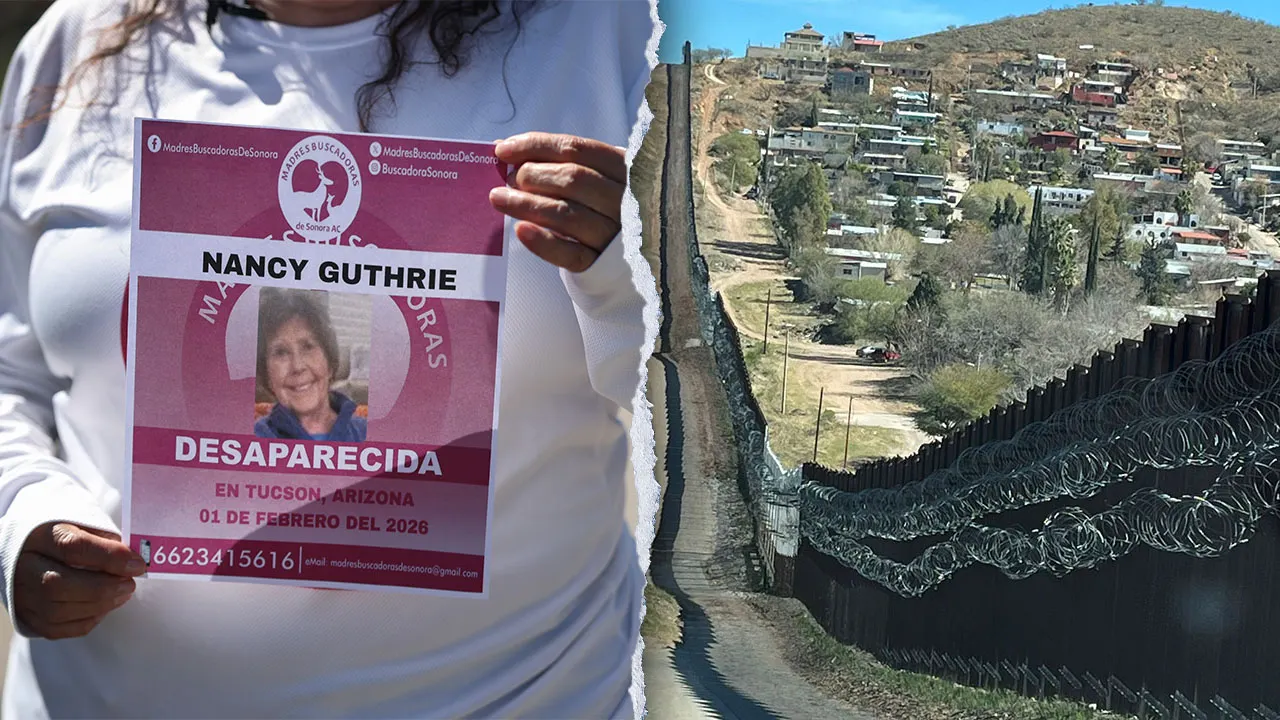
The search for answers recently took a dramatic and emotionally charged leap across the international boundary, deep into the arid and unforgiving terrain of Sonora, Mexico. It is here, amidst the dust and heat of Nogales, that the pure human spirit of solidarity emerged through the volunteer search collective known as Buscando Corazones Nogales (Searching Hearts Nogales). Led by the tireless and courageous Ramona Guadalupe Ayala Ortiz, this group of mothers, sisters, and daughters—who spend their lives digging through the desert in search of their own missing loved ones—received an anonymous, heartbreaking tip. The informant claimed that a grave containing a body matching Nancy Guthrie’s description could be found in the Mariposa area near the border town of Nogales. This remote region, characterized by rugged canyons and hidden paths, is a place where many tragic secrets are swallowed by the earth. The willingness of these Mexican volunteers to immediately take up the shovel and search for a missing American grandmother they had never met represents an extraordinary, beautiful act of cross-border humanity, proving that the bond of shared grief and the sacred duty to bring the lost home knows no geopolitical division.
Yet, as hope and dread collided south of the border, the harsh realities of international bureaucracy and systemic communication gaps threatened to slow the momentum of the search. Pima County Sheriff Chris Nanos was forced to address the public via social media, stating that despite the swirling news reports of the anonymous tip and the active hunt in Sonora, his department had not yet been officially contacted by Mexican authorities. This administrative delay highlights the agonizing friction that often exists between grassroots, boots-on-the-ground searchers and the formal diplomatic channels of sovereign nations. While retired border patrol agents note that international search protocols are designed to trigger automatically when a case spills across the boundary lines, the actual flow of time-sensitive information is often bogged down by jurisdictional red tape and diplomatic protocols. For a family waiting in agonizing suspense in Tucson, every hour lost to bureaucratic silence feels like an eternity. The sheriff maintained that his department remains fully committed, active, and ready to follow any credible lead, but the lack of direct, real-time coordination between Sonoran activists and Arizona detectives remains a frustrating obstacle in a race where days and hours are precious.
As the hot desert winds continue to sweep across the borderlands, the unresolved fate of Nancy Guthrie stands as a poignant reminder of both the darkness of human cruelty and the enduring light of human empathy. The vast Sonoran Desert, beautiful in its desolation, cannot be allowed to keep this secret forever; an eighty-four-year-old woman who lived a life of quiet dignity deserves to be found, honored, and brought home. This case is a powerful call to action for communities on both sides of the border to refuse to look away, to keep Nancy’s face in the public eye, and to stand behind the brave volunteers who refuse to let the missing be forgotten. Whether the ultimate truth is uncovered by the high-tech forensic tools of Arizona law enforcement or the muddy shovels of mothers searching in the Mexican dirt, the pursuit of Nancy Guthrie is a testament to the belief that no human being is disposable. Until justice is served and Nancy is brought back to her soil, her story remains an open, weeping wound—a call to protect our elders, to build stronger bridges across our borders, and to hold onto the fierce hope that the light of truth will eventually pierce the darkest corners of the desert.