



The quiet warmth of early autumn in Pasadena, California, was shattered on September 7, 2025, by an event that laid bare the profound vulnerability and fallibility of those sworn to protect the public. The Pasadena Police Department, an agency long striving to maintain a delicate balance of authority and community trust, found itself thrust into an uncomfortable spotlight after releasing highly disturbing video footage of what can only be described as a catastrophic lapse in professional judgment. This was not a high-speed pursuit of a dangerous suspect, nor was it a tense standoff with an armed assailant in the dark of night. Instead, it was an entirely self-inflicted crisis—a profoundly human tragedy born of complacency, where the line between tactical readiness and juvenile behavior was tragically blurred. The incident, which Chief Gene Harris would later soberly categorize as a suspected accidental officer-involved shooting, occurred not in the heat of a chaotic patrol encounter, but during a moment of ill-conceived leisure that defied every standard of basic firearm safety. By peeling back the layers of this incident, we are forced to confront the sobering reality that behind the badges, the bulletproof vests, and the imposing uniforms are human beings capable of profound errors in judgment. This event serves as a stark reminder of how quickly routine duty can devolve into disaster when vigilance is replaced by arrogance, and how one split-second decision can forever alter multiple lives and tarnish the hard-earned reputation of an entire law enforcement agency. Fortunately, the wounded officer survived the ordeal and successfully embarked on a path to physical recovery, but the emotional, psychological, and institutional scars left behind by this bizarre episode will undoubtedly linger far longer than any physical wound, prompting deep introspection within the department and the community it serves.
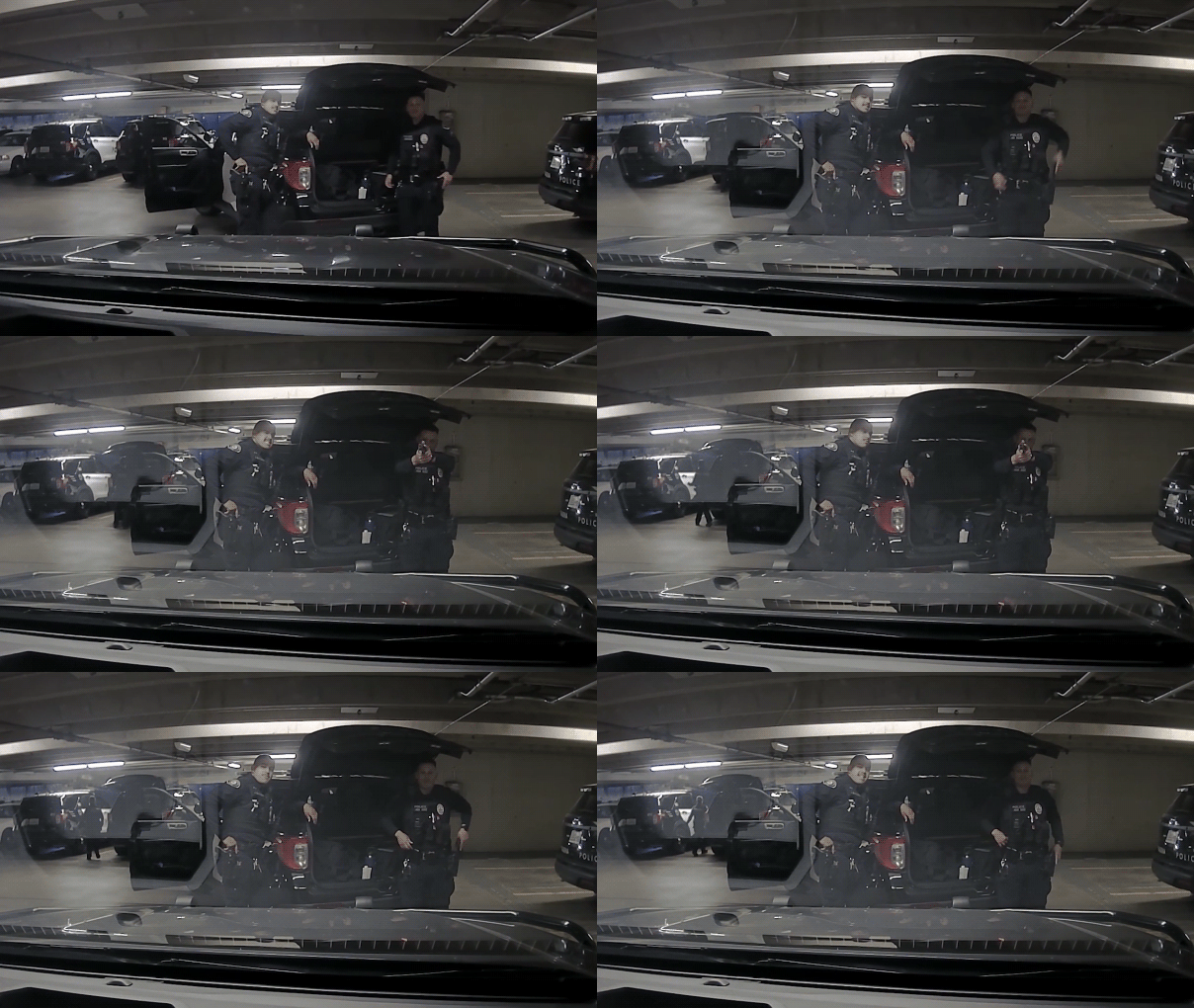
To understand how such an unthinkable event could transpire in broad daylight, one must look at the specific dynamics of the interaction captured on the department’s own raw recording systems, which paint a vivid picture of casual negligence as it unfolded. The video footage captures a scene that initially appears entirely routine: one officer stands outside a parked patrol car, a familiar sentinel on the urban landscape, while another officer slowly pilots a secondary police cruiser toward him. There is an unspoken, casual camaraderie that often exists among partners who face constant external dangers together—a bond of brotherhood that should foster mutual protection but, in this case, fostered a dangerous, reckless familiarity. As the vehicle glides to a halt, the officer standing on the pavement suddenly draws his duty weapon with a practiced, dramatic flourish, pointing the live, loaded firearm directly at the windshield of the approaching cruiser where his colleague sits behind the wheel. This initial act of “quick draw” bravado, mimicking the cinematic tropes of a wild-west gunslinger rather than the strict protocols of modern tactical firearms training, lasted only a few seconds before the standing officer casually returned the weapon to his holster. It was a brief, unwarranted display of machismo, a split-second decision to treat a lethal instrument as a prop for a joke, revealing a deeply concerning undercurrent of complacency. In high-stress professions, lighthearted interaction and play are often used as psychological defense mechanisms against chronic anxiety and occupational trauma, but when that coping mechanism takes the physical form of brandishing loaded firearms at companions, the threshold from harmless bonding to extreme hazard is crossed. This playful yet lethal game established a dangerous precedent of escalation, creating an environment where basic survival instincts and safety protocols were completely overridden by the desire to reciprocate a foolish gesture, setting the stage for a split-second disaster that neither man could undo.
The escalation of this dangerous game was swift and catastrophic, illustrating the terrifying speed with which a joke can transform into a life-threatening crisis. Seated behind the steering wheel of the approaching cruiser, the driving officer, apparently unwilling to let his colleague’s dramatic gesture go unanswered, decided to participate in this ill-conducted display by drawing his own firearm from its holster. What transpired inside the cramped confines of that police vehicle was a masterclass in worst-case scenarios, as the driver pointed his weapon forward, aiming directly through his own front windshield at the officer standing just feet away on the pavement. In that breathless micro-moment, the fundamental rules of firearm safety—always assume a weapon is loaded, do not point a gun at anything you do not intend to destroy, keep your finger off the trigger until you are ready to shoot—were completely ignored. The inevitable consequence of this negligence was captured on video with jarring, violent clarity: a sudden, deafening muzzle blast erupted from the driver’s weapon, shattering the quiet afternoon. The bullet tore through the police vehicle’s glass windshield with explosive force, sending a violent mini-tempest of safety glass into the air and leaving a clean, terrifying hole in the center of the screen. The projectile, of course, did not stop at the glass; it continued its trajectory directly toward the standing officer, striking him squarely in the left shoulder. The camera footage captures the immediate, visceral shock of the victim, who had just re-holstered his own weapon and was utterly unprepared for the impact of a live round, his body recoiling as the realization of his colleague’s unfathomable mistake set in. This moment, captured forever on digital media, encapsulates the absolute horror of accidental violence among friends, stripping away the myth of the infallible protector and showing the raw, fragile reality of human flesh meeting high-velocity lead.
The immediate aftermath of the gunshot was a chaotic transition from foolish play to frantic lifesaving measures, a stark shift that highlights the profound trauma of the incident for everyone involved. In the seconds following the discharge, the atmosphere of casual play vanished instantly, replaced by the cold, hard adrenaline of an emergency response as the reality of a wounded brother-in-arms gripped the scene. Fortunately, the bullet’s path missed vital arteries and organs, sparing the Pasadena Police Department from what could easily have been a tragic line-of-duty funeral and a lifetime of unbearable guilt for the shooter. The wounded officer was swiftly transported to a medical facility where doctors treated the shoulder wound, and Chief Gene Harris later confirmed that the physical recovery of the officer was successful, allowing him to survive an ordeal that so easily could have claimed his life. However, the true depth of this event lies far beyond the physical healing of a muscle and skin wound, entering the delicate realm of psychological recovery and interpersonal trust. For the officer who pulled the trigger, the burden of knowing that his reckless actions nearly ended the life of his friend and colleague is a heavy psychological cross to bear, one that often results in profound guilt, anxiety, and post-traumatic stress. For the injured officer, the trauma is compounded by the knowledge that the threat did not come from a hostile criminal in an alleyway, but from a trusted partner sitting in a patrol car, destroying the fundamental psychological safety that officers rely on to perform their duties. This physical and emotional recovery process is a long, winding road that tests the resilience of the human spirit, demonstrating that while bones and flesh may mend with time, the shattering of trust and the cognitive impact of such close brushes with death require a lifetime of processing and healing.
As the dust settled on the immediate medical crisis, the institutional machinery of the Pasadena Police Department went into overdrive to address the profound administrative and ethical crisis that this bizarre incident presented to the public. Chief Gene Harris did not mince words when addressing the media and the community, delivering a sober and unyielding critique of the behavior that led to the shooting, labeling the actions of his officers as “unsafe, and out-of-policy horseplay involving loaded firearms.” This candid assessment was a necessary step in salvaging whatever institutional credibility remained, as the department sought to distance its core values from the reckless actions of these individual officers. Chief Harris made it clear that while the formal criminal investigation and a comprehensive force review were still ongoing through their statutory paces, the internal administrative investigation had already been swiftly completed, resulting in decisive disciplinary measures against the involved personnel. The challenge for police leadership in such situations is immense: they must balance the human labor rights and psychological needs of their employees with the absolute demand for accountability from a public that expects its officers to be disciplined, highly trained professionals. By releasing the raw footage and openly acknowledging the systemic failure of culture that allowed such “horseplay” to occur, the administration attempted to demonstrate transparency, yet the revelation of such behavior inevitably invites intense scrutiny into the department’s training regimens, hiring practices, and day-to-day supervisory oversight. The process of disciplining officers for such egregious lapses is not merely about punishment, but about sending an unambiguous message to the rest of the rank-and-file that the privilege of carrying a lethal weapon carries with it an absolute responsibility to conduct oneself with gravity, maturity, and unwavering professionalism at all times, ensuring that such a catastrophic breakdown of protocol never repeats itself.
Ultimately, this shocking lapse of discipline serves as a poignant reminder of the fragile relationship between law enforcement agencies and the communities they are sworn to serve, especially in an era of heightened public sensitivity toward police conduct. In a society where the actions of police officers are constantly scrutinized under a microscope, an incident of self-inflicted violence stemming from “horseplay” threatens to erode the delicate fabric of trust that officers work tirelessly every day to build. When citizens see those entrusted with the power of life and death playing childish games with loaded firearms, it fosters a sense of cynicism and fear, raising uncomfortable questions about the maturity and temperament of those who patrol our neighborhoods. Chief Harris acknowledged this profound disconnect, stating firmly that this regretful conduct is entirely inconsistent with the expectations and service commitments of the Pasadena Police Department, promising that corrective actions would be taken to ensure their internal culture genuinely reflects the values and service the community deserves. Humanizing this story requires us to look beyond the viral nature of the video and recognize it as a cautionary tale about the dangers of complacency in any high-stakes profession, reminding us that constant vigilance is the price of safety. It highlights the absolute necessity of ongoing mental health support, continuous tactical training, and a healthy station house culture that discourages reckless bravado. As the Pasadena community and its police department move forward from this embarrassing and dangerous chapter, the path to healing will require more than just discipline and policy changes; it will require a renewed commitment to humility, an honest acknowledgment of human imperfection, and a tireless effort to rebuild the trust that was so quickly shattered by a single, senseless pull of a trigger.