



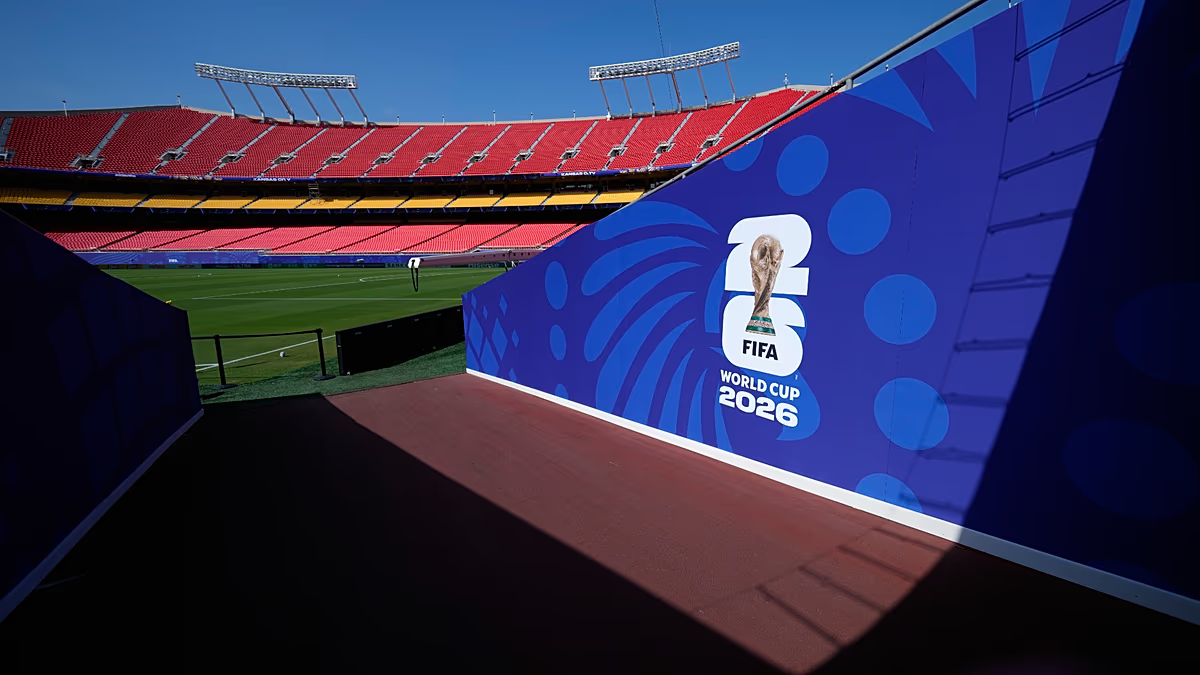
The beautiful game has always possessed a unique, almost magical ability to unite humanity, and soon, that global spirit will find its grandest canvas yet. The upcoming FIFA World Cup 2026 is poised to be an unprecedented spectacle of athletic prowess and cultural celebration, stretching across three vibrant host nations—the United States, Canada, and Mexico. Featuring an expanded format of 48 national teams and a record-breaking 104 matches, the tournament promises to deliver a month of pure, unadulterated passion as the world’s footballing icons battle to lift the iconic golden trophy. Yet, for millions of everyday supporters, the dream of witnessing this history in person has felt agonizingly out of reach, overshadowed by the chaotic scramble for tickets. In a delightful twist of fortune, however, a lifeline has emerged from an unexpected source, turning the stressful quest for match access into an opportunity for authentic travel experiences. Airbnb has stepped onto the pitch to level the playing field, offering hopeful travelers and football enthusiasts a golden opportunity to secure completely free tickets simply by booking their tournament accommodations through the platform.
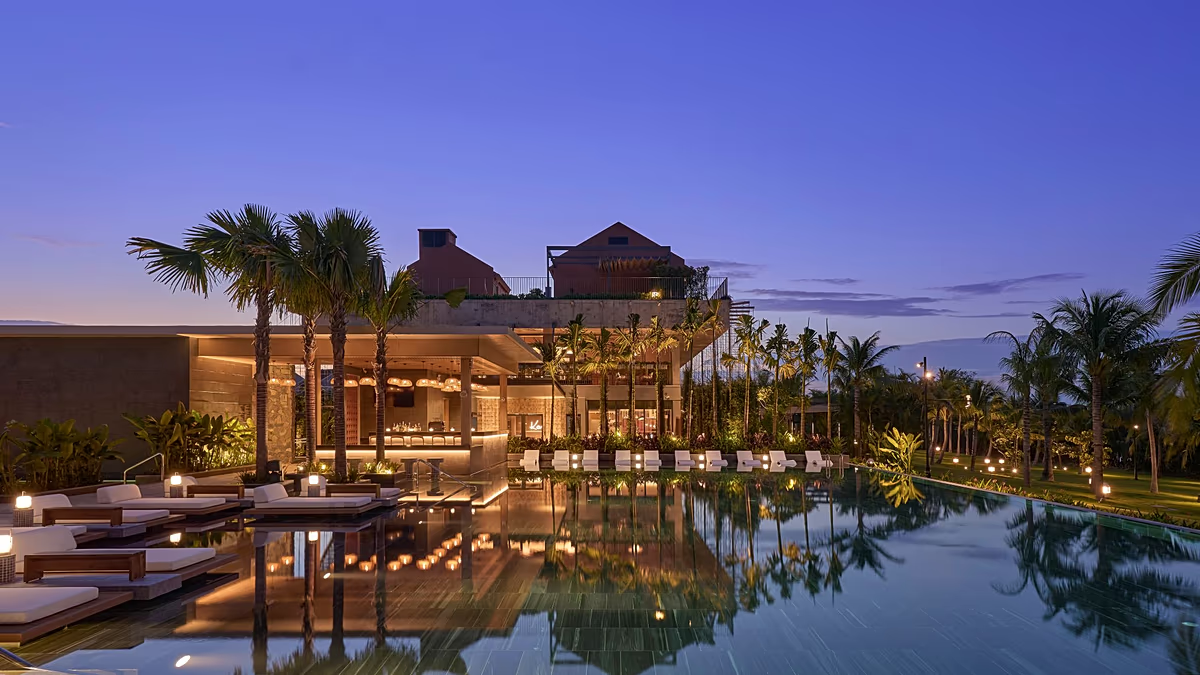
This innovative initiative, aptly named the “stay and watch the play” campaign, marries the comfort of local hospitality with the thrill of live world-class sports. Under this scheme, guests who book select accommodations across the tournament’s 16 diverse host cities will find their reservations packaged with complimentary tickets to watch the matches live from the stadium stands. Navigating this opportunity is designed to be as simple as it is exciting; whether using the Airbnb mobile app or their desktop website, fans merely need to look out for listings adorned with a distinct football icon. This small graphic serves as a digital golden ticket, indicating that the reservation includes official FIFA World Cup tickets for every single guest registered on the booking. Dave Stephenson, the chief business officer of Airbnb, highlighted the heartwarming philosophy behind this campaign, noting that Airbnb hosts offer far more than just a bed to sleep on—they provide an open door to local cultures and a more genuine way to experience a new city. By bundling homes with match tickets, hosts are performing an extraordinary act of hospitality, helping passionate fans follow their national teams throughout their journey, and Airbnb has already distributed over 1,300 tickets through this and prior surprise giveaways during the group stages.
To make the most of this remarkable giveaway, fans must carefully align their travel plans with Airbnb’s staggered booking release dates, which span from the initial group stages all the way to the historic final. The booking window opened on June 10 for the group stage and the highly anticipated knockout round of 32, covering a sprawling array of iconic cities including Los Angeles, Boston, Monterrey, New York/New Jersey, Mexico City, San Francisco, Seattle, Vancouver, Kansas City, and Dallas. Shortly thereafter, on June 18, the booking window opens for the crucial Round of 16 matches, giving fans the chance to lock in stays and tickets in Philadelphia, Houston, New York/New Jersey, Mexico City, Dallas, and Seattle. As the tournament reaches its business end, booking opportunities for the high-stakes semi-finals will commence on July 9 for stays in Dallas and Atlanta. Finally, for those dreaming of witnessing the crowning of the world champions at New Jersey’s MetLife Stadium near New York City, the ultimate booking window for the World Cup final opens on July 16. While the tickets themselves are entirely free, travelers should budget for their accommodations, with participating campaign listings averaging a highly competitive $385 (approximately €333.28) per night—a reasonable price point considering the massive surge in lodging demand during such a historic global event.
However, this heartwarming initiative by Airbnb stands in stark contrast to the wider, more turbulent narrative surrounding the ticketing sales for the 2026 tournament. The road to the 2026 World Cup has been paved with growing public frustration and severe criticism regarding how FIFA has handled its ticket distribution and pricing models. The primary source of outrage stems from the implementation of “variable pricing,” a controversial system where the cost of a ticket is not fixed but instead fluctuates dynamically based on real-time market demand and dwindling availability. This algorithmic approach has drawn intense scrutiny from legal authorities; in May, the states of New York and New Jersey launched formal, joint investigations into the football governing body’s sales practices. State investigators are deeply examining complaints that accuse FIFA of misleading the general public about pricing transparency, artificial ticket scarcity, and the fairness of seat allocations, which have left thousands of ordinary families feeling exploited and priced out of a tournament that is supposed to belong to the people.
The outcry over these commercial practices is by no means confined to North American shores, reflecting a deep-seated global dissatisfaction with the commodification of sport. Across the Atlantic, Euroconsumers—a highly respected European consumer rights organization—conducted a thorough investigation and echoed these grave concerns, finding that dynamic pricing algorithms effectively locked genuine, working-class fans out of securing affordable seats. While FIFA had publicly promised that group-stage match tickets would start at a relatively accessible $60 (€51.77) to keep the tournament inclusive, the realities of the market saw prices aggressively scale to eye-watering levels, with premium seats for the final match soaring as high as $4,185 (€3,628.48). Els Bruggeman, the Head of Policy and Enforcement at Euroconsumers, spoke passionately against this trend, demanding an immediate halt to dynamic pricing practices in sports. Bruggeman argued that FIFA must operate with absolute honesty, calling on the organization to publish transparent and definitive ticket counts, declare fixed prices clearly, and put an end to the psychological manipulation of fans who are forced to make rushed, financially draining decisions.
Adding further complexity and frustration to the fan experience is the rigid and heavily monetized nature of FIFA’s official ticket resale platform. In an effort to curb unauthorized ticket scalping, FIFA mandates that all secondary market transactions occur through its proprietary platform, yet it levies a steep 15% transactional fee on both the seller and the buyer. This double-dipping fee structure has severely choked the secondary market, discouraging desperate fans from placing unwanted tickets up for resale and penalizing those attempting to buy them. Reports from the Financial Times revealed a deeply concerning irony: despite millions of fans crying out for affordable tickets, as many as 180,000 tickets remained completely unsold on the official resale platform just hours before kick-off times, sparking intense fears of empty stadium seats, diminished crowd energy, and a muted atmosphere during what should be highly charged matches. In this highly commercialized environment, Airbnb’s heartwarming giveaway serves as a refreshing reminder of what sports travel should be about—bringing people together, fostering community connection, and ensuring that those who love the game the most actually get to sit in the stands and sing for their teams.