


Back in the bright, hopeful summer of 2018, when the joint bid to host the World Cup was officially awarded to the United States, Mexico, and Canada, the air was thick with the rhetoric of brotherhood. Leaders of all three nations stood before cameras to spin a tale of continental harmony, presenting the upcoming tournament not just as a sporting event, but as a grand testament to North American unity. Justin Trudeau spoke of bringing the world together, Enrique Peña Nieto declared the three nations deeply united, and Donald Trump, then in his first presidential term, offered enthusiastic congratulations on a job well done. It was envisioned as a historic, border-dissolving celebration—the first time three countries would co-host the tournament, expanding the field to an unprecedented 48 teams. Fast forward to the eve of the opening match on Thursday, however, and that sunny optimism has evaporated, replaced by a chilly reality of geopolitical hostility, economic threats, and border-control rancor. As the Mexican national team prepares to kick off the mammoth 104-game tournament against South Africa, the prevailing sentiment across the continent is not one of seamless alliance, but of deep division, leaving many to wonder if the beautiful game can survive the ugly politics surrounding it.
The romanticized vision of a shared, egalitarian tournament has been sharply undercut by a tournament structure that feels deeply unequal, combined with a brazen display of corporate exclusion. While Mexico and Canada have been relegated to hosting just 13 matches each across a small handful of cities, the United States will dominate the tournament, staging 78 matches in 11 major metropolitan areas, including all the high-stakes, late-stage knockout rounds. To critics, it is painfully obvious that soccer’s global governing body, FIFA, was primarily interested in courting the world’s largest consumer economy. This corporate favoritism is further highlighted by the controversial introduction of dynamic pricing, which has driven ticket prices to staggering heights, shutting out the working-class families who form the emotional backbone of the sport. Under the leadership of Gianni Infantino—who famously awarded Donald Trump a custom FIFA Peace Prize—the organization has cozyed up to American political power, alienating fans in neighboring countries who feel treated like mere opening acts. While history reminds us that the World Cup has often been played under the shadow of authoritarian regimes and political scandals, the feeling of betrayal running through Mexico and Canada is uniquely intimate, born from the raw sting of a promise broken by close neighbors.
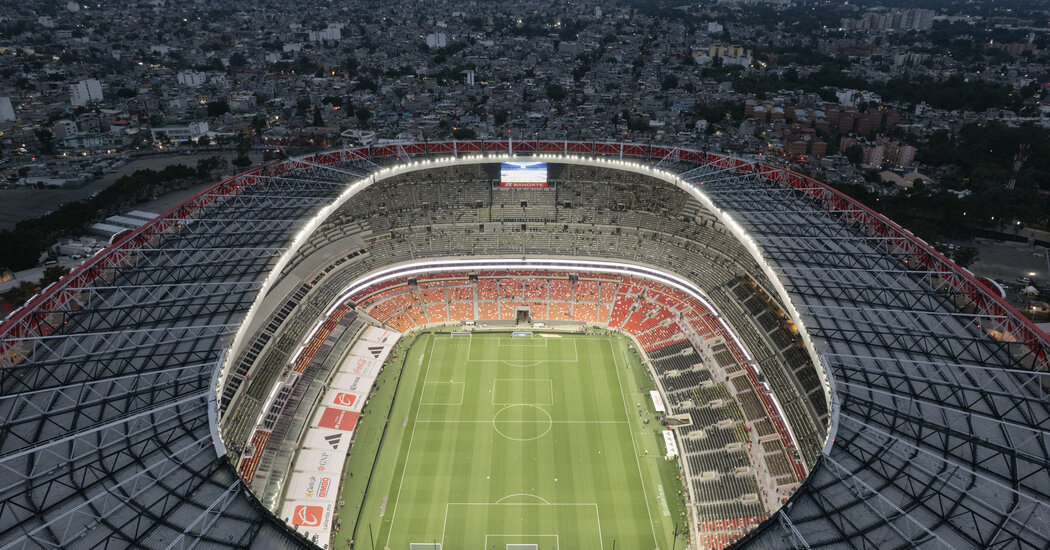
This tension is particularly palpable in Mexico, where soccer is less of a pastime and more of a national religion. Mexico holds the proud distinction of being the first country in history to host the World Cup three times, and the legendary Estadio Azteca has undergone a nearly $200 million renovation to prepare for its record-breaking third opening match. Yet, the national pride surrounding this historic milestone is heavily clouded by domestic pain and social unrest. Local residents in Mexico City have taken to the streets to protest the aggressive gentrification accelerated by the tournament, which has driven up living costs and displaced vulnerable families. Simmering just beneath the festive surface are planned demonstrations by the national teachers’ union and, most poignantly, by activist mothers searching for their disappeared children in a country ravaged by cartel violence. For these communities, the glitz and glamour of a multi-billion-dollar sporting event feel like an insulting distraction from their daily struggles, setting up a poignant contrast between the manufactured joy inside the stadium and the desperate cries for justice directly outside its newly polished gates.
On the diplomatic stage, Mexican President Claudia Sheinbaum has had to navigate an incredibly treacherous path with a hostile American administration. Despite her government taking significant political risks by arresting major cartel leaders, aligning trade tariffs with American policies, and absorbing the pressure of strict new migration standards, she has faced relentless verbal attacks, threats of military strikes, and economic threats from Donald Trump. Tensions reached a boiling point ahead of the tournament when U.S. prosecutors unsealed a bribery indictment against a prominent Mexican governor from Sheinbaum’s own political party, a move she condemned as an infringement on her country’s sovereignty. In a quiet but deeply symbolic act of defiance, Sheinbaum announced she would break with diplomatic tradition and boycott the opening game entirely. Instead of sitting in the luxurious VIP gallery with foreign dignitaries, she gifted her ticket to a 21-year-old Indigenous woman who plays amateur soccer, choosing instead to watch the game on a big public screen surrounded by ordinary citizens in Mexico City’s central square.
To the north, Canada’s relationship with its southern neighbor has deteriorated to an equally historic low, shifting the country’s political landscape. Under Prime Minister Mark Carney, a finance expert elected to guide the nation through the volatile era of protectionism, Canada has found itself labeled by Trump as a weak, extractive partner, with the U.S. president even suggesting that Canada should simply become the 51st American state. This aggressive rhetoric has ignited an unusual wave of patriotic fervor among Canadians, prompting Carney to deliberately seek out new international partners in Europe and Asia to break Canada’s heavy economic dependence on the United States. Mirroring Sheinbaum’s diplomatic snub, Carney is scheduled to miss Canada’s opening match against Bosnia and Herzegovina in Toronto altogether. His office announced he would instead be traveling to Europe for diplomatic sumits, subtly reminding the world that Canada is actively diversifying its alliances and will not be intimidated by the looming economic shadows cast from Washington.
Even within the United States, the atmosphere surrounding the tournament is filled with irony and disconnect. Trump himself has continued his economic attacks on his co-hosts, threatening to abandon the vital USMCA free trade agreement and bluntly stating that the U.S. has no need for Mexican or Canadian goods. Meanwhile, his administration’s strict immigration policies have actively deterred international journalists, support staff, and dedicated soccer fans from crossing the border to support their teams. In a final twist of irony, even Trump has complained about the soaring, inaccessible ticket prices driven by FIFA’s corporate greed, admitting in a recent interview that he wouldn’t pay the exorbitant fees to attend a match himself. Yet, as the sun sets over the stadiums in Los Angeles, Vancouver, and Monterrey, the grand machinery of the tournament will grind into motion regardless of political posturing. For the millions of ordinary fans clenching their national flags, the ultimate hope is that once the whistle blows, the beautiful game can shed its corporate armor and political burdens, reclaiming its true status as a sport that belongs to the people.