


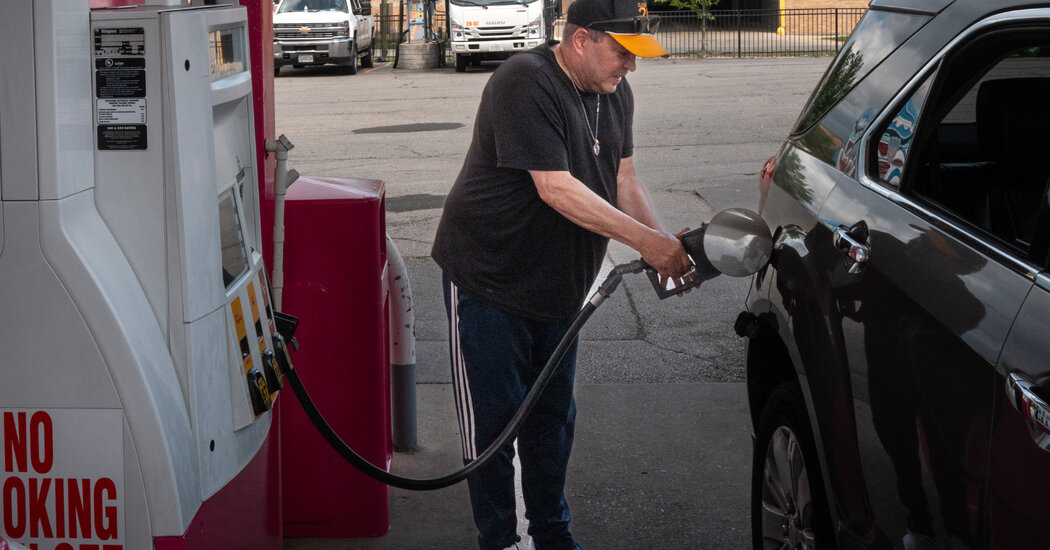
For billions of ordinary people around the world, the news of rising oil prices on a Thursday morning is not just a dry financial statistic; it is a tangible weight added to the everyday struggle of making ends meet. When the digital tickers on Wall Street and the London Stock Exchange surge, the ripple effects are felt almost immediately by a commuter starting their car in a rainy midwestern suburb, a delivery driver in Mumbai calculating their daily margins, and a family sitting around a kitchen table trying to stretch a tightening budget. This sudden spike in the cost of the world’s most vital commodity was the immediate economic symptom of a much deeper, more terrifying geopolitical fever: the sudden, violent escalation of hostilities between the United States and Iran. As the two nations exchanged direct fire for a second consecutive day, the abstract concept of international diplomacy dissolved into the stark reality of modern warfare. The sudden price jump serves as a stark reminder of how deeply our globalized lives are intertwined with the volatile politics of the Middle East, demonstrating that a decision made in a high-security war room half a world away can instantly alter the economic security of an ordinary household thousands of miles across the globe.
Behind the headlines of military strategizing and geopolitical chess moves lies the raw, human anxiety of soldiers, their families, and the innocent civilians caught in the crossfire. For two consecutive days, the skies above the region screamed with the sounds of active combat, marking a dangerous departure from years of shadow wars and proxy conflicts toward the precipice of an all-out, open war. The sheer terror of this escalation is felt most acutely by the young men and women stationed on remote military bases, who write hurried letters home to anxious parents, and by the local communities in Iran who look to the skies with a sense of dread, wondering if their neighborhoods will become the next battleground. This is no longer a localized dispute; it is a high-stakes standoff where the margin for error is razor-thin, and the threat of an uncontrollable, spiraling conflict looms larger than it has in a generation, threatening to swallow the hope of peace and replace it with the grim reality of endless wreckage and loss.
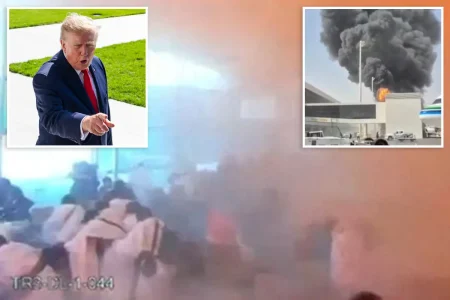
This dangerous new chapter of violence unfolded after the United States launched a series of coordinated military strikes against multiple targets within Iranian territory, a direct and severe escalation ordered under the direction of President Donald Trump. Washington’s justification for this dramatic military action was rooted in profound diplomatic frustration, with the administration declaring that negotiations regarding Iran’s nuclear program had ground to a painful and unproductive crawl. In the corridors of power, the decision to pivot from dialogue to destruction was framed as a necessary measure to maintain military pressure, but the human cost of this strategic pivot is devastatingly simple: it signaled the collapse of words and the rise of weapons. When diplomacy fails, it is not the politicians who pay the price, but the people who must endure the physical, psychological, and economic devastation of war, as years of patient, painstaking diplomatic efforts to prevent nuclear proliferation and maintain regional stability were incinerated in a matter of hours.
In rapid and furious response to the American bombardment, Iran claimed to have launched two successive waves of retaliatory strikes targeting major U.S. airbases located in the neighboring allied nations of Kuwait and Bahrain, turning the entire region into a tinderbox of fear. Though military officials and independent journalists rushed to verify the authenticity of these attacks amidst the dense fog of war, the mere announcement of strikes on Kuwait and Bahrain sent shockwaves of panic through the local expatriate communities and host-country nationals who have long regarded their homes as safe havens. The terrifying reality of modern warfare is that its boundaries are highly fluid; innocent neighboring countries find themselves dragged into the periphery of a conflict they did not start, leaving families living near these strategic military installations to pack emergency bags and wait in agonizing silence for confirmation of their safety. This retaliation, whether fully realized or strategically exaggerated, demonstrated Iran’s willingness to strike back directly at American assets, proving that any illusion of a contained, one-sided conflict had officially shattered.
What makes this sudden surge in panic and oil prices particularly striking is how stubbornly complacent the global markets had been in the days leading up to this flashpoint, highlighting the bizarre human capacity to normalize ongoing crises until they arrive directly on our doorsteps. Just days earlier, on Monday, a U.S. Army Apache helicopter was brought down near the highly sensitive and heavily militarized Strait of Hormuz—a narrow, vital chokepoint through which a significant portion of the world’s petroleum passes daily. Yet, despite the obvious danger of that initial incident, global oil markets barely flinched, treating the downed aircraft as just another routine tremor in a chronically unstable region. This collective shrug from the financial world illustrates a dangerous desensitization to conflict, where those sitting in safe financial capitals refuse to acknowledge the gathering storm clouds until the first raindrops of a major war actually begin to fall, ultimately forcing a chaotic, late-stage panic when the reality of disrupted supply chains became too loud to ignore.
As the world watches this precarious situation unfold, the overarching hope remains that cooler heads will eventually prevail before this localized cycle of retaliation degenerates into a catastrophic global disaster. The sudden volatility in energy prices is a warning sign of a much larger, shared vulnerability, illustrating that our modern, interconnected society cannot truly thrive when we treat the threat of war as an abstract problem for someone else to solve. To humanize this crisis is to recognize that whether a person is an anxious parent in Washington, a merchant in Tehran, a service member in Kuwait, or a budget-conscious consumer at a local gas station, we are all bound together by a fragile web of security, economy, and shared humanity. Breaking this destructive cycle of violence requires more than just military deterrence or economic posturing; it demands a renewed, empathetic commitment to dialogue and a collective recognition that the ultimate price of war is always paid in human lives, long before it is ever settled on the trading floors of the world’s financial markets.