


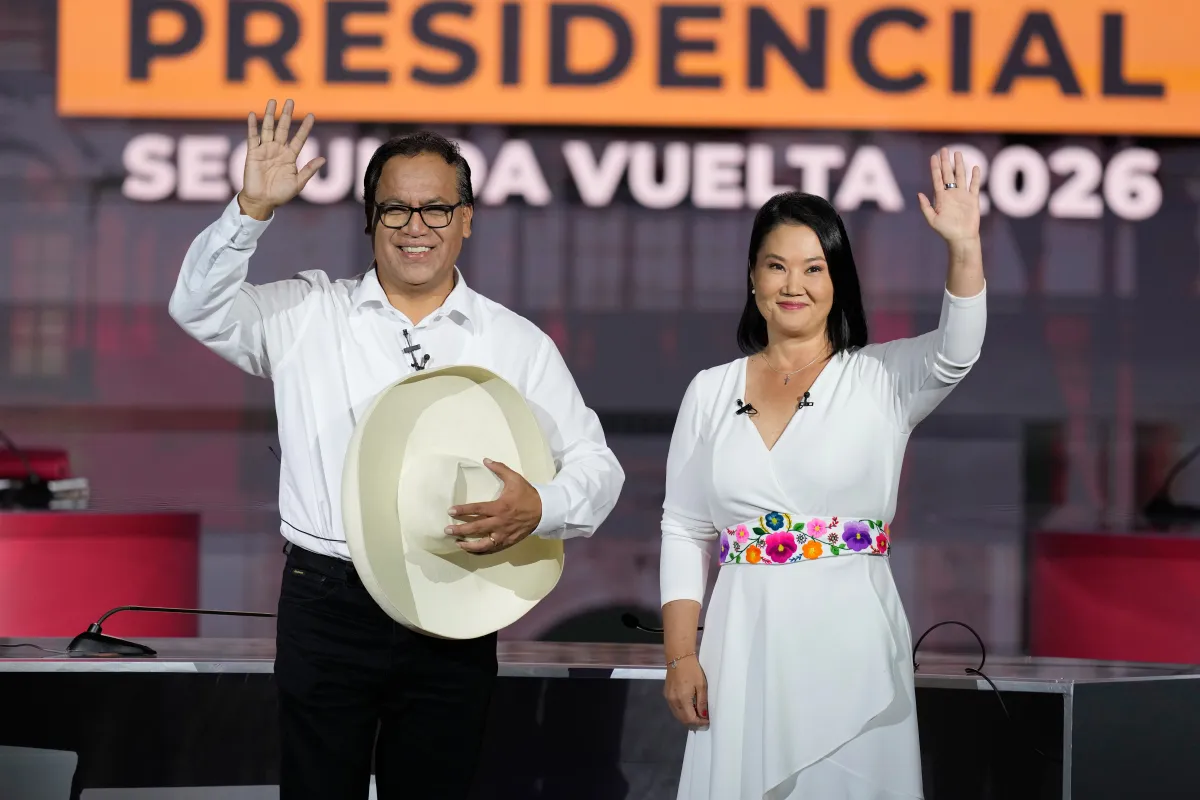
As the official electoral counters tick past the ninety-seven percent barrier, Peru finds itself caught in an agonizing, fingernail-biting democratic deadlock that has pushed the nation’s political temperature to a boiling point. The distance separating the two presidential contenders—left-wing challenger Roberto Sánchez and right-wing leader Keiko Fujimori—is so microscopically small that the destiny of this Andean nation is no longer being decided solely in the historic Plazas of Lima or the cold, high-altitude villages of the Andes. Instead, the ultimate verdict hangs on a highly unusual and deeply poignant geographic irony: the votes of the Peruvian diaspora, cast thousands of miles away in schools, consulates, and community centers across the globe, are poised to decide the winner. Sánchez currently clings to a razor-thin domestic lead of 50.05 percent against Fujimori’s 49.94 percent, but this fragile advantage could easily evaporate as the ballots from overseas are slowly processed. This dramatic divergence presents a historical first—an unprecedented scenario where a candidate could win the overwhelming backing of the citizens residing within the country’s physical borders, yet lose the presidency because of the monumental political weight of those who left. It is a striking reminder of how modern migration has blurred the boundaries of national sovereignty, transforming the painful act of physical exile into a decisive exercise of political power.
In the quiet corridors of Peru’s National Office of Electoral Process (ONPE), the incoming data from abroad tells a story of dramatic political divergence that sharply contrasts with the reality observed back home. To date, nearly sixty-three percent of the overseas electorate has cast their ballots for Fujimori—totaling over 132,000 votes—compared to a modest thirty-eight percent for Sánchez, who has captured just under eighty thousand. Among the massive global diaspora, the United States stands out as the ultimate stronghold for the conservative Fujimorista movement, with an astonishing seventy-six percent of voters backing her over her left-wing rival. This preference climbs to even more staggering heights in Florida, home to the largest concentration of Peruvian-Americans in the United States, where the ballot boxes in major cities read like a resounding, almost unanimous rejection of the left. In Miami, Fujimori captured a whopping 88.79 percent of the vote, while in Orlando, she secured over eighty-six percent, leaving Sánchez with mere fractions of the local electorate. To walk through the polling stations in Florida on election day was to witness an emotional gathering of families draped in red-and-white flags, filled with voters who feel a profound urgency to protect their homeland from what they perceive as a catastrophic socialist drift, proving that the psychological and political ties to the fatherland remain unbreakable even after decades of living abroad.
The root of this fierce conservatism among overseas Peruvians is not an accident of geography, but rather a deeply human story of survival, trauma, and generational memory. The vast majority of those who built lives in cities like Miami, Santiago, Madrid, or Buenos Aires did so to escape the harrowing nightmares of the late 1980s and early 1990s—a dark era defined by hyperinflation, severe economic collapse, and the terrifying, indiscriminate violence of the far-left guerrilla group, the Shining Path. For these emigrants, the presidency of Alberto Fujimori, Keiko’s father, is remembered through a highly complex, often contradictory lens; while human rights organizations and domestic critics rightfully condemn his regime for extrajudicial killings, corruption, and authoritarian abuses, many in the diaspora credit his administration’s iron-fisted security policies and market-open reforms with saving the country from total collapse. In contrast, Roberto Sánchez represents a terrifying return to the economic instability and social chaos they fled, a fear amplified by his close association with former President Pedro Castillo, whose chaotic presidency began in rural populist promises and ended in a disastrous, failed constitutional coup in 2022. By voting for Fujimori, many in the diaspora feel they are performing a protective duty for their relatives back home, voting to preserve the economic model that allowed them to escape poverty, even if it means aligning with a family dynasty that remains deeply controversial.
This high-stakes electoral nail-biter feels like a hauntingly familiar sequel to the deeply polarized presidential runoff of 2021, where the exact same socio-political fault lines threatened to tear the country apart. In that race, the massive groundswell of support for Keiko Fujimori from the overseas diaspora proved insufficient to overcome the domestic surge of Pedro Castillo, who rode to power on a wave of deep-seated resentment and systemic neglect felt by the impoverished rural populations of the southern Andes and agricultural heartlands. This dramatic geographic and social fracture highlights the painful existence of “two Perus”—one coastal, middle-class, globalized, and deeply fearful of leftist interventionism, and another rural, indigenous, neglected, and desperate for structural change that dismantles the Lima-centric status quo. For Fujimori, who is making her fourth consecutive attempt to capture the presidency after narrow, heartbreaking losses in 2011, 2016, and 2021, this race represents either the ultimate political redemption or perhaps her final political defeat. This profound polarization means that every single vote is loaded with existential weight, transforming the simple acts of counting and verification into a battlefield where the very institutional legitimacy of Peru’s democracy is put to its most agonizing test yet.
As the days drag on, the physical process of counting the final votes has become a test of national sanity, with the country caught in a suspended animation where every fractional percentage gain is dissected with feverish intensity. While over ninety-eight percent of domestic votes have been securely processed, only about sixty-seven percent of the slower-moving overseas ballots have been officially tabulated, keeping the final outcome tantalizingly out of reach and leaving both camps on a knife-edge. The candidates themselves have adopted contrasting strategies of public decorum and strategic patience to manage the explosive emotions of their respective bases. Roberto Sánchez, speaking with the measured tone of a statesman confident in his grassroots support, has publicly pledged to respect the democratic framework, declaring his commitment to the official count while simultaneously celebrating the undeniable energy of his popular movement. Keiko Fujimori has similarly urged calm, advising her fervent supporters to wait patiently until the last ballot from the furthest corner of the globe is processed and verified. With the official validation of the results potentially delayed until mid-July due to the inevitable legal challenges, recounts, and disputed ballots, the country faces a long, tense holding pattern before the scheduled presidential inauguration on July 28, a period during which rumors, conspiracy theories, and political anxieties are bound to fester.
Ultimately, the cold, sobering reality of this election is that whoever emerges victorious from this razor-thin contest will inherit a country that is structurally fractured, institutionally depleted, and profoundly difficult to govern. As Latin American expert Dr. Christopher Sabatini of Chatham House warns, Peru’s political landscape is poised to remain in a highly volatile, fragile state regardless of whether the left or the right claims the presidency. Should Sánchez secure the executive seat, he will face an overwhelmingly hostile, conservative, and obstreperous Congress that will likely try to block his every move, potentially tempting him to bypass the legislature by mobilizing his militant grassroots base—a dangerous path that could mirror the institutional collapse of his predecessor, Castillo. Conversely, if Fujimori finally achieves her lifelong ambition of winning the presidency, she will have to govern in the shadow of deep public distrust, with rival political factions eagerly seeking vengeance for her party’s historic strategy of hardline, zero-sum parliamentary obstruction. For the ordinary, everyday citizens of Peru—who have endured years of systemic corruption, multiple presidential impeachments, and economic stagnation—this election offers no easy path to healing, suggesting instead that the final ballot count will not be the end of the crisis, but merely the opening chapter of a turbulent and highly unpredictable new political era.