


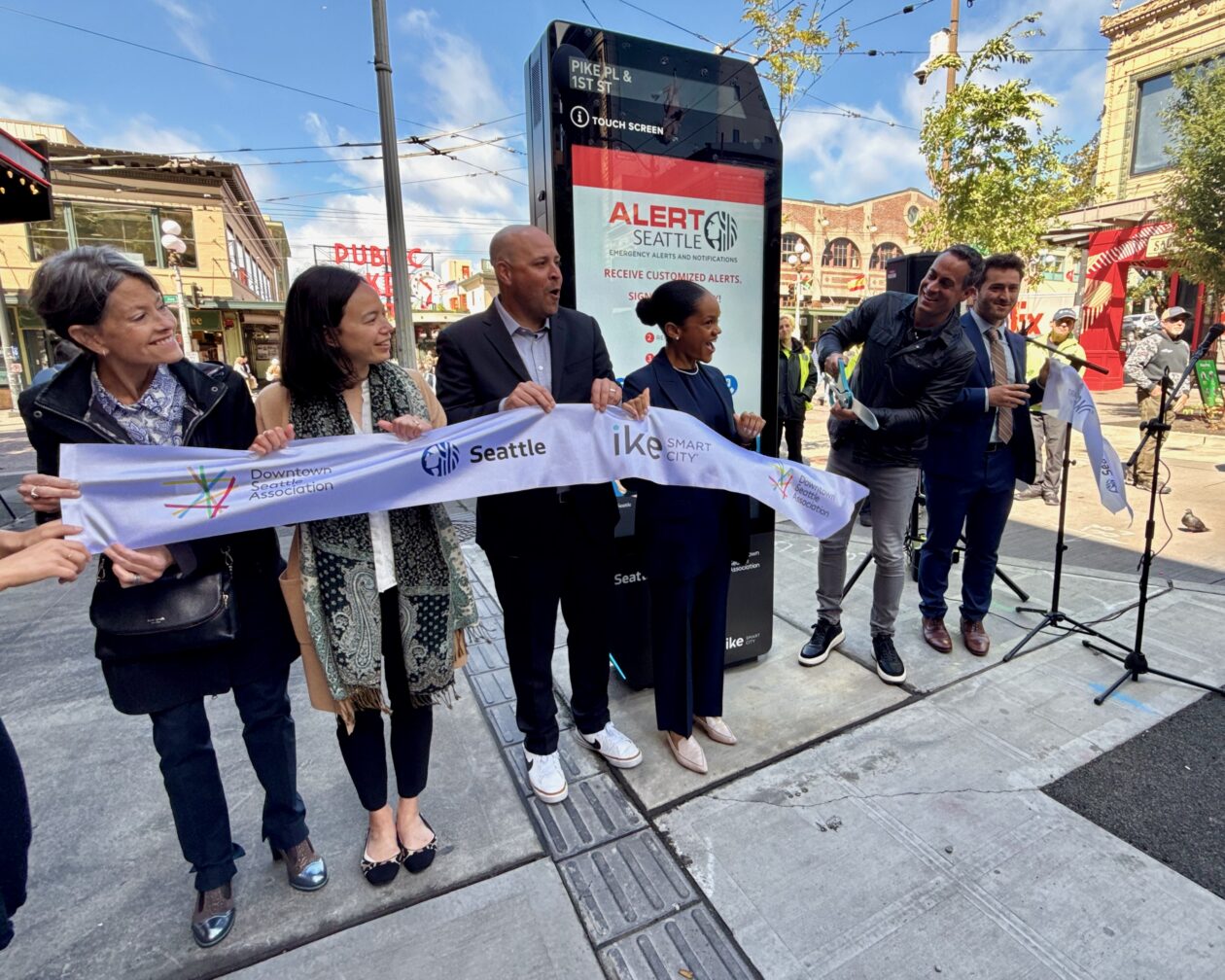
The bustling intersection of First Avenue and Pike Street has long stood as the emotional, historical, and geographic heartbeat of downtown Seattle, a vibrant convergence point where the salty, crisp breeze blowing off Elliott Bay mingles with the aromatic static of freshly thrown fish, roasting coffee beans, and the constant, excited chatter of global tourists. For generations, the undisputed crown jewel of this historic vista has been the beloved, glowing red neon sign marking the entrance to the iconic Pike Place Market—a nostalgic and comforting symbol of a bygone era that continues to draw millions of eager eyes to its rustic wooden stalls each year. Yet, on a recent, historic Tuesday afternoon, a sleekly modern competitor for the public’s attention made its official debut directly across the cobblestone street, signaling a bold, optimistic leap into the digital age. Amid the usual visual symphony of shifting city traffic, curious onlookers, and street performers, a diverse crowd of local leaders, urban planning advocates, and neighborhood business owners gathered to watch Jon Scholes, the energetic president and CEO of the Downtown Seattle Association (DSA), cut a ceremonial red ribbon to officially unveil the city’s very first IKE Smart City digital wayfinding kiosk. Standing as a handsome, towering eight-foot-tall black monolith, this sophisticated device represents the physical manifestation of a collaborative, multi-year crusade to transition the invaluable civic, cultural, and navigational information traditionally locked away behind personal smartphone screens and plant it directly into the physical hands of the public at street level. Flanked by an optimistic contingent of current and former municipal officials, alongside representatives from the pioneering national advertising firm Orange Barrel Media, Scholes proudly declared that Seattle—a legendary birthplace of global technological giants—finally possessed a modern, 21st-century wayfinding system designed to complement its highly interconnected, forward-thinking population. This ribbon-cutting ceremony was not merely a celebration of a new piece of street-side hardware, but a symbolic bridge linking Seattle’s rich, maritime-driven history with a highly connected, accessible, and interactive urban future.
The introduction of these striking, high-tech devices is the fruit of an incredibly deliberate and highly strategic partnership between the Downtown Seattle Association and Orange Barrel Media, an innovative, Columbus, Ohio-based media company specializing in enriching urban spaces with community-first digital infrastructure. Already operating successfully in more than twenty-five major metropolitan areas across the United States, from the historic brick alleyways of Boston to the sun-drenched, palm-lined boulevards of Tempe, the Interactive Kiosk Experience (IKE) network has arrived in Seattle with an ambitious and carefully choreographed rollout plan. The overarching vision for the Emerald City entails the installation of fifty high-tech kiosks distributed across the city in two carefully designed phases over the next several months. The initial wave of implementation will focus intensely on the core urban center, placing thirty state-of-the-art units within the bustling footprint of the Metropolitan Improvement District, directly targeting high-traffic pedestrian arteries where visitors, office workers, and daily commuters are most in need of dynamic, real-time directional guidance. Following this crucial central saturation, the remaining twenty kiosks will make their way into diverse, economically vital neighborhood business improvement areas, including the maritime-rich streets of Ballard, the industrial-cool corridor of SoDo, the youthfully energetic University District, and the tightly knit, scenic community of West Seattle. By spacing these installations thoughtfully throughout the city’s unique micro-neighborhoods, organizers hope to cultivate an interconnected civic ecosystem that respects the individual character and heritage of each district while providing a standardized, universally accessible digital portal. With four downtown units already in various stages of deployment—ranging from Tuesday’s newly active kiosk at First and Pike to operational units at Fourth Avenue and Pine Street, and upcoming installations at Second and Stewart, and Third and Virginia—the physical footprint of Seattle’s streets is changing to become a more navigable, welcoming, and responsive environment for everyone.
When observing these digital sentinels up close, one is immediately struck by their impressive physical dimensions and their intuitive, deeply human-centric design, which seamlessly translates complex city grid data into an accessible, rewarding public utility for people of all walks of life. Standing just over eight feet tall and three feet wide, each kiosk boasts a massive twelve-point-five-square-foot high-definition touchscreen that mirrors the sleek, familiar, and highly tactile interface of a giant smartphone, instantly lowering the emotional and technical barrier to entry for users of all ages, languages, and technological backgrounds. Crucially, the engineers behind the IKE kiosks prioritized universal accessibility from the very beginning, building the units to be fully ADA-compliant with interactive elements positioned at comfortable heights for wheelchair users, alongside multi-lingual support and seamless compatibility with the “Seamless Seattle” program to offer real-time, multimodal navigation paths that smoothly integrate municipal buses, light rail, streetcars, and walking routes. But these digital structures serve a purpose far beyond mere electronic map-reading; they have been meticulously designed to act as vital community anchors, functioning as free, high-speed public Wi-Fi hotspots and providing a completely free, hyper-localized business directory that showcases nearby restaurants, boutiques, and services at no cost to the merchants themselves, a vital boost for local storefronts. Furthermore, the kiosks prioritize public safety and civic health by incorporating highly visible, weather-resistant 911 emergency call buttons that connect users instantly with first responders in times of distress. Demonstrating a tangible commitment to the community’s cultural well-being, the DSA and Orange Barrel Media have legally mandated that at least twenty-five percent of the annual screen display time be strictly reserved for non-commercial messaging, utilizing the platform to champion local non-profit organizations, promote upcoming neighborhood festivals, and broadcast critical municipal public safety announcements. Compounding this commitment to civic beauty is a rotating digital public art program integrated directly into the displays, offering a vibrant canvas for talented local Pacific Northwest illustrators, indigenous storytellers, photographers, and national artists to showcase their work, effectively transforming these utilitarian devices into breathing, dynamic street-side galleries.
Despite the overwhelming enthusiasm from city boosters and development advocates, the journey to bring these digital kiosks to Seattle’s streets was not without its share of intense civic debate, highlighting the healthy skepticism and passion for public spaces that characterizes Seattle’s deeply engaged citizenry. During a series of spirited, occasionally contentious Seattle Design Commission meetings, several community advocates, environmental groups, and aesthetic purists raised valid, deeply felt concerns regarding the potential negative consequences of introducing large, illuminated digital screens into the public right-of-way. Skeptics warned of potential visual clutter that could obscure historical architectures, the insidious oversaturation of commercial advertising in shared public spaces, and the disruptive effects of artificial light pollution on both human residents sleeping in nearby apartments and local urban wildlife. Responding directly to these modern anxieties, particularly around digital privacy, data collection, and the creeping threat of algorithmic surveillance, both the developers and city officials took great pains to clarify that these kiosks are explicitly designed without any hidden cameras or tracking software to monitor pedestrians, track demographics, or harvest personal data. While the kiosks do feature an integrated camera, it is confined solely to a whimsical, opt-in “Photo Booth” application designed to let groups of friends capture lighthearted memories and text the digital photos to their personal phones, with an ironclad guarantee from IKE that no images are ever permanently stored on the hardware, analyzed, or retained by the network. Additionally, the financial architecture of the project was deliberately engineered to protect local taxpayers, as the entire cost of the equipment, installation, and ongoing physical maintenance is fully absorbed by Orange Barrel Media through private advertising revenues, ensuring absolutely zero cost to the city of Seattle or the Downtown Seattle Association. In fact, this unique public-private partnership is highly lucrative for the community, with the DSA projecting that the kiosks will generate an impressive one-point-one million dollars annually in shared revenue—monies that the organization is legally bound to reinvest directly into vital downtown programming, safety initiatives, cleaning services, and cultural events.
The realization of this digital network represents the culmination of a grueling, years-long bureaucratic marathon, illustrating the complex political tapestries that must be woven to enact meaningful physical change in a major American metropolis. Under the persistent championing of former Seattle City Council President Sara Nelson, who spent countless legislative sessions advocating for the modernization of the city’s pedestrian infrastructure, the proposal eventually reached the legislative finish line in June 2025, where it was ratified by the City Council in a decisive six-to-two vote. Former Mayor Bruce Harrell, a staunch proponent of leveraging smart technology to foster economic development, tourism, and public safety in Seattle’s downtown core, enthusiastically signed the historic legislation into law, setting the complex permitting and engineering processes into motion. The urgency to complete the initial rollout of this network has been further magnified by a highly anticipated global milestone: the upcoming FIFA World Cup, which is scheduled to kick off next week, bringing a massive, unprecedented wave of international tourists, sports fans, and journalists to the emerald streets of the Pacific Northwest. While Jon Scholes and his dedicated team at the Downtown Seattle Association had aggressively hoped to have a much larger percentage of the downtown kiosks operational before the first tournament whistle blew, the logistical realities of urban excavation and electrical hookups meant that only the first few vanguard units are fully functional for the immediate influx of global visitors. Nevertheless, Scholes remains highly optimistic, reassuring the public that the installation of the remaining twenty-eight downtown-designated kiosks will proceed at a rapid, steady pace over the coming months, transforming the city’s pedestrian corridors just in time to sustain the ongoing post-pandemic economic recovery and provide a world-class welcome to tourists for decades to come.
Ultimately, these interactive kiosks represent far more than a convenient, high-tech way to look up directions or snap a quick souvenir photo; they represent a physical manifestation of hope and a deliberate investment in the enduring human spirit of Seattle’s urban core. In speaking with GeekWire at the launch event, former Council President Sara Nelson eloquently captured the profound, democratization of technology that these kiosks embody, describing them as having “the city at your fingertips” while highlighting how they act as critical lifelines for small businesses and serve as vital, physical gathering spots where strangers can cross paths, converse, and connect. This sentiment was echoed by Jon Scholes, who emphasized that this twenty-year permit agreement between Orange Barrel Media and the City of Seattle is deeply rooted in the philosophical belief that great, thriving downtown spaces must make it effortlessly simple for people to discover the cultural pulse of their environment, whether that means attending an impromptu live theater performance, finding an underground art gallery, or locating a historic monument. As cities worldwide continue to navigate the profound social and spatial reorganizations triggered by the rise of remote work and digital isolation, Seattle is charting a proactive course that uses technology not to sequester people behind closed doors, but to actively lure them out onto the sidewalks, encouraging them to explore, support local merchants, and look up from their individual hand-held screens to engage with the vibrant world around them. Standing boldly at the crossroads of First and Pike, directly opposite the historic market that has fed the souls and bodies of Seattleites for over a century, this new digital companion stands ready to guide generations of residents and wanderers alike, reminding us that the ultimate goal of any smart city is to foster a warmer, safer, more vibrant, and more deeply connected human community.