


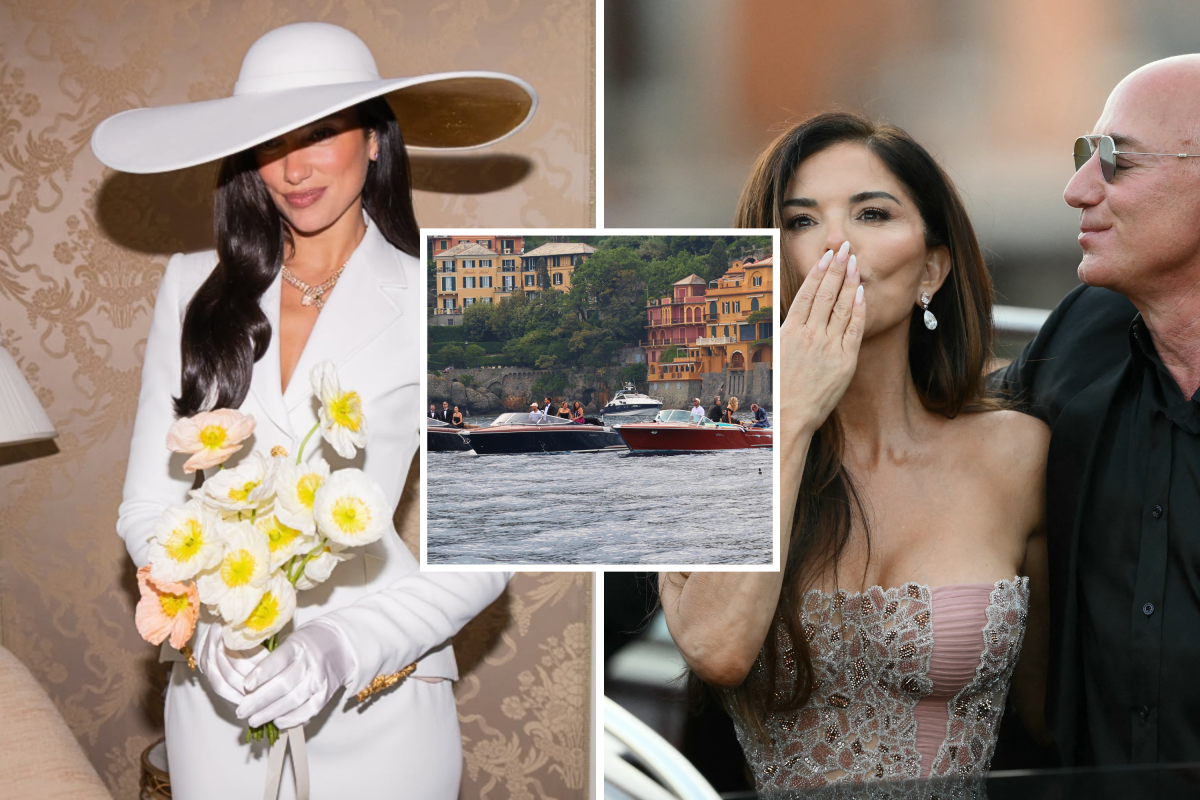
The quiet whisper networks of the global entertainment industry had long speculated about the ultimate trajectory of pop music sensation Dua Lipa and her British actor partner, Callum Turner, a glamorous couple famously known for their whirlwind, globetrotting lifestyles and seemingly endless strings of sun-drenched vacations. When the pair quietly finalized their legal union in an incredibly understated, highly private civil ceremony at the historic Marylebone Town Hall in London on May thirty-first, many assumed they would keep their celebrations modest. However, only a few days later on June fifth, the newlyweds traded the grey, overcast English skies for the rustic, historic charm of Palermo on the Italian island of Sicily to host a far more extravagant, multi-day affair. This grand event, quickly dubbed an Italian Extravaganza by an active international media, was meticulously designed to be a breathtaking spectacle of high fashion, cascading floral arrangements, and an elite gathering of modern celebrity royalty. Among the illustrious guests who touched down on the island were legendary music producer Mark Ronson alongside his wife, Grace Gummer, daughter of Hollywood icon Meryl Streep, as well as Taylor Swift’s high-profile former partner, Joe Alwyn, and even the visionary fashion designer Donatella Versace. Yet, as glittering photos of the elite gathering began to flood social media, a starkly different and far less beautiful narrative was unfolding on the local streets. Instead of welcoming the high-profile visitors with open arms, local Sicilian residents expressed deep frustration as municipal authorities cordoned off historic public squares, redirected daily commuter traffic, initiated heavy police cordons around the historic Palazzo Valguarnera-Gangi, enforced strict no-fly drone zones, and required local support staff to sign aggressive non-disclosure agreements. This sudden, heavily policed privatization of their public heritage quickly sparked community protests, with hand-painted protest signs stating Palermo is not for rent being defiantly pasted onto nearby stone walls, indicating a strong, grassroots rejection of this grand spectacle that completely shut down the citizens out of their own beautiful public spaces for the entire long weekend.
The mounting backlash in Sicily is not merely an isolated case of local grumbling, but rather the latest and most visible flashpoint in an escalating cultural debate over how the modern cognitive elite and the ultra-wealthy consume geographic space for personal milestones. Over the past decade, public perception surrounding destination weddings has shifted dramatically from an object of harmless, aspirational envy into a frustrating symbol of corporate greed, social tone-deafness, and unchecked economic privilege. This modern friction has been building steadily, with similar controversies erupting when reality television star Kourtney Kardashian and musician Travis Barker essentially shuttered the picturesque Italian fishing village of Portofino for their highly sponsored, multi-day wedding celebrations in 2022, drawing intense criticism from local residents and regional tourism advocates who fiercely objected to their historic, shared spaces being aggressively privatized for the amusement of the ultra-wealthy. This pattern reached a boiling point with the highly publicized 2025 Venice wedding of Amazon billionaire Jeff Bezos and his partner, Lauren Sánchez, which triggered an unprecedented and highly vociferous chorus of protest from Venetian locals and concerned municipal officials alike. Critics argued passionately that the delicate infrastructure of the historic lagoon city, already critically fragile and buckling under the weight of climate change and mass tourism, should not be subjected to the massive logistical disruptions, heavy security lockouts, and spatial exclusivity demanded by one of the wealthiest couples on Earth. These high-profile events have forced a critical reassessment of the implicit contract between international visitors and the local communities they temporarily displace, raising difficult ethical questions about whether priceless historical landmarks and public civic spaces should ever be leased out or cordoned off for the exclusive enjoyment of wealthy foreigners who treat entire towns as temporary backdrops and ultimate playgrounds, effectively reducing centuries of rich cultural history and community life into a highly commodified stage set that exists solely to serve their brief personal vanity, completely ignoring the long-term emotional and physical cost to the people who reside there year after year.
To properly understand the depth of this growing public hostility, one must analyze the broader, highly politicized backdrop of global overtourism, which has systematically degraded the everyday quality of life for residents living in the world’s most coveted travel destinations. Across historic European cities, everyday citizens find themselves locked in an active struggle against skyrocketing housing costs driven by local Airbnb crackdowns, gridlocked pedestrian thoroughfares, intrusive municipal loudspeaker bans, and the sudden disappearance of the traditional neighborhood shops that once defined their local cultures. It is within this exhausted, highly sensitive environment that the destination wedding has rapidly evolved from a coveted status symbol into a profound social faux pas that highlights systemic wealth inequality. Crucially, this growing wave of intense resident frustration is no longer confined solely to the actions of Hollywood A-listers and tech billionaires; it has begun to impact affluent, non-celebrity couples who seek to emulate this lavish lifestyle. For example, in 2025, a destination wedding held in the sacred Indian coastal city of Puri sparked widespread outrage and dominated national headlines after the extravagant private celebrations spilled directly into public spaces, blocking major streets and disrupting the daily routines and religious obligations of local citizens. This specific incident demonstrated that local resentment is not merely a reaction to celebrity culture itself, but rather a universal, deep-seated exhaustion with wealthy individuals using their financial superiority to override the daily comfort, mobility, and dignity of the communities that host them. As these lavish events continue to encroach on public life, the growing demands for strict institutional accountability and respect for local populations have transitioned from minor complaints into a global cultural movement that threatens the very social license of the luxury travel industry as a whole, pointing to an inevitable reckoning where local governments will be forced to choose between the immediate, lucrative financial returns of a few select wealthy international patrons and the long term social stability of their own residents who live within these historic city walls every year.
This rapid shift in public sentiment has forced branding experts, public relations professionals, and wedding industry insiders to seriously reexamine the long-term impact of these massive events on a celebrity’s public image and reputational standing. Speaking on the evolving dynamics of celebrity culture, prominent PR strategist Estelle Keeber explained that high-profile weddings have transitioned from intimate personal celebrations into highly calculated public relations campaigns designed to deliberately align a star’s personal brand with an idealized, status-heavy European lifestyle. Keeber notes that today’s modern audience is increasingly socially conscious, environmentally aware, and quick to criticize public figures who disregard the social and environmental footprints of their actions, meaning that what was once viewed as purely aspirational is now viewed through a critical lens of community impact and moral accountability. Stefanie Grassley, the co-owner of the iconic Tuscan wedding venue Castello di Ristonchi, agrees that local tensions have risen dramatically due to these highly publicized, large-scale events taking place in historic cities that are already struggling to cope with severe, existing tourism pressures. Grassley emphasizes that when historic neighborhoods are subjected to intense media scrutiny, disruptive security structures, and restrictive traffic regulations, it creates a palpable sense of alienation among local residents who feel their homes are being exploited merely as beautiful, disposable backdrops for wealthy spectacles that offer no practical, long-term economic benefits to the regional community. This dynamic has transformed celebrity weddings into the highly visible face of a much larger, highly contentious debate regarding geographic equity and the ethical limits of high-end corporate tourism. As these discussions intensify on social channels and in community forums, celebrities are finding that the reputational damage from a single weekend of unchecked extravagance can quickly overshadow years of carefully cultivated goodwill, proving that the luxury travel market must adapt to a new era where local consent is viewed as just as valuable as having an incredibly massive bank account to rent out these beautiful, treasured public spaces for their exclusive, highly disruptive, and showy matrimonial spectacles.
The sophisticated, theatrical blueprint for turning historic Italian cities into exclusive, multi-day wedding backdrops was arguably perfected back in 2014, when Hollywood actor George Clooney and human rights lawyer Amal Alamuddin effectively dominated Venice’s historic Grand Canal for their star-studded matrimonial pageant, followed shortly after by Kim Kardashian and Kanye West’s lavish, high-budget ceremony at Florence’s historic Forte di Belvedere. However, as the cultural and social landscape continues to shift beneath their feet, some modern celebrities are proving that it is entirely possible to celebrate romance abroad without alienating local residents or triggering intense public relations backlash. For instance, the pop star Charli XCX’s recent wedding to George Daniel, the drummer for the popular British band The 1975, took place in Sicily in July but managed to fly almost entirely under the radar of the mainstream media and local protesters alike, demonstrating that discretion, respect, and a lack of highly disruptive public lockouts can successfully keep the peace. Tym Lewtak, the insightful founder of the luxury travel platform Luxatolls, observes that the public’s primary grievance is not with the simple act of marrying abroad, but rather with modern weddings that mimic big-budget movie productions and actively alienate residents from their own ancestral hometowns. When an incredibly wealthy couple treats a historic, living city not as an organic community of working people but as a sterile, closed soundstage, it inevitably triggers a defensive, highly political reaction from the citizens who inhabit that space daily. The key difference lies in whether a couple approaches their destination with humility and a desire to integrate, or with the entitlement of an invading force. Ultimately, those celebrities who build genuine local connections, employ regional vendors ethically, and respect the natural daily flow of municipal life can successfully create beautiful lifelong memories without leaving a legacy of bitter resentment among the very citizens who must inhabit these historic places long after the grand destination wedding entourage has finally packed up its expensive gear and flown back to their comfortable homes.
Despite the growing threat of public relations fallout and the rising tide of local resistance, the deep-seated, intoxicating allure of the European destination wedding is highly unlikely to disappear for the global elite or the affluent couples who dream of emulating them. Nicola Whitfield, an experienced wedding style adviser and director at Whitfield and Ward, explains that the unique appeal of historic nations like Italy lies in their unparalleled ability to offer a completely immersive, multi-sensory fantasy, blending timeless architecture, world-renowned culinary arts, and dramatic natural landscapes into a single, cohesive experience that elevates the ceremony far beyond the standard wedding. This breathtaking setting provides couples with a degree of creative and sartorial freedom that they would rarely find back in their home countries, giving them the perfect excuse to experiment with bold fashion choices, dramatic cinematic photography, and extravagant design concepts that might appear garish, ostentatious, or visually clashing within the familiar confines of a local country club or a municipal banquet hall. Ultimately, the modern destination wedding has transformed into a complex, highly visible battleground where the deeply human desire to celebrate a magical, unforgettable love story directly collides with the modern world’s urgent, escalating demands for ethical global tourism and respect for local communities. As long as the wealthy and influential continue to view these treasures as the ultimate backdrops for their private milestones, the industry must seek a more harmonious, respectful balance that honors both the beautiful intimacy of marriage and the lived dignity of the hosting citizens. The future of the destination wedding will not be defined by how much space a couple can buy, but by how thoughtfully they can share that space with the people who call it home, creating a celebration that leaves everyone involved feeling deeply enriched rather than profoundly pushed aside by the excessive wealth of others as they witness the happy start of a truly modern, socially responsible, and beautiful family life in an increasingly crowded and interconnected global community of nations.