

The intersection of sports and politics has always been a volatile arena of human expression, but on a fateful Monday night at Madison Square Garden, the atmosphere carried a unique, almost combustible tension that transcended the game of basketball itself. The occasion was Game 3 of the NBA Finals, a high-stakes battle between the New York Knicks and the San Antonio Spurs, which should have been a night of pure, unadulterated athletic celebration. Instead, the narrative was dramatically reshaped by the highly anticipated and deeply polarizing presence of President Donald Trump. For decades, the relationship between American political leaders and professional sports has been characterized by a delicate, often strained dance, with championship teams frequently refusing traditional White House invitations and modern athletes increasingly leveraging their global platforms to champion social and systemic causes. Under the bright, historic lights of Midtown Manhattan, the hardwood floor of the world’s most famous arena became a physical manifestation of a culturally divided nation. As thousands of spectators converged on the venue, the impending arrival of the presidential motorcade cast a colossal shadow over the court, forcing players, coaching staff, and ordinary fans alike to confront a complex reality: in contemporary society, even the ultimate sanctuary of a championship series cannot remain insulated from the relentless, polarizing forces of the political landscape.
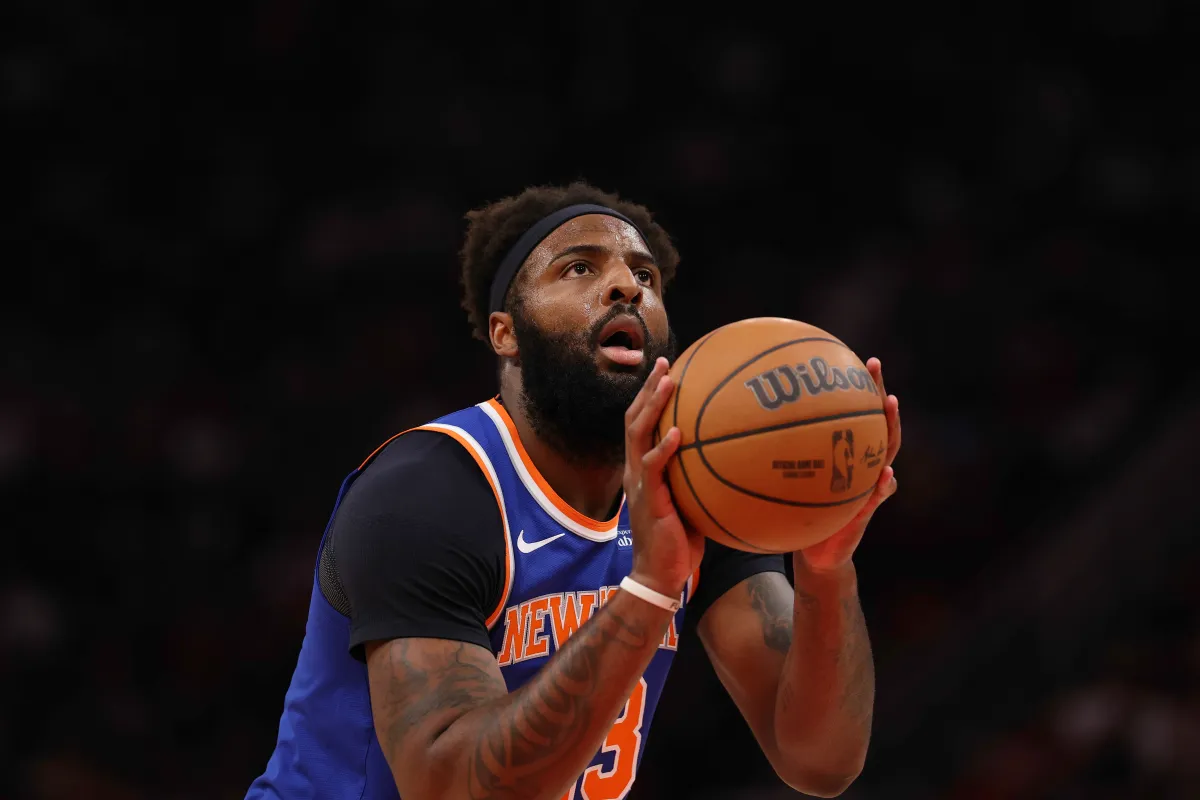
At the absolute center of this pre-game media storm was the Knicks’ towering seven-foot center, Mitchell Robinson, whose digital footprints on social media suddenly thrust him into the unforgiving glare of the national political spotlight. The controversy began on TikTok when an account named Eren posted a video implying that the young athlete would perform with heightened intensity and dominant prowess with Trump watching from the luxury suites, using nostalgic footage of a young Allen Iverson confidently challenging Michael Jordan in the 1990s as a metaphor. Robinson’s spontaneous, four-word response under the video—”You ain’t lying, brother”—instantly detonated across the internet, sparking a frenzy of speculation regarding his personal political beliefs. This digital interaction was not an isolated event; months earlier, Robinson had shared an image of himself holding a large American flag, which prompted a follower to comment that the photo was fine as long as there wasn’t a Trump flag hiding in the background, to which Robinson provocatively and directly replied, “I got one.” Investigating the young center’s personal history reveals a journey rooted in the American South, with voter registration records showing that Robinson, who spent his formative years growing up in Louisiana, officially registered as a Republican in September 2024—a significant shift from 2020 when he registered to vote without declaring any formal political party affiliation. Humanizing Robinson, however, requires looking past the black-and-white bureaucracy of voter rolls and the quick-twitch nature of social media banter. When later pressed about his polarizing comments, the center casually shrugged them off as lighthearted “trolling” on TikTok, and during an official pre-game interview with ESPN, he adopted a thoroughly professional, detached demeanor, expressing that Trump’s physical presence in the arena was merely “cool, I guess” while emphasizing the ultimate athlete’s mindset: “We can still get out there and play [no matter] who’s here and who’s not.”
This intricate dance of personal identity, public perception, and team harmony is further colored by the remarkably diverse spectrum of voices within the Knicks’ own locker room, a contrast epitomized by Robinson’s star teammate, Karl-Anthony Towns. Unlike Robinson’s playful or conservative-leaning digital interactions, Towns has historically occupied a highly vocal, progressive space in the public sphere, famously utilizing his platform in 2018 to fiercely criticize Trump for insulting the intelligence of basketball icon LeBron James. At the time, Towns had publicly urged the president on social media to stop using “them twitter fingers” and start using his executive pen to solve real-world crises, pointing to the ongoing water crisis in Flint, Michigan, as a glaring example of neglected domestic policy. When interested fans on TikTok recently asked Robinson how he managed to maintain a positive relationship with Towns despite their apparently contrasting political worldviews, Robinson responded with a single, universally understood shrug emoji—a touching testament to the reality that professional athletes routinely build deep bonds of brotherhood that comfortably transcend ideological disputes. For his part, Towns chose to demonstrate a profound level of maturity and focus ahead of Game 3, ignoring the media’s attempts to draw him into a political debate and instead redirecting the focus entirely to the community, passionately reminding reporters that the team’s sole mission was to keep championship hope alive in New York City and deliver on their promise to their fiercely loyal fan base.
The internal atmosphere of the Knicks squad reveals a masterclass in professional compartmentalization, as other key players also sought to de-escalate the political circus surrounding their pursuit of a world championship. Forward OG Anunoby, celebrated for his calm, stoic, and unflappable demeanor on and off the court, sought to ground the narrative in pure basketball reality, suggesting that Trump would ultimately just “be there watching the game” and that his presence would do absolutely nothing to alter how the team played because their collective focus was locked on securing a victory. Meanwhile, the unyielding memory of the internet ensured that past expressions of political opinion would not be entirely forgotten, as fans quickly resurfaced a passionate 2020 social media post from Knicks guard Josh Hart celebrating Trump’s election loss to Joe Biden, reminding the media of the diverse political landscape coexisting within a single professional roster. This juxtaposition highlights an essential, human truth about modern sports franchises: a championship-caliber team is not a political monolith but rather a microcosm of society itself, a gathering of individuals from wildly different geographic and cultural backgrounds who must find common ground, mutual respect, and a singular, shared purpose under the brightest, most demanding lights in the sporting world.
Beyond the locker room doors, the severe security measures implemented to accommodate the former president transformed the game-day experience for thousands of loyal, working-class fans into an exhausting logistical nightmare. Madison Square Garden is usually a sanctuary of shared community joy, but the high-level presidential security sweeps turned the surrounding streets of Midtown Manhattan into a heavily barricaded, strictly patrolled fortress. Ticket holders were advised to arrive hours ahead of time to navigate the intense security checkpoints, while those without tickets were abruptly blocked from walking within several blocks of the arena, effectively dismantling the organic, electric street culture that typically defines a New York playoff run. Most disappointingly for the local community, the vibrant, high-energy outdoor watch parties that had become a staple of the postseason on the plaza outside the Garden were completely canceled due to perceived security risks, briefly threatening to stifle the collective joy of the city’s basketball faithful. Yet, demonstrating the resilient, indomitable spirit that characterizes New Yorkers, Knicks guard and native son Jose Alvarado perfectly captured the local grit when he explained to ESPN how fans and organizers quickly improvised by moving the communal celebration to nearby Bryant Park, proudly declaring, “We’re New Yorkers. We’re going to find a way to watch a game, and that’s what we’re doing,” proving that no amount of political disruption could break the community’s bond.
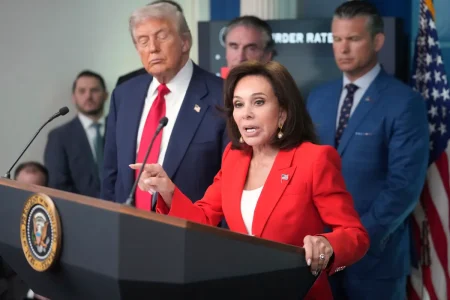
Ultimately, when the house lights finally dimmed and the national anthem echoed through the historic rafters of the world’s most famous arena, the complex, pent-up emotions of the crowd erupted into a raw, auditory battleground that perfectly mirrored the nation’s current state of polarization. Outside the arena, the arrival of Trump’s motorcade was met with a chorus of loud boos from vocal local protesters, a wave of public discontent that was echoed inside the stadium when the former president’s face was broadcast on the giant Jumbotron during the pre-game ceremonies. Conversely, representing the deeply split nature of the audience, supporters of the president pointed to the powerful, echoing chants of “USA!” that reverberated through the stands as evidence of deep-seated patriotic support, even though such chants are a historic staple of sporting events and their true political intention remained open to interpretation by onlookers on both sides of the aisle. As the game finally tipped off, the deafening political noise began to recede, replaced by the rhythmic squeaks of sneakers, the crisp snaps of the net, and the shared, unifying passion of a historic sports rivalry. This unforgettable night in New York City served as a poignant, deeply human reminder that while sports can offer a beautiful temporary escape from our daily realities, they also serve as a profound mirror, reflecting the complicated, passionate, and beautifully diverse world we all must navigate together.