


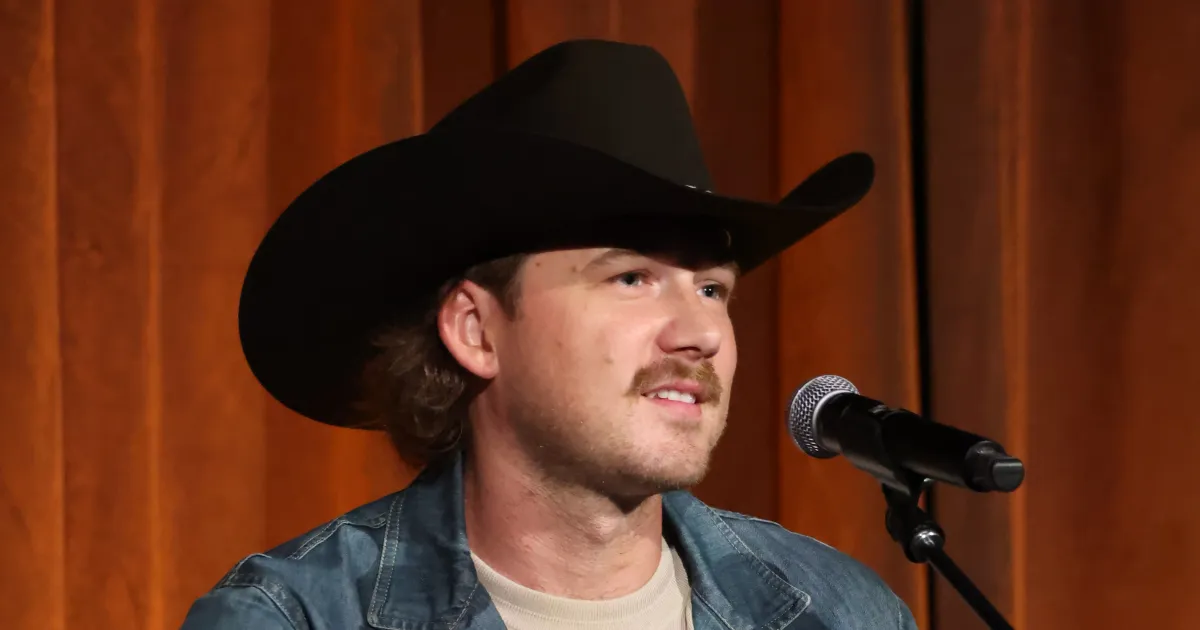
The relationship between a performing artist and their audience has always been a delicate dance of intimacy and theater, but in the modern era of stadium tours, that connection is increasingly mediated by a wall of glowing screens. This digital barrier seemed to push country music giant Morgan Wallen to his limit during a Friday night performance at Pittsburgh’s Acrisure Stadium. While performing under the blinding spotlights, Wallen’s attention was captured not by the sea of singing faces, but by a security guard standing at the foot of the stage, holding up a smartphone to film him from a low angle. To an artist attempting to lose himself in the emotion of his music, a close-up camera lens can feel less like an act of appreciation and more like an invasive intrusion. In a moment of mounting irritation, Wallen gestured for the filming to stop, trying to reclaim the pure human connection of the live space. When the recording didn’t cease, the raw frustration of an intense touring schedule appeared to boil over; returning to the edge of the stage, Wallen snatched the device directly from the guard’s hands and sent it flying across the stage. It was a brief, chaotic flash of temper that quickly went viral, serving as a stark reminder of how thin the line is between a superstar’s curated public persona and the impulsive, easily frayed emotions of a real human being operating under constant scrutiny.
In the digital aftermath of the concert, the internet quickly dissected every angle of the outburst, searching for context in a world that often lacks nuance. Raw footage shared on social media showed that the incident began with a gesture of goodwill turned sideways, as a fan had reportedly handed their phone to the security guard in hopes of getting a treasured, close-up video of their idol. For the fan, it was a harmless attempt to bridge the massive gap between the crowd and the stage; for Wallen, however, the constant presence of recording devices can feel like living in a commercial panopticon where every momentary grimace or misstep is captured for eternity. When the guard held the phone high, filming the performance from the ground up, she became an unwitting facilitator of this digital intrusion. By discarding the phone across the stage, Wallen reacted not just to a single device, but to the overwhelming sensation of being relentlessly analyzed through glass lenses. The incident highlights a growing disconnect in modern concert culture, where the hunger for digital keepsakes and viral content often overshadows the mutual respect required for live performance, leaving artists feeling dehumanized and defensive in the very spaces where they are supposed to be most expressive and free.
The emotional high of the Friday night show and the subsequent online fallout were met with an abrupt silence the very next day, reminding everyone of the unpredictable public and natural forces that govern outdoor stadium tours. On Saturday, Wallen was forced to cancel his second scheduled Pittsburgh performance due to dangerous, severe weather conditions forecasted to sweep through the region. Making the call to cancel a massive stadium event is never easy for an artist; it involves disappointing tens of thousands of passionate fans who have traveled, spent hard-earned money, and waited months for a single night of escape. Yet, taking to his Instagram Stories, Wallen expressed that after consulting with local officials and his team, there was simply no safe alternative. Emphasizing that the safety of his fans and crew remained his highest priority, he had to make the difficult, mature decision to pull the plug on the evening. This swift transition from the impulsive, frustrated individual who threw a phone on Friday to the responsible, safety-conscious leader on Saturday illustrates the complex duality of modern stardom. Underneath the rock-and-roll bravado and the occasional stage outbursts lies a massive, highly coordinated machine that demands sobriety, logic, and a profound sense of responsibility for human lives, often requiring an artist to swallow their own desires for the sake of the collective good.
This tension has been a recurring theme throughout Wallen’s highly anticipated tour, which kicked off in April and has already seen its fair share of high-octane pressure and stage-side drama. Only a week prior to the Pittsburgh phone-tossing incident, during a stop at Empower Field at Mile High in Denver, Colorado, Wallen made headlines when he flipped a piano over mid-performance in a display of sheer exasperation. Reports later revealed that the dramatic act was born out of technical difficulties that had plagued the performance, demonstrating how easily the intricate, electronic scaffoldings of a modern stadium show can collapse and leave an artist feeling exposed and vulnerable on stage. Rather than letting the narrative harden into one of unchecked anger, Wallen chose to humanize the moment by turning to TikTok a few days later to mock his own temper. Sharing a playful video, he assured his audience with deadpan humor that his piano was indeed working that night—or at least, that is what his crew had promised him. This ability to self-deprecate reveals a man learning to navigate his intense emotions while living under a microscope. It is worth noting, too, that the hostility on stage is a two-way street; during his 2024 tour, Wallen himself was the target of a flying smartphone thrown directly at him from the crowd, a dangerous trend that has left many performers feeling physically unsafe on their own stages.
To understand Wallen’s volatile relationship with fame and public scrutiny, one must look back at the turbulent path he has walked over the last several years. Wallen is no stranger to the toxic cycle of celebrity scandal, outrage, and redemption. In May 2020, he was arrested outside Kid Rock’s honky-tonk bar in downtown Nashville for public intoxication and disorderly conduct—charges that were later dropped, but which nevertheless painted a picture of a young artist struggling to handle his sudden rise to fame. Later that year, during the height of the COVID-19 pandemic, he was caught on camera partying maskless and kissing multiple women at college bars in Alabama, a move that got him temporarily dropped from a high-profile television appearance. The true reckoning, however, came in February 2021, when a leaked video caught him using a racial slur outside his home. The backlash was swift, severe, and nearly career-ending. In the face of widespread condemnation, Wallen did not retreat into complete denial; instead, he issued a sincere, solemn apology, expressing deep embarrassment, admitting there was absolutely no excuse for his language, and promising to do the hard work to become a better version of himself. These deeply human errors and the subsequent public castigation have left a permanent mark on Wallen, forcing him to grow up in front of millions of people who are often eager to see him stumble.
Ultimately, Morgan Wallen’s chaotic moments on stage—whether he is flipping over a broken piano or hurling an intrusive phone across the stage—cannot be viewed in a vacuum. They are the visible symptoms of a highly scrutinized human being trying to find his footing at the absolute pinnacle of the music industry. Behind the record-breaking streaming numbers, the sold-out stadium tours, and the chart-topping country anthems is a flawed individual who must daily confront his past mistakes while carrying the immense weight of administrative, emotional, and physical demands. The spotlight is a harsh, dehydrating environment, where the boundaries between the public persona and the private soul are constantly eroded. As Wallen continues his journey through the highs and lows of his massive career, his outbursts serve as a reminder that fame does not cure human fragile nature; it merely amplifies it. For Wallen, the challenge lies not only in delivering flawless vocal performances night after night, but in cultivating the inner peace required to withstand the endless barrage of flashing cameras, unpredictable crowds, and the haunting echoes of his past, as he strives to prove that he is more than just his worst moments.