



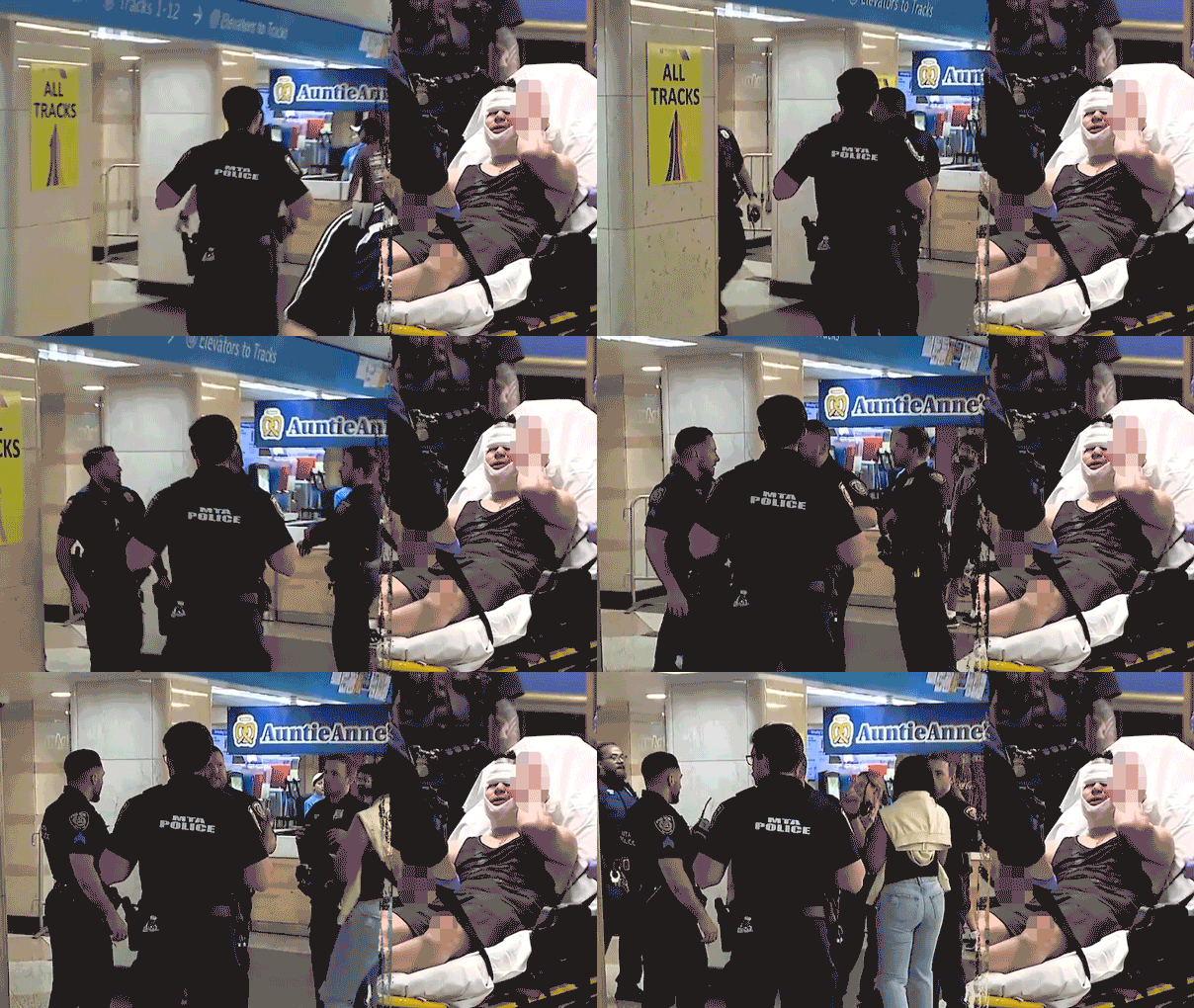
For the millions of commuters, travelers, and dreamers who pass through its subterranean corridors every year, New York City’s Penn Station is more than just a transit hub—it is the beating, chaotic heart of Manhattan’s daily hustle. On any given Sunday evening, the station is alive with a unique, energetic hum, filled with tourists taking in the sights, locals returning from weekend getaways, and passionate sports fans clad in blue and orange, riding the high of the New York Knicks’ thrilling postseason run. Yet, on this particular Sunday, at precisely 7:02 p.m., that familiar symphony of clanging train bells, hurried footsteps, and animated chatter was shattered by a sudden, terrifying chorus of screams. Near the busy intersection of West 33rd Street and Seventh Avenue, a routine evening transformed in an instant into a scene of absolute horror when an assailant armed with a knife began attacking unsuspecting bystanders. In a matter of minutes, the vibrant weekend energy evaporated, replaced by the chilling realization that a violent act was unfolding in one of the city’s most heavily policed and crowded public spaces. Panicked crowds scattered in search of safety, seeking refuge behind concrete pillars and inside nearby storefronts, as the grim reality of a multi-victim stabbing began to register with those unlucky enough to be nearby.
The human toll of the attack was immediate and devastating, leaving six individuals with physical and psychological wounds that will undoubtedly take a lifetime to heal. As sirens wailed and emergency vehicles illuminated the Manhattan twilight with flashing red and blue lights, the brave first responders of the Fire Department of New York (FDNY) and emergency medical technicians rushed headfirst into the chaos to triage the wounded. Among the victims, one person suffered severe, life-threatening injuries, their survival hanging in the delicate balance of the rapid medical intervention provided on the hard pavement of Seventh Avenue. Two other victims sustained moderate, deep tissue injuries, while three others suffered minor but deeply traumatic physical cuts and bruises. Paramedics worked with practiced, urgent efficiency, loading five of the wounded—including the critically injured individual and those with moderate trauma—into ambulances bound for Bellevue Hospital, a trauma center historically renowned for handling the city’s most critical emergency cases. A sixth victim, whose physical injuries were classified as minor but whose emotional shock was severe, was transported to NewYork-Presbyterian/Weill Cornell Medical Center, leaving behind a crime scene marked by discarded medical packaging, police tape, and the haunting reminders of a Sunday evening shattered by violence.
In the crucial, high-tension minutes following the initial calls for help, the swift and decisive action of law enforcement prevented what could have been an even greater catastrophe. Amtrak Police officers, who hold primary jurisdiction over the sprawling daily operations of Penn Station, responded instantly alongside their counterparts from the New York Police Department (NYPD) to isolate the threat. Amid the confusion of fleeing crowds and conflicting reports, officers navigated the complex architecture of the station to track down, confront, and successfully apprehend the suspect without further loss of life or injury to the public. Amtrak Police quickly took the lead in the subsequent investigation, releasing a succint but reassuring statement confirming that the suspect was in custody and that a thorough investigation into the nightmarish sequence of events was already underway. While the NYPD assisted in securing the perimeter and managing the immediate flow of frightened pedestrians outside the station, the primary responsibility of uncovering how and why this tragedy occurred remained with Amtrak’s specialized security forces. Despite the quick arrest, the air remained thick with unanswered questions, as authorities initially withheld details regarding the suspect’s identity, the type of weapon used, or any potential motive that could explain such a senseless act of violence against innocent people.
In the aftermath of the tragedy, local leaders sought to offer words of comfort and resolve to a shaken populace, acknowledging the deep psychological scar such violence leaves on the collective consciousness of the city. New York City Mayor Zohran Mamdani quickly addressed the public, releasing a poignant statement on the social media platform X to express his profound sorrow and to condemn the senseless assault. Calling the incident a “horrific stabbing,” Mamdani extended his deepest sympathies to those physically wounded and to their families, who had to endure the agonizing wait for news from the hospital. He emphasized that his heart was with everyone shaken by this unacceptable breach of public safety and expressed a fierce hope that each of the victims would experience a rapid, complete recovery. Additionally, the mayor expressed his profound gratitude to the Amtrak Police Department and the quick-thinking medical first responders whose bravery prevented the situation from escalating into an even worse disaster. As the city wrestled with the frightening reality of violence in its transit system, Mamdani sought to reassure the public by confirming that his administration was remaining in constant communication with federal and local transit officials to monitor the ongoing investigation and ensure the safety of the station moving forward.
The incident occurred at a time when safety in urban transit centers has become a highly charged and deeply personal issue for millions of everyday commuters who rely on public transportation as an absolute lifeblood. Penn Station, which has recently faced other major operational hurdles—including infrastructure failures, high-profile commuter disruptions, and localized transit cancellations—is a place where vulnerability and vitality constantly coexist. The anxiety of navigating crowded stairwells and narrow platforms is already a formidable part of the daily New York experience, but acts of sudden, unpredictable violence amplify those fears, forcing commuters to look over their shoulders and question their basic safety. This stabbing took place during a time of immense pride and celebration for the city, with the local NBA franchise drawing massive, joyous crowds to the nearby Madison Square Garden, and global sports enthusiasts arriving in the region ahead of major international FIFA events. The stark contrast between the city’s celebratory mood and the grim scene of a multi-person stabbing highlights the ongoing, complex challenge of securing massive, open public spaces while preserving the welcoming, free-flowing energy that makes New York City one of the world’s premier destinations.
Ultimately, of all the stories that emerge from the dark events of Sunday night, the most enduring one is the incredible resilience of the people who call this city home. Despite the profound shock of the violence and the heavy police presence that blanketed West 33rd Street long into the night, the station did not grind to a halt; Amtrak services continued to run, trains kept arriving and departing, and the essential flow of humanity did not stop. This stubborn refusal to be paralyzed by fear is a hallmark of the New York spirit, yet it does not diminish the need for a deeper, more compassionate focus on public safety and mental health resources to address the root causes of such tragedies. As the six victims begin their long, difficult journeys toward physical and emotional recovery in their hospital rooms, the thoughts of a united city remain firmly with them and their loved ones. Through their recovery and the continued vigilance of the community, New Yorkers are reminded that while acts of violence can momentarily disrupt the peace of their shared public squares, the enduring bond of neighborly support and the unwavering dedication of first responders will always prove stronger than the actions of those who seek to cause harm.