


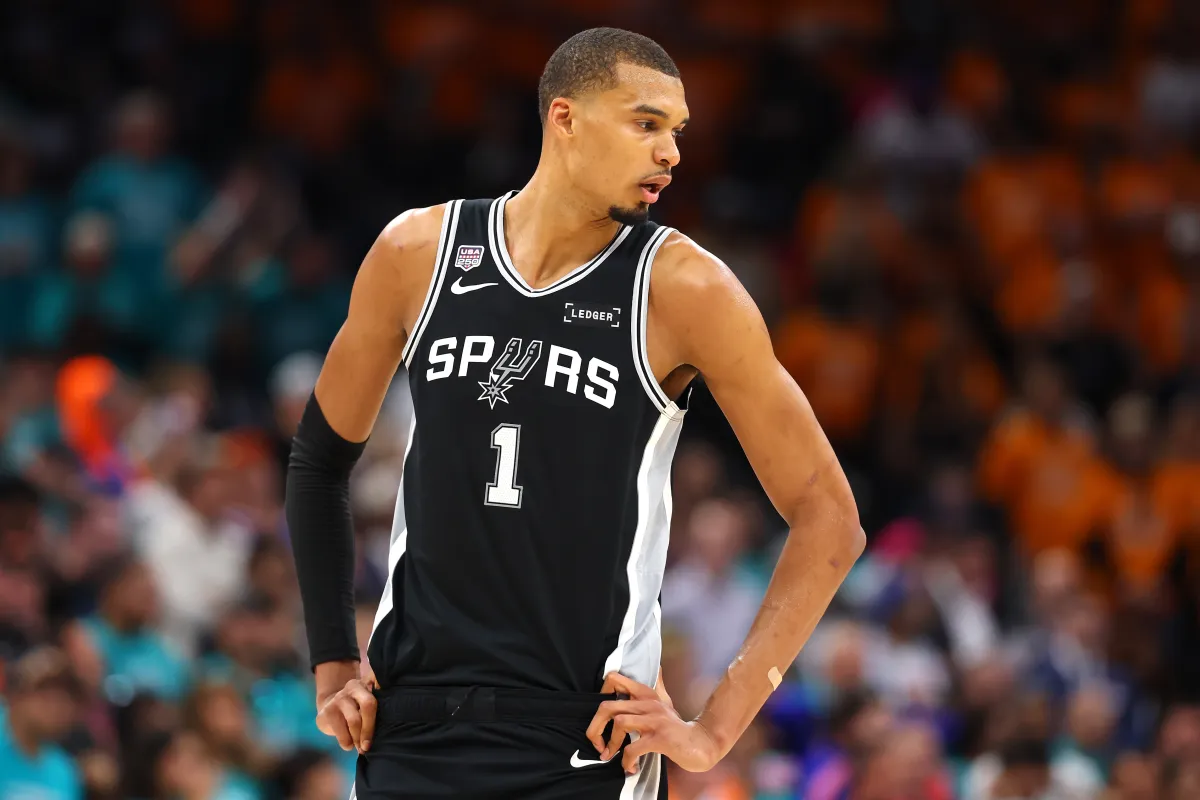
The ascent of Victor Wembanyama from a highly touted, almost mythical prospect to the undeniable epicenter of the basketball universe has occurred at a speed that has left even the most seasoned sports analysts completely breathless. In just his third NBA season, the 7-foot-4 French phenomenon has done what many believed would take at least half a decade: he has guided the legendary San Antonio Spurs franchise back to the grandest stage of professional basketball, the NBA Finals. This modern-day resurgence was not handed to the silver and black on a silver platter; instead, it was forged in the competitive fires of a brutal, emotionally draining seven-game Western Conference Finals series against the reigning champion Oklahoma City Thunder. Faced with an OKC roster brimming with elite young talent and deep postseason experience, Wembanyama stood tall—both literally and figuratively—anchoring his team through moments of extreme tactical duress and ultimately hoisting the Western Conference Finals MVP trophy after a unanimous vote. This historic achievement signaled a profound, seismic changing of the guard in the basketball landscape, confirming that the future of the league had not merely arrived, but had taken complete, dictatorial control of the present. The poise and grit displayed by the young Frenchman under the blinding, high-pressure lights of the postseason has completely redefined what is possible for a young franchise cornerstone, evoking memories of past Spurs legends like Tim Duncan and David Robinson. Wembanyama has single-handedly transformed a rebuilding San Antonio squad into an absolute championship-caliber juggernaut in record time, carrying the dreams of a passionate fanbase on his broad shoulders. As fans, coaches, and sports historians marvel at his uncanny combination of guard-like fluidity, reliable outside shooting range, and terrifying rim-protecting instincts, it has become abundantly clear that we are witnessing the dawn of an entirely new paradigm in global sports, one where traditional boundaries no longer apply. This young star is not just playing a game; he is actively crafting a legacy that will be discussed for decades to come, redefining the limits of human athletic potential.
Behind this meteoric rise on the hardwood lies a deep, unwavering psychological conviction that borders on the prophetic. Long before the championship rings, the MVP trophies, and the global adoration, Wembanyama harbored a fierce, quiet certainty about where his athletic journey would inevitably lead. This steel-cold mindset was put on full display during a private, behind-closed-doors meeting with top-tier Nike executives prior to the official launch of his historic 2025-26 NBA campaign. When discussions turned to modern marketing strategies, brand identity, and who would soon inherit the coveted mantle of the league’s primary ambassador, the young giant did not offer polite platitudes or express humble gratitude for the opportunity. Instead, according to a corporate insider present in the room, Wembanyama delivered a chillingly confident declaration that echoed through the corporate halls: “I’m not gonna give basketball a choice of who the face is going to be.” This striking quote, which recently surfaced in a deeply researched piece by respected NBA insider Jared Weiss of The Athletic, offers a rare, unfiltered glimpse into the mind of a generational athlete who flatly refuses to wait politely for his turn in the spotlight. Published just hours before Wembanyama was set to take the court for Game 2 of the NBA Finals against the iconic, highly resilient New York Knicks, the revelation of this quote served as a stark reminder of his ruthless competitive nature. It illustrates that his dominance is not merely a product of lucky physical genetics or fortunate draft circumstances, but rather the hard manifestation of a meticulously calculated, self-driven prophecy. Wembanyama did not enter the NBA looking to fit into a pre-existing superstar mold; he arrived with the deliberate, cold-blooded intention of breaking that mold entirely, forcing the entire basketball ecosystem to reshape itself around his singular star power.
To truly understand the weight of his ambitious declaration, one must look at the path Wembanyama carved through the league during his spectacular regular-season campaign. He did not simply cruise on his potential; he put together one of the most statistically dominant and physically imposing seasons in modern NBA history. National commentators and basketball enthusiasts were amazed as he went head-to-head with the league’s absolute best. Wembanyama ultimately finished an incredible third in the NBA Most Valuable Player voting, a stunning achievement that saw him trailing only back-to-back reigning MVP Shai Gilgeous-Alexander and the masterfully consistent three-time MVP winner Nikola Jokic. To be mentioned in the same breath as those seasoned superstars in only his third year is a testament to his rapid maturation, but it was on the defensive end of the floor where he truly separated himself from ordinary mortals. Wembanyama was awarded the coveted Defensive Player of the Year trophy, making history as the first player in the annals of the NBA to win the award by a completely unanimous vote. On virtually any given night, his presence on the court resembled an interactive defensive cheat code, a towering, hyper-mobile specter whose absurd wingspan and lateral quickness fundamentally altered the driving lanes and shooting arcs of opposing offenses. He did not just block shots with frustrating ease; he systematically dismantled the confidence of his opponents, forcing entire teams to abandon their preferred offensive game plans out of sheer terror of descending into his paint. Coaches around the league openly admitted to countless sleepless nights trying to solve the tactical riddle of his defense, recognizing that Wembanyama had turned the court into his own personal defensive laboratory where traditional offensive strategies went to die. This rare blend of individual accolades and rapid team success did more than just silence his remaining skeptics; it proved that his ambitious promises to Nike were never empty boasts, but rather a realistic, inevitable roadmap for his career.
Yet, for all his undeniable greatness and prophetic confidence, the grand stage of the NBA Finals has a unique way of introducing key adversity to even the most gifted athletes. This harsh reality check came hard and fast during Game 1 of the Finals, played in front of a passionate, deafening crowd at San Antonio’s Frost Bank Center. Facing a relentless, physically punishing, and defensively disciplined New York Knicks squad, Wembanyama experienced the bitter taste of a high-stakes postseason defeat. On paper, his final box score looked highly respectable, if not outright dominant: a commanding double-double of 26 points and 12 rebounds. However, those raw numbers masked a deeply frustrating night characterized by uncharacteristic shooting struggles and highly effective defensive game-planning by the grit-and-grind Knicks. Wembanyama struggled mightily with his offensive efficiency all evening, converting a disappointing 6-of-21 shots from the field and a mere 2-of-9 from behind the three-point arc. The Knicks’ swarming, physical defense consistently bumped him off his preferred spots, denying him comfortable entry catches near the basket and forcing him into tough, highly contested, perimeter-oriented looks. In the end, the Spurs fell in an unsettling 105-95 loss, leaving their home crowd shell-shocked and forcing the team to confront an immediate, high-pressure series deficit. This opening-game setback highlighted the human vulnerability that still exists within Wembanyama’s otherwise superhuman basketball persona, illustrating that the path to a coveted NBA championship is rarely a smooth, unbroken line. Instead, it is a grueling, agonizing test of endurance, deep strategic adaptation, and mental fortitude under the harshest sports scrutiny. The Knicks proved that they would not simply bow down to the league’s newly crowned prodigy, setting the stage for a fascinating, high-stakes tactical chess match between two historically proud franchises hungry for global glory.
As the basketball world shifts its focus to the highly anticipated Game 2, scheduled to tip off at 8:30 p.m. ET on Friday, all eyes will once again be locked onto the towering figure wearing number one. The true measure of a superstar’s legacy is defined not by how they perform when everything is flowing smoothly, but by how they respond when their backs are firmly against the wall. This upcoming matchup represents a critical crossroads for Wembanyama and the Spurs, offering a prime opportunity to demonstrate the psychological resilience that separates the merely great players from the immortal legends of the game. Legendary voices around the sports world, including former NBA All-Star Charles Barkley, have recently made various emotional admissions regarding Wembanyama’s rapid ascent, expressing a mixture of pure awe at his rare talents and protective concern for the immense pressure being placed upon such young shoulders. Under the wise, veteran guidance of Hall of Fame head coach Gregg Popovich, Wembanyama is currently being schooled in the fine art of the postseason bounce-back, learning to quickly shake off poor shooting nights, adjust to physical double-teams, and trust the collective team system. Friday night’s pivotal contest will be an ultimate test of mental adjustment, as the young star must find ways to crack the Knicks’ physical defense, make faster, more decisive plays with the basketball, and re-establish his dominant, towering presence deep in the paint. The atmosphere inside the Frost Bank Center is guaranteed to be absolutely electric, heavily charged with the palpable anxiety and raw excitement of a proud fanbase that knows just how crucial a split on their home court is for their ultimate championship aspirations. If Wembanyama can successfully channel his inner fire and refine his offensive approach, Game 2 could very well be the moment he solidifies his global superstar status, turning a temporary tactical setback into a defining chapter of his basketball legacy. The stage is now set for a night of intense, high-stakes drama in San Antonio.
In the grand scheme of sports history, Wembanyama’s journey is about much more than a single game, a single series, or even a single championship ring. It represents a massive, irreversible paradigm shift in how we view athlete empowerment, global marketing, and the very physical limits of the human body on a basketball court. When Victor spoke those bold words to Nike executives years ago, he was drawing a line in the sand, declaring to the world that his destiny was entirely in his own hands. Now, standing on the precipice of his first NBA Finals championship, he finds himself in the unique position of having to turn those magnificent concepts into hard reality. The global basketball community is watching with bated breath, recognizing that a victory in this series would secure his place as the undisputed face of the league for the next decade or more, officially taking the torch from legendary veterans like LeBron James, Stephen Curry, and Kevin Durant, who have dominated the sport for so long. Regardless of the final score of Game 2 or the ultimate outcome of these grueling Finals, Wembanyama has already accomplished the unthinkable, forcing us all to expand our imaginations regarding what a basketball player can do. As the clock ticks closer to tip-off on Friday night, the pressure on his young shoulders will be immense, but so too is his capacity for dramatic greatness. In a world full of athletes who hope to be remembered, Victor Wembanyama has made it clear that he will settle for nothing less than absolute, unforgettable immortality, proving that when destiny knocked on his door, he did not just answer—he blew the door completely off its hinges, rewriting the future of the game itself forever.