


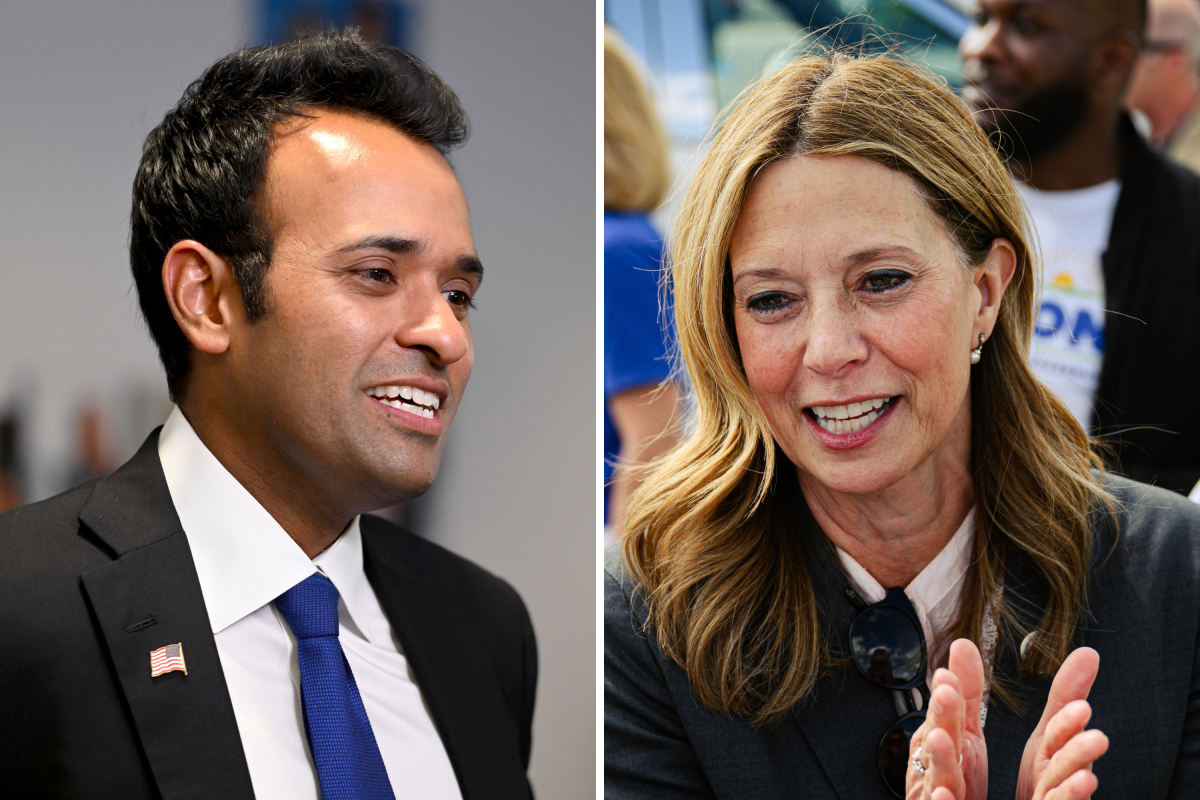
The crisp morning air shifting across the rolling hills of southeast Ohio and through the bustling, revitalized streets of Columbus carries with it a familiar, electric tension. Once celebrated as the nation’s ultimate political bellwether, Ohio has in recent years settled into a quieter, more predictable conservative identity, seemingly turning its back on its legendary history of knife-edge elections. Yet, beneath this veneer of partisan stability, a quiet storm is brewing that threatens to upend everything we thought we knew about the state’s political trajectory. A statewide Fox News survey of 1,015 registered voters, conducted between May 28 and June 1 by Beacon Research and Shaw & Company Research, has sent shockwaves through the political establishment by revealing a statistical dead heat in the high-stakes gubernatorial race. Empowered by a mixture of phone and online outreach, the poll places Democratic challenger Amy Acton at 50 percent and Republican standard-bearer Vivek Ramaswamy at 49 percent—a razor-thin margin that sits well within the survey’s ±3 percentage point margin of error. This sudden, agonizingly tight matchup stands in stark contrast to the cold, calculative world of online prediction markets, where traders on high-tech platforms like Kalshi and Polymarket continue to risk real capital on a narrow Republican victory. This divergence between immediate human sentiment and calculated market probability captures a campaign defined not by a confident frontrunner, but by a profound and moving uncertainty, where the ultimate destination of the state will be decided in the quiet, reflective spaces of local diners, backyard barbecues, and kitchen tables.
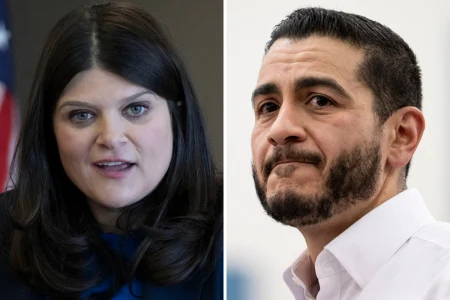
To understand why this race has become such a deeply personal battleground for Ohioans, one must look closely at the two remarkably different human beings vying to lead them, each representing a distinct vision of the American dream. Dr. Amy Acton, a public health physician who became a household name as Ohio’s health director during the chaotic, terrifying early days of the COVID-19 pandemic, brings a style of leadership forged in empathy, science, and a raw, shared vulnerability. Her personal narrative is not one of inherited privilege; she has spoken openly about surviving a grueling, impoverished childhood marked by periods of homelessness, a story that resonates deeply with working-class families who feel forgotten by a rapidly changing economy. Opposing her is Vivek Ramaswamy, a young, relentlessly energetic biotech entrepreneur and former 2024 presidential candidate who represents a fierce, unapologetic brand of modern conservatism. Backed heavily by Donald Trump and possessing a sharp, fast-talking intellect, Ramaswamy’s campaign is fueled by the promise of economic disruption, deregulation, and a dramatic dismantling of the bureaucratic state. Where Acton offers voters the comforting, maternal presence of a healer who seeks to bind up the state’s wounds, Ramaswamy offers the kinetic, visionary zeal of an outsider ready to shatter the status quo. This clash of archetypes transforms the election from a simple policy debate into a deeply philosophical question about what kind of leadership Ohioans trust to guide them through an increasingly unpredictable world.
This choice is weighing heavily on the minds of those who do not wear a partisan jersey, a massive and diverse group of citizens who refuse to be easily categorized. In Ohio, independent voters make up an estimated 38 percent of the electorate, forming a quiet majority that holds the true key to the governor’s mansion. The recent polling suggests that these non-aligned citizens are beginning to lean toward Acton’s message of stability, granting her an eight-point lead—51 percent to 43 percent—among independents. Yet, this fragile advantage exists alongside a remarkable volatility; nearly 30 percent of all polled voters confess that they could still change their minds before casting their ballots, revealing an electorate that is deeply introspective, cautious, and resistant to easy tribalism. Further complicating this human tapestry is the fascinating phenomenon of ticket-splitting, evidenced by the fact that 14 percent of voters who plan to support veteran Democratic Senator Sherrod Brown in his own grueling re-election bid are simultaneously planning to cross the aisle to vote for Ramaswamy for governor. These cross-pressured voters demonstrate that real people do not make decisions based on rigid party platforms; instead, they make deeply personal, sometimes contradictory choices based on who they believe will protect their job, their family, and their community’s way of life.
The political landscape of the state is further complicated by the long, complex shadow cast by former President Donald Trump, whose relationship with Ohio voters is undergoing a subtle, intriguing evolution. Although Trump carried the Buckeye State by decisive, double-digit margins in the 2024 presidential cycle, cementing its reputation as a reliably red stronghold, the recent Fox News poll paints a surprisingly nuanced picture of his current standing among the state’s residents. Today, Trump faces a net negative rating in Ohio, with a striking 57 percent of voters viewing him unfavorably compared to only 42 percent who hold a favorable opinion. This unexpected dip suggests a growing sense of political exhaustion among moderate Midwesterners, who may feel worn down by years of national polarization and the relentless drama of federal politics. For Ramaswamy, who has built much of his political identity upon his close alignment with Trump and his populist movement, this shifting sentiment presents a delicate, high-stakes challenge. He must find a way to maintain the passionate energy of the conservative base without alienating those crucial suburban and independent voters who are searching for a return to pragmatic executive leadership and collaborative governance.
This delicate human balancing act is precisely what has kept the digital trading floors of modern prediction markets locked in a state of hyper-analytical fascination. On platforms like Kalshi and Polymarket, where traders buy and sell contracts based on the perceived probability of political outcomes, the mood remains cautiously optimistic for the Republican ticket, with Kalshi pricing a GOP victory at roughly 55 percent and Polymarket hovering around 54 percent. These digital speculators are looking beyond the temporary passion of the latest polls, placing their bets instead on the heavy, structural machinery of Ohio’s recent history, its conservative voter registration trends, and the institutional advantages that come with a well-funded Republican apparatus. This creates a captivating tension between the dispassionate, mathematical algorithms of the global betting markets and the subjective, emotional reality of the voters themselves. While a trader sitting in an office in New York or London sees Ohio as a predictable, red-shifting data point on a spreadsheet, the actual citizens of Dayton, Toledo, and Athens are living a far more fluid reality, weighing their memories of the pandemic, their anxiety over inflation, and their personal trust in two highly compelling leaders.
Ultimately, as the heat of the summer gives way to the intense focus of the autumn campaign, the destiny of Ohio’s governorship will be decided in the spaces where politics meets daily life. It will be decided by whether Amy Acton can maintain her vital connection with independent voters and convince them that her past public health leadership translates into a steady, prosperous future for their families. It will be decided by whether Vivek Ramaswamy can successfully channel his undeniable intelligence and entrepreneurial drive to convince skeptical moderates that his disruptive energy is a force for creation rather than division. And most of all, it will be decided by that quiet, thoughtful 30 percent of the electorate who are still listening, still watching, and waiting to make up their minds. In an era when national politics often feels cold, hollow, and performative, the struggle for Ohio stands as a beautiful, exhausting reminder of the enduring power of local democracy, where the future of an entire state is still resting comfortably, and unpredictably, in the hands of its people.