



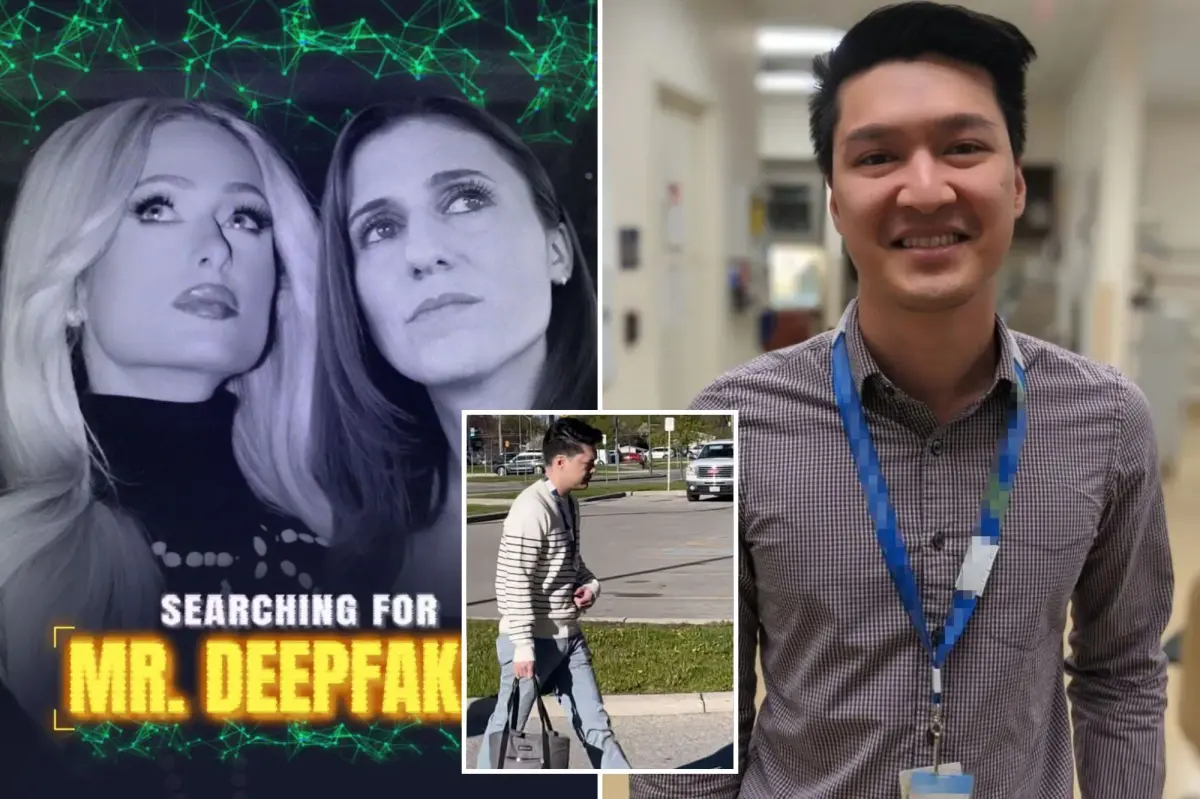
In the quiet, tree-lined suburbs of Toronto, Canada, David Do was known as a dedicated family man, a loving father of one, and a trusted neighborhood pharmacist. During the height of the COVID-19 pandemic, he worked selflessly on the frontlines of healthcare, a local hero celebrated in social media posts for his commitment to keeping his community safe. Neighbors spoke highly of his gentle demeanor; he drove a modest family car, lived in an unpretentious home, and lived an seemingly quiet, respectable life. Yet, beneath this carefully constructed veneer of suburban normalcy lay a dark, parallel digital existence that shocked even those closest to him. Behind closed doors, the 36-year-old was allegedly the mastermind behind “Mr. Deepfakes,” one of the most prolific and devastating websites on the internet. This platform served as a global clearinghouse for nonconsensual, AI-generated explicit content, allowing millions of anonymous users to digitally undress women without their knowledge or permission. At its peak, the site drew in over 17 million monthly users, operating in a lawless digital frontier where rapid technological advancement outpaced legislation, and human empathy was sacrificed for online traffic. When veteran technology journalist Laurie Segall finally unmasked his identity, the sheer normalcy of his everyday life was what shocked her most. Do was not a cartoonish villain hiding in a dark basement; he was the polite gentleman next door who dispensed life-saving medication by day and ran a massive engine of digital degradation by night. Even when confronted directly in his own community, Do displayed no remorse or fear, showing only a cold, defensive resentment that anyone had dared to breach his anonymity. His refusal to acknowledge the deep psychological harm he facilitated underscores a chilling disconnect in our modern era, where the creators of highly destructive technologies are able to compartmentalize their devastating real-world impacts while enjoying the comforts of a quiet, respectable domestic life.
The true tragedy of Mr. Deepfakes lies in the silent, profound suffering of the thousands of women who found their identities stolen, weaponized, and sexualized on a global stage. The physical safety of a screen does nothing to diminish the profound psychological trauma experienced by the victims of AI-generated abuse. For many, discovering their faces seamlessly grafted onto explicit pornography was an agonizing violation that felt indistinguishable from physical assault. Joanne Chew, an ordinary resident of Los Angeles, described the utter terror of typing her own name into a search engine only to find highly realistic, explicit videos of herself that she had never consented to make. This violation shattered the comfortable illusion that deepfake technology is a weapon reserved solely for Hollywood starlets or high-profile politicians; instead, it proved that any woman, anywhere, is vulnerable to having her digital likeness hijacked. For Molly Kelley, the betrayal cut even closer to home when she discovered that her husband’s closest friend had utilized sophisticated artificial intelligence tools to manufacture explicit content of her and other women in their shared social circle. The horror of realizing that someone who dined at your table, smiled at your children, and shared your life was secretly generating synthetic pornography of you in his spare time is a psychological wound that may never fully heal. The technology, as Kelley pointed out, has created a reality where a synthetic, hyper-realistic avatar of an innocent person can perpetrate acts they would never dream of doing, completely stripping them of their agency, reputation, and peace of mind. Victims are left grieving the loss of their digital sovereignty, feeling as though their bodies are no longer their own, while battling an invisible, global audience that views their pain as nothing more than cheap entertainment.
The journey to unmasking the architect behind this empire of violation began quietly in 2022 when Laurie Segall, an award-winning former CNN technology correspondent, stumbled upon a disturbing digital breadcrumb. Following an anonymous whisper on social media, Segall ventured into the corners of Mr. Deepfakes, expecting to find the usual fringe elements of the internet. Instead, she discovered a thriving, mainstream community of millions of active users who were not just consuming explicit AI content but actively sharing techniques, tutorials, and photographs of everyday women to be transformed into nonconsensual pornography. The truly terrifying aspect of this community was not merely the advanced artificial intelligence tools being shared, but the casual, everyday cruelty on display in the site’s forums. Users chatted lightheartedly about violating the dignity of their female coworkers, classmates, and even family members; one user casually queried the forum about the moral implications of deepfaking his own sister-in-law, illustrating a profound desensitization to digital violence. Realizing that the scale of this exploitation was a full-blown humanitarian crisis disguised as a technological novelty, Segall resolved to bring the anonymous operator to justice. She knew she could not do this alone, so she enlisted the help of David Kennedy, a highly respected cybersecurity expert and former intelligence analyst. Kennedy brought in a specialized team of ethical hackers who specialized in complex, high-stakes digital tracking. Recognizing that no one online is truly invisible, Kennedy’s team leveraged advanced open-source intelligence (OSINT) to sift through raw internet data, tracing historical digital footprints, server registrations, and fragmented clues that the site’s creator had carelessly left behind over a span of several years.
The critical breakthrough in the investigation came from an unexpected ally: a small, dedicated group of anti-deepfake advocates operating in the Netherlands. This grassroots collective shared their extensive findings with Segall, introducing her to Dutch researcher Jordy Ubanski. Ubanski and his brilliant team had spent countless obsessive hours mapping out the complex web of usernames, archaic email addresses, archived forum registrations, and server logs that formed the digital skeleton of Mr. Deepfakes. By reconstructing these digital crumbs, they traced a definitive pathway of online activity that stretched back to an old posting on the controversial forum 8chan. As Kennedy’s security team analyzed and cross-referenced this mountain of raw data, every single independent thread of inquiry converged upon one specific individual: David Do of Toronto. The digital fingerprints matched perfectly, with multiple independent methods of corroboration confirming his identity without a shadow of a doubt. This discovery set the stage for a tense, dramatic expedition to Canada, where Segall and her production crew sought to confront the enigmatic pharmacist in person. They tracked his movements to his suburban home, his neighborhood, and eventually the public hospital where he was employed. The confrontation was an exercise in stark, jarring contrast: a respected healthcare professional, who dedicated his days to healing and helping others physically, stood face-to-face with a journalist revealing him as a man who facilitated the digital destruction of thousands of lives. When Segall directly presented Do with the overwhelming evidence linking him to the notorious website, his response was a cold wall of silence, a stark rejection of accountability that left the investigative team shaken by his utter lack of visible remorse or standard human empathy.
To amplify the voices of the victims and bring international attention to this systemic failure of law and technology, Segall partnered with global icon Paris Hilton, who served as a presenter and executive producer for the documentary series. For Hilton, this battle was not an abstract exercise in digital ethics, but a deeply personal, painful crusade that mirrored her own history of public exploitation. When Hilton was just nineteen years old, an intimate videotape of her was distributed across the globe without her knowledge or consent. Decades before the term “deepfake” even existed, Hilton suffered the devastating fallout of nonconsensual media distribution, experiencing public ridicule, systemic shaming, and a profound sense of helplessness in an era when no laws existed to protect her from this form of abuse. She described the harrowing experience as being “digitally raped” with the entire world watching and laughing—a permanent scar she carries to this day. Driven by the desire to shield future generations of young girls and women from experiencing that same agonizing sense of violation, Hilton utilized her massive global platform to co-launch a 14-part investigation on TikTok, exposing the dangers of AI and the identity of her tormentors. Despite her status, Hilton is acutely aware that she is one of the most targeted individuals on earth, with over 100,000 explicit deepfake videos of her likeness circulating online. Her involvement in the documentary is part of a broader, tireless effort to lobby lawmakers for the passage of the DEFIANCE Act, a critical piece of legislation designed to give victims of AI-generated harm a powerful civil recourse to fight back against their creators, establishing a legal framework where none previously existed.
The immense pressure generated by Segall’s investigation, coupled with growing public outrage, congressional inquiries, and advocacy from victims worldwide, eventually shattered the immunity of Mr. Deepfakes. After seven long years of operation, during which it amassed billions of views and caused immeasurable psychological wreckage, the platform abruptly shut down in 2025. Yet, despite this massive victory, the ethical and cultural implications of David Do’s creation continue to cast a long, dark shadow over the future of the internet. Segall remains deeply concerned about the broader societal impact of such websites, pointing out that platforms like Mr. Deepfakes do not merely distribute pornography; they actively train young boys and men to view women as digital playthings whose bodies can be manipulated, reshaped, and shared like toys in a video game. This normalization of digital objectification represents a profound moral desensitization that threatens to erode basic human respect and consent in the offline world. Segall often ponders whether Do truly conceptualized the horrific magnitude of the suffering he unleashed upon the world, wondering if he was simply a tech enthusiast who got lost in his own technical capabilities and private fetishes, entirely blind to the tragic human cost of his creations. To this day, the quiet Canadian pharmacist refuses to answer any of the pressing questions regarding his role in this enterprise. His silence is a haunting reminder that while technology can easily create massive systems of exploitation with the click of a button, the difficult work of healing, enforcing justice, and restoring human dignity in the age of artificial intelligence is a long, arduous journey that has only just begun.