



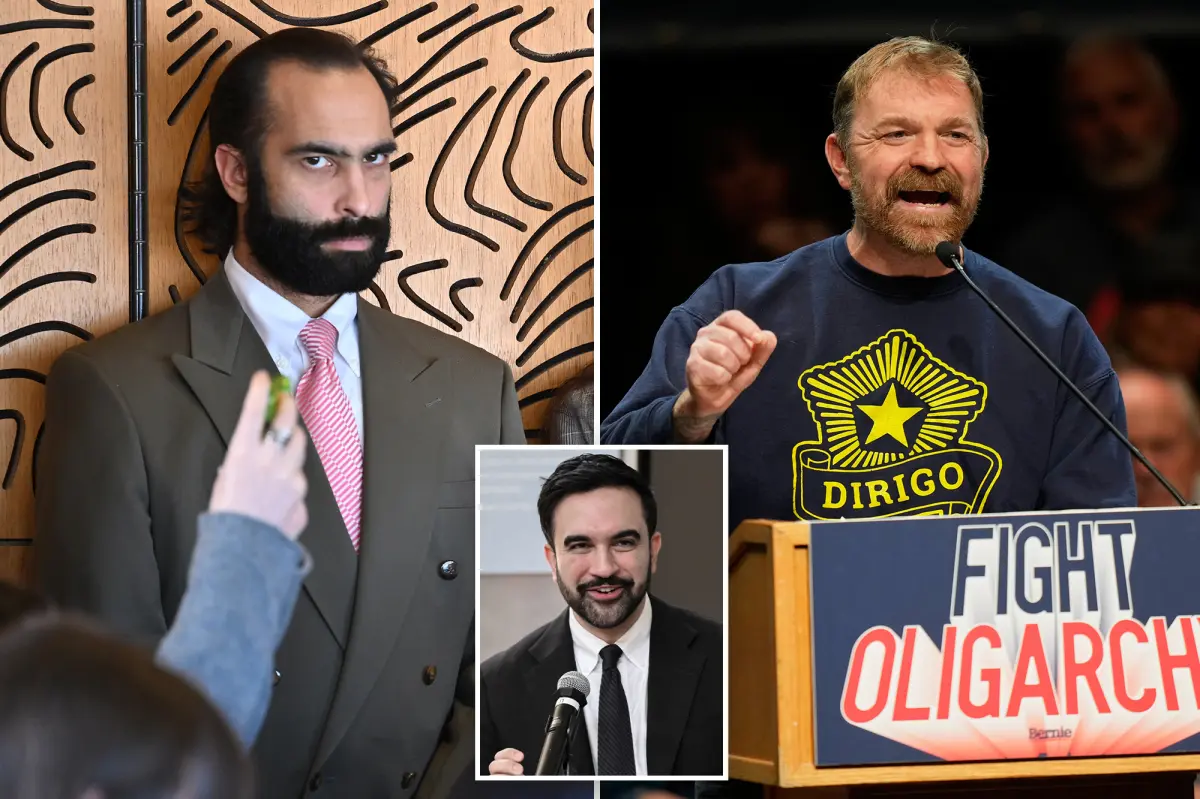
The high-stakes arena of modern American progressive politics operates as a revolving door of elite strategists, shared financial networks, and intense public relations damage control, a reality vividly illustrated by the recent career trajectory of Joe Calvello. Currently serving as the chief spokesperson for New York City’s newly minted Mayor Mamdani—a former left-wing oysterman whose own administration has been beset by intense public scrutiny—Calvello commands a highly lucrative taxpayer-funded salary of $210,000 a year to manage the city’s complex messaging apparatus. Yet, just days before he officially walked through the doors of City Hall to assume his prestigious municipal post, Calvello was deeply entrenched in the national electoral battlefield, pocketing more than $50,000 for high-level political consulting work for Graham Platner, a progressive Democrat locked in a critical bid for the U.S. Senate in Maine. Federal campaign finance filings reveal that Platner’s campaign dispatched a total of $50,036.07 to a private consulting entity registered to Calvello between October 1, 2025, and January 9, 2026, with the final, substantial $10,000 payment clearing just nine days after Mayor Mamdani was sworn into office. While City Hall representatives have been quick to point out that Calvello’s official start date of January 13 legally insulated him from needing a conflict-of-interest waiver or declaring a formal ethical overlap, the incredibly tight timeline reveals the tightly knit fabric of modern Democratic campaigns, where elite spin-doctors seamlessly transition from shaping national Senate bids to steering municipal administrations without skipping a beat, bridging the gap between local policy and grand national ambitions. This constant cross-pollination breeds an environment where personal and professional loyalties are continuously tested under the public spotlight, forcing political practitioners to walk a thin, delicate line between private financial gain and the ethical obligations of public trust, leaving average everyday citizens to wonder if their elected representatives are truly focused on governance or simply maintaining a lucrative network of professional allies.
Behind the financial transactions of Calvello’s lucrative consulting tenure lies a sophisticated corporate structure that has drawn intense scrutiny from campaign finance watchdogs and transparency advocates alike. The payments from the Platner campaign were routed directly to Common Pheasant Consulting LLC, a business entity incorporated in Cheyenne, Wyoming, in May 2025. Wyoming has long been criticized by ethics watchdogs as a domestic tax haven and a shield for financial anonymity, primarily because the state’s business laws do not require limited liability companies to disclose their actual beneficial owners, members, or partners. This shroud of corporate secrecy makes it exceptionally difficult for public interest groups to trace the flow of political money or determine exactly who is profiting from campaign disbursements. Between August 2025 and January 2026, Common Pheasant raked in over $68,500 from various Democratic campaigns, yet public records paint a highly chaotic picture of the entity’s internal operations, indicating that by early May, the firm had already been flagged with a tax delinquency notice by Wyoming business regulators. This revelation echoes a broader, escalating anxiety in municipal politics; earlier this year, a New York City government watchdog group uncovered hundreds of thousands of dollars flowing from former Mayor Eric Adams’ campaign into similarly opaque, Wyoming-based LLCs, prompting calls for the City’s Campaign Finance Board to execute a sweeping investigation into what whistleblowers termed “incredibly suspicious” accounting schemes. Calvello, when pressed by journalists, remained conspicuously silent on both his firm’s tax status and the ethical questions surrounding these financial pipelines, highlighting how public relations experts increasingly rely on secretive corporate vehicles to manage their private consulting windfalls while drawing massive public salaries, a trend that deepens public cynicism and obscures the true path of political capital in local and national democratic elections.
The financial intrigues surrounding Calvello’s consulting firm are only a prelude to the astonishing personal and digital scandal currently engulfing his former client, Graham Platner, whose bid to unseat Republican incumbent Senator Susan Collins has been violently rocked by allegations of severe personal misconduct. A damning series of reports published by The New York Times and the Wall Street Journal exposed a pattern of highly explicit digital behavior, revealing that the married, self-styled progressive family man had engaged in sexually charged messaging with at least twelve different women. Adding a surreal layer of domestic and financial complication, the allegations were initially brought to light by Platner’s own wife, Amy Gertner, who reportedly discovered the extensive illicit messaging in August 2025. Paradoxically, rather than leading to a public split, the revelation was followed immediately by Gertner being mysteriously placed directly onto the campaign’s official payroll the very next month, earning more than $28,750 as a campaign staffer through March of the following year. Despite their attempts to dismiss the damning media exposes as overblown “gossip” and defending their marriage as a resilient, unified partnership rehabilitated through intensive marriage counseling, the sordid details of Platner’s digital alter-ego continue to leak into the public domain. Most notoriously, investigative outlets uncovered a highly active profile on Kik, a secure messaging app frequently associated with anonymous hookups, operating under the username “Phustle0331,” which featured a brazen, towel-clad bathroom mirror selfie of the aspiring senator, painting an indelible image of hypocrisy that has left voters and party insiders struggling to square his progressive domestic policy platform with his chaotic private life. This digital double life was further compounded when old Reddit comments written by Platner under a similar pseudonym surfaced, containing highly problematic statements about victims of sexual assault, forcing him to release a defensive advertisement pleading with Maine voters not to judge his current character by his worst online comments from over a decade ago.
The internal shockwaves from Platner’s unfolding scandal have ripped through his campaign staff, exposing deep-seated internal betrayals, aggressive cover-up attempts, and a toxic culture of intimidation that reaches to the highest echelons of progressive power broker circles, laying bare the intensely human cost of national political ambitions. The cracks in the campaign first became public with the sudden departure of Genevieve McDonald, Platner’s former political director, who resigned in October 2025 after learning of the candidate’s secret digital liaisons and the subsequent, highly suspect decision to place his wife on the campaign payroll as an apparent containment strategy. As the administrative infrastructure of the campaign began to fracture, powerful political kingmakers scrambled to suppress the looming disaster. Among them was Morris Katz, a prominent left-wing strategist and backroom operator known for his fierce loyalty to progressive candidates, who quickly faced intense progressive and public backlash for allegedly browbeating and intimidating the former staffer who blew the whistle on Platner’s behavior in a desperate, aggressive bid to kill the story before it could reach major national publications. This pattern of aggressive suppression, coupled with the systemic cross-pollination of personnel between the camps of Mamdani, Platner, and other far-left figures, illustrates the lengths to which political machines will go to protect their political investments, transforming what should have been a transformative progressive crusade into a messy, embattled defense of individual misconduct that threatens to alienate the fundamental grassroots base they so desperately need. For the idealistic young volunteers and professional staffers who dedicated their lives to this political cause, the revelation of these backroom brawls and calculated cover-ups has been a devastating lesson in the realities of political survival, proving that behind the inspiring rhetoric of progressive change often lies the same age-old gamesmanship and self-preservation that defines the worst of the political establishment.
The sheer absurdity of Platner’s digital double life has not escaped the notice of national Democratic heavyweights, resulting in public humiliation from some of the party’s most prominent figures on Capitol Hill who fear the fallout will damage their brand nationwide. Senator John Fetterman, the towering Pennsylvania Democrat whose own legendary 2022 campaign against celebrity doctor Mehmet Oz was successfully navigated with Joe Calvello serving as his communications director, did not hold back when asked by reporters about the escalating situation in Maine. Fetterman, known for his unvarnished and blunt rhetorical style, openly mocked Platner’s online persona to a crowd of Capitol Hill journalists, jokingly whispering and asking if anyone had “seen Phustle,” and dryly lamenting that they had unfortunately failed to match up on the Kik app. Fetterman’s public remarks quickly turned serious, as he pointedly criticized the Maine candidate’s behavior, stating flatly that aspiring national leaders should refrain from sending sexually explicit messages and compromising photographs to women on anonymous chat platforms. The Pennsylvania senator’s comments highlighted the intense frustration brewing within the wider Democratic establishment, which is forced to watch a highly winnable, strategically critical Senate seat be thrown into absolute chaos by reckless, juvenile online antics that occurred less than a year prior. For Calvello, who also previously served as a high-profile strategic adviser to progressive Chicago Mayor Brandon Johnson, the public drubbing of his former employer by his other former boss represents a complicated crossing of political streams, laying bare the deep anxiety of professional political operatives who watch their meticulously crafted media campaigns utterly demolished by the bizarre personal impulses of the candidates they represent. Fetterman’s exasperated remark—”what’s next?”—perfectly captures the collective sigh of relief that never comes for Democratic campaigns nationwide, as they are repeatedly forced to defend the indefensible in an era dominated by hyper-digital indiscretion.
Despite the relentless storm of scandal, digital exposures, and damning public condemnation, the raw mechanical calculus of modern polarization has kept Platner’s electoral hopes stubbornly alive, presenting Maine voters with an incredibly fraught constitutional choice as the general election looms. Up to this point, aggregated polling from RealClearPolitics shows Platner maintaining a surprising lead of 7.8 percentage points over the entrenched Republican incumbent, Senator Susan Collins, demonstrating the intense desire of the Democratic electorate to claw back control of the Senate at almost any cost. However, this electoral math is severely complicated by the lingering presence of Governor Janet Mills, Platner’s former primary rival, whose name remains officially active on the state’s June ballot despite her having previously suspended her campaign, creating a legitimate backdoor avenue for disaffected, moderate voters to register their deep moral protests. While some anxious mainstream Democrats have quietly hoped that Mills might somehow pull off a historic, surprise write-in or ballot victory to rescue the party from the liability of Platner’s candidacy, street-level party operatives and veteran strategists remain highly skeptical of such a dramatic outcome, warning that a grassroots revolt would tear the party apart if they attempted to bypass the primary winner. Ultimately, as the state of Maine barrels toward an incredibly tense election day, the scandal surrounding Platner, Calvello’s questionable financial arrangements, and the desperate maneuvers of political elites serve as a sobering, deeply humanized reflection of our current political era—a time when voters are increasingly asked to ignore profound, glaring character defects and backroom financial gamesmanship in service of broader ideological warfare, leaving the actual trust of the public hanging in the balance. In this highly commodified electoral landscape, the prevailing motto of “Platner or bust” uttered by party insiders underscores a grim, contemporary reality: that in the pursuit of legislative majorities, moral accountability is often the first casualty on the battlefield.