

Sovereignty, Safety, and the State: Behind the Legal Battle Over the U.S. Ebola Unit in Kenya
The Judicial Intervention: Kenya’s High Court Halts Washington’s Quarantine Plans
LEGAL ROADBLOCK: THE GEOPOLITICAL AND DOMESTIC STAKES┌─────────────────────────────────────────────────────────────────┐
│ High Court of Kenya (Justice Patricia Nyaundi) │
│ └─ Orders 3-week delay (Hearing set for June 23) │
│ └─ Demands full treaty details & safety measures in 7 days │
│ │
│ The Catalyst: Katiba Institute (Constitutional Challenge) │
└────────────────────────────────┬────────────────────────────────┘
│
▼
┌─────────────────────────────────────────────────────────────────┐
│ Geopolitical & Local Conflict Points │
│ ├─ U.S. Policy Pivot: Outsource biological risks abroad │
│ ├─ Domestic Backlash: Nanyuki protests & political opposition │
│ └─ Ruto’s Dilemma: Balancing Washington alliance vs. Voters │
└─────────────────────────────────────────────────────────────────┘
In a decisive move that has sent shockwaves through both Nairobi’s State House and Washington’s diplomatic circles, Kenya’s High Court has effectively blocked, for at least three weeks, a controversial plan by the Trump administration to establish a highly specialized Ebola quarantine facility on Kenyan soil. In a packed courtroom charged with political tension, the Hon. Lady Justice Patricia Nyaundi ruled that all subsequent legal proceedings regarding the facility will be suspended until June 23, at which point a definitive date for a full, comprehensive hearing will be set. This judicial intervention follows an emergency petition brought forward by the Katiba Institute—a prominent Kenyan civil society organization dedicated to defending the country’s progressive 2010 Constitution—which successfully argued that the bilateral agreement bypassed essential constitutional checks, public participation, and national security protocols. Beyond merely pausing construction of the containment ward, Justice Nyaundi issued a firm mandate ordering the Kenyan government to present, within seven days, the complete and unredacted details of the bilateral agreement brokered with the United States. This court-ordered disclosure must lay bare all financial provisions, liability clauses, indemnification terms, and containment strategies designed to protect the local population from potential exposure. By asserting the supremacy of domestic constitutional law over executive diplomacy, the judiciary has elevated what began as a quiet military-health arrangement into a major national debate over sovereign rights, transparency, and the limits of executive power in East Africa’s most vibrant democracy.
Redefining Bio-Defense: The Trump Administration’s Strategy of Offshore Containment
                   U.S. EBOLA containment POLICY EVOLUTION
         ┌────────────────────────────────────────────────────────┐
         │       PREVIOUS OUTBREAKS (e.g., 2014 Epidemic)       │
         │  • Medevac exposed/infected citizens back to the U.S. │
         │  • Specialized domestic care (Emory, Nebraska, etc.)   │
         └──────────────────────────┬─────────────────────────────┘
                                    │
                                    ▼ Shift in Strategy
         ┌────────────────────────────────────────────────────────┐
         │                  CURRENT OUTBREAK POLICY               │
         │  • Outsource quarantine & observation to foreign bases │
         │  • Construct 50-bed unit at Laikipia Air Base, Kenya   │
         └────────────────────────────────────────────────────────┘
The clinical blueprints for the proposed 50-bed quarantine facility, slated for construction at the strategically vital Laikipia Air Base in central Kenya, represent a dramatic and highly controversial shift in United States global health policy. Under previous American administrations, particularly during the devastating West African Ebola epidemic of 2014, the standard operating procedure dictated that any American healthcare workers, diplomats, or citizens exposed to the virus would be medically evacuated back to the United States to receive treatment in state-of-the-art biocontainment units like those at Emory University or the University of Nebraska. However, the Trump administration has abandoned this precedent, establishing a new containment directive that bars any American citizen exposed to Ebola in neighboring Democratic Republic of Congo (DRC) from returning directly to domestic soil for observation or initial treatment. This policy of offshore bio-containment has deeply unsettled international health specialists, epidemiologists, and human rights advocates, who argue that outsourcing biological risks to developing nations lacks ethical justification and strains global health partnerships. By turning Laikipia Air Base—a facility primarily used for counter-terrorism operations and joint military exercises—into a frontline defensive zone against infectious diseases, Washington has effectively externalized its domestic biosecurity concerns, leaving Kenyan authorities to manage the intense political and social fallout of hosting a pathogen that has never naturally breached their national borders.
A President in the Crosshairs: William Ruto’s Diplomatic and Domestic Tightrope
For Kenyan President William Ruto, the High Court’s ruling is a major political setback that arrives at a highly vulnerable moment in his presidency. As he prepares for a grueling re-election campaign next year, Ruto find himself trapped between a powerful international ally and a deeply skeptical domestic electorate. Political opponents have seized upon the secret bilateral agreement as proof of executive overreach, accusing the administration of subservience to Western interests and of gambling with the lives of ordinary Kenyans for geopolitical favor. What has further fueled public outrage is the confusing and often contradictory messaging surrounding who exactly will be treated at the Laikipia facility. While U.S. officials originally declared that the high-containment ward would serve exclusively as a private sanctuary for exposed American citizens, Dr. Ouma Oluga, the top civil servant in Kenya’s Ministry of Health, quickly countered this narrative by asserting that the unit would also be fully accessible to Kenyan citizens requiring advanced medical care. This glaring discrepancy in public statements has remained unresolved, with Washington refusing to confirm Dr. Oluga’s claims, leaving the Kenyan public to suspect that their government signed an unequal treaty that treats Kenyan citizens as secondary partners in their own country.
THE POLITICAL TIGHTROPE┌─────────────────────────────────────────────────────────────────────────────┐
│ PRESIDENT WILLIAM RUTO’S DILEMMA │
├──────────────────────────────────────────┬──────────────────────────────────┤
│ Domestic Pressures │ Geopolitical Imperatives │
├──────────────────────────────────────────┼──────────────────────────────────┤
│ • Looming re-election campaign next year │ • Maintain “Major non-NATO Ally” │
│ • Accusations of “under-the-table” deals │ status granted by Washington │
│ • Local protests in Laikipia & Nanyuki │ • Leverage U.S. aid for health, │
│ • Opponents alleging loss of sovereignty │ HIV/AIDS, and national security│
└──────────────────────────────────────────┴──────────────────────────────────┘
Fear in the Highlands: Local Protest, Public Panic, and Scientific Reassurance
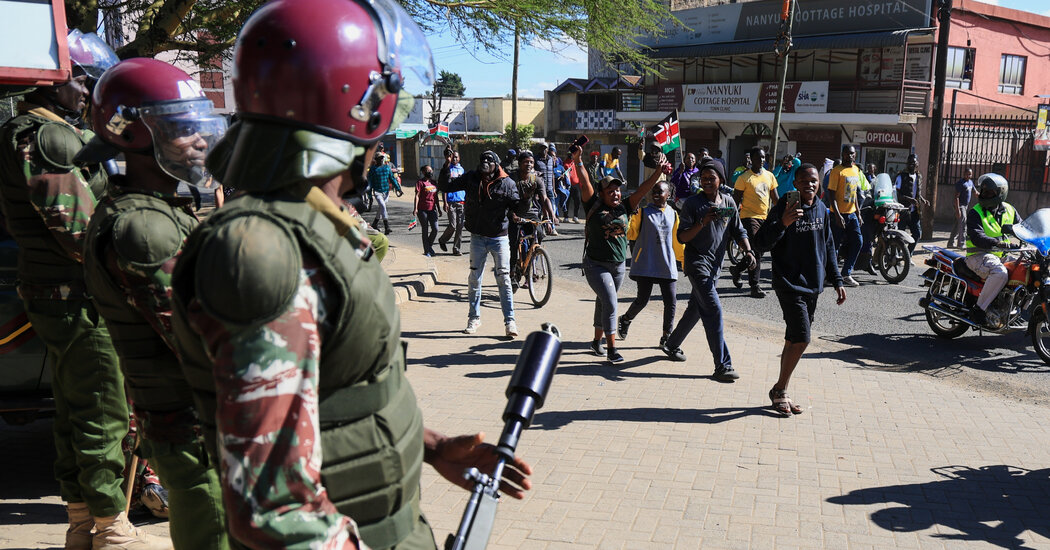
The abstract geopolitical debate in Nairobi became a tangible, volatile crisis in the highlands of Laikipia, culminating in chaotic protests in Nanyuki, the bustling commercial town situated just outside the perimeter of the air base. Driven by graphic images of the current Ebola outbreak in the Democratic Republic of Congo circulating on social media, hundreds of local residents took to the streets in a march that quickly escalated into clashes with law enforcement. Authorities responded with tear gas, and the Kenyan military deployed armored personnel carriers to block protesters from marching on the gates of Laikipia Air Base.
While public health experts explain that the actual epidemiological risk of a modern, strictly controlled containment facility is practically nonexistent, the psychological impact of Ebola—a disease with high mortality rates—makes rational risk communication difficult. Public health advocates point out that during the 2014 West African epidemic, the United States built massive, high-tech treatment centers across Liberia that ended up treating very few patients due to strict containment protocols. However, with the World Health Organization (WHO) confirming 330 cases and 49 deaths in the region, local anxieties remain high. For the people of Nanyuki, the proposed facility represents an unnecessary biological threat brought to their doorstep by a foreign power.
EPIDEMIOLOGICAL RISK VS. PUBLIC PERCEPTION┌─────────────────────────────────────────────────────────────────────────────┐
│ Public Anxiety │
│ • Visual social media reports of Ebola outbreaks in neighboring DRC │
│ • Strong distrust of foreign military-run projects on domestic soil │
│ • Escalating protests and military presence in Nanyuki │
└──────────────────────────────────────┬──────────────────────────────────────┘
│ Contrasted with
▼
┌─────────────────────────────────────────────────────────────────────────────┐
│ Epidemiological Reality │
│ • Sophisticated, strictly isolated biocontainment structures │
│ • Negligible risk of community spread under modern containment protocols │
│ • Historical precedent: 2014 Liberia centers maintained zero-leak records │
└─────────────────────────────────────────────────────────────────────────────┘
The Architecture of Alliance: The Deepening Ties Between Nairobi and Washington
THE U.S.-KENYA STRATEGIC ROADMAP2024 Non-NATO Alliance Haiti Security Mission Health Collaboration
┌─────────────────────────┐ ┌─────────────────────────┐ ┌─────────────────────────┐
│ Washington designates │ │ Nairobi sends police │ │ Over 40 years of shared │
│ Kenya as a Major Non- │ ───> │ forces to stabilize │ ───> │ funding for HIV/AIDS, │
│ NATO Ally, securing │ │ Port-au-Prince; funded │ │ malaria, & tuberculosis │
│ defense partnerships. │ │ primarily by the U.S. │ │ programs in East Africa.│
└─────────────────────────┘ └─────────────────────────┘ └─────────────────────────┘
To fully comprehend President Ruto’s willingness to accept the political risks associated with the Ebola quarantine unit, one must look at the rapidly deepening security and diplomatic partnership between Kenya and the United States. In 2024, President Joseph R. Biden designated Kenya as a Major Non-NATO Ally—making it the first sub-Saharan African nation to receive this status, which grants Nairobi access to advanced defense equipment, specialized military training, and closer security collaboration with the Pentagon. That same year, in a move that drew both international praise and intense domestic debate, Ruto’s administration deployed hundreds of highly trained Kenyan police officers to Haiti to lead a United Nations-sanctioned security mission aimed at dismantling powerful gang networks. This intervention was planned, equipped, and financed by the United States.
Defending his decision to approve the Ebola unit during a press conference in the northern town of Wajir, President Ruto framed the agreement not as a concession, but as a natural reciprocal step in a long history of beneficial bi-national cooperation. “I gave the OK because it was an agreement and a partnership with friends who have walked with Kenya for 30 or 40 years,” Ruto stated, stressing that American-funded initiatives have been critical to Kenya’s success in managing major health challenges like HIV, AIDS, malaria, and tuberculosis. From the presidency’s perspective, allowing a temporary, highly secure quarantine facility on a joint-use military base is a reasonable obligation for a country seeking to secure its position as Washington’s primary strategic partner in Africa.
The Continental Trend of Transactional Diplomacy: African Sovereignty in a Multi-Polar World
The unfolding political crisis in Kenya highlights a broader trend in how African leaders manage relations with Washington. In an era marked by transactional foreign policy, many African nations find themselves balancing localized domestic opposition against the tangible benefits of U.S. military aid, economic intelligence, and development funding. This dynamic is evident in agreements across the continent, where several governments have quietly cooperated with controversial U.S. initiatives, such as third-country deportation policies, accepting non-national deportees in exchange for economic aid and security support.
However, the Kenyan High Court’s decisive intervention serves as a reminder that African democracies are not passive actors in these geopolitical arrangements. The judiciary’s demand for full treaty disclosure and constitutional compliance demonstrates the strength of Kenya’s independent institutions. As Lady Justice Nyaundi’s court prepares for the upcoming June 23 hearing, the case will be watched closely across the continent. It stands as a significant test of whether a sovereign African nation can maintain its constitutional integrity while remaining a key strategic partner to a global superpower.
SUMMARY OF KEY TIMELINES & ACTIONS┌─────────────────┬─────────────────────────────────────────────────┐
│ Timeline │ Action / Event │
├─────────────────┼─────────────────────────────────────────────────┤
│ Early June │ High Court suspends U.S. Ebola unit plan │
│ Mid-June │ Seven-day deadline for full treaty disclosure │
│ June 23 │ Major High Court hearing to determine next steps│
│ Next Year │ Kenyan Presidential Election │
└─────────────────┴─────────────────────────────────────────────────┘