



Welcome to South Florida, a legendary sun-kissed sports paradise where champions are forged and athletic history is written on a daily basis. To understand this region is to understand its deep, burning passion for sports, serving as the proud home to the three-time NBA champion Miami Heat, the two-time NFL Super Bowl-winning Miami Dolphins, the two-time MLB World Series champions Miami Marlins, and the reigning, two-time NHL Stanley Cup champions Florida Panthers. As if this star-studded legacy weren’t enough, the local landscape was recently electrified by the arrival of the reigning Major League Soccer Cup champions Inter Miami, meaning that the world’s biggest game has truly found its new home. This summer, the beautiful game comes full circle as the FIFA World Cup descends directly onto Lionel Messi’s adopted neighborhood, igniting an unprecedented level of football fever across the entire coastline. While the legendary Messi and his beloved Argentina national team are not currently scheduled to play any of their group-stage matches in Miami Gardens, the tournament bracket offers an enticing tease for local fans. If the defending world champions live up to overwhelming global expectations and conquer Group J, their path will lead them straight back to South Florida for a highly anticipated Round of 32 clash on July 3rd at Hard Rock Stadium, where they would battle the runner-up of Group H. The only other dramatic scenario that could bring the global icon back to his current home turf would be a heartbreaking semi-final loss, which would route Argentina to the tournament’s third-place playoff. Yet, even if Messi’s path takes him elsewhere, South Florida’s global football craving will be thoroughly satisfied by a spectacular parade of world-class talent, most notably featuring Cristiano Ronaldo and Portugal, who are guaranteed to grace the pitch in Miami. This summer promises to turn the region into a stunning global crossroads, welcoming a brilliant melting pot of nations—including Scotland, Brazil, Saudi Arabia, Uruguay, Cabo Verde, Colombia, and Portugal—representing the rich footballing heritage of Asia, Africa, South America, and Europe alike.
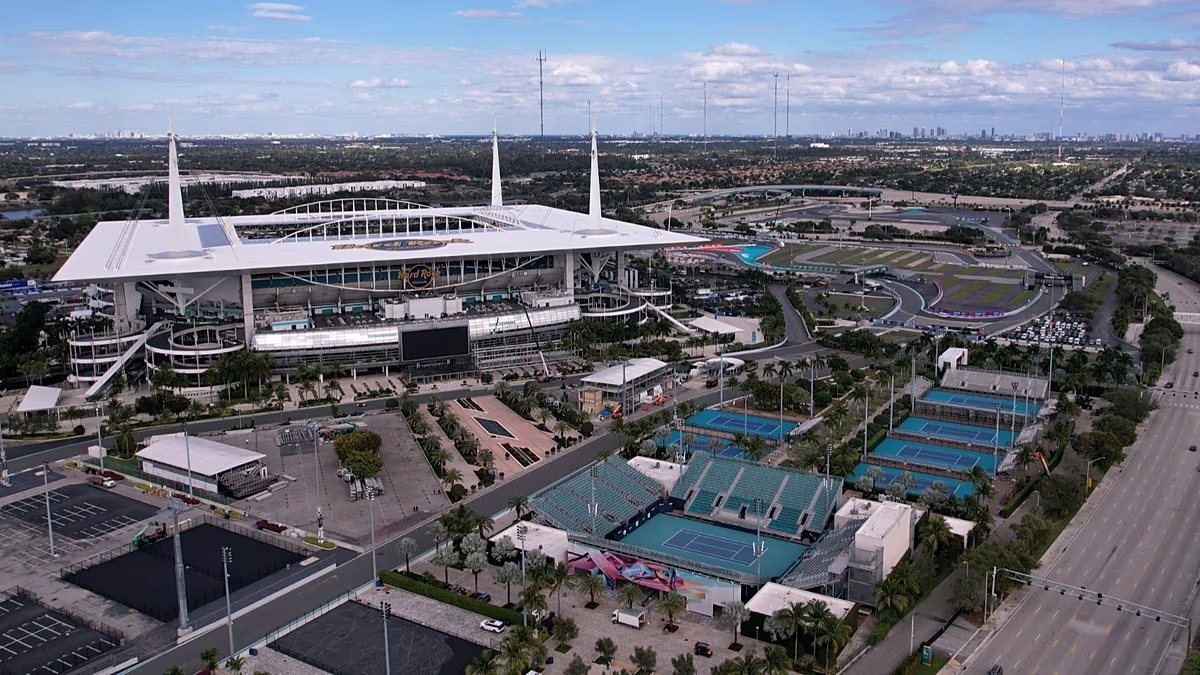
The heart of this global spectacle will beat directly within Miami Stadium—famously known to locals as Hard Rock Stadium—which is set to host seven pivotal World Cup matches, securing its place as one of the tournament’s most prestigious and high-profile venues. The stadium’s schedule is packed with blockbusters, starting on June 15th with an intriguing Group H showdown between Saudi Arabia and Uruguay, followed on June 21st by another competitive Group H clash as Uruguay returns to face the emerging force of Cabo Verde. The atmosphere will reach a boiling point on June 24th when South America meets Europe in a highly anticipated Group C powerhouse match featuring Brazil against Scotland, a classic fixture that promises to draw massive, colorful crowds of passionate supporters from both hemispheres. This is followed on June 27th by a mouth-watering Group K blockbuster between Portugal and Colombia, a game destined to showcase dazzling individual skill and intense team rivalries on the pristine Miami pitch. But the drama does not end with the group stage; the tournament’s intensity will only amplify as the stadium shifts to knockout football. Miami will proudly host a high-stakes Round of 32 matchup on July 3rd, followed by an elite, tension-filled Quarter-final on July 11th, and ultimately culminates in the emotional, hard-fought third-place play-off on July 18th. This diverse and jam-packed schedule guarantees that elite football remains physically and culturally anchored in the city throughout the entire tournament, capitalizing on Miami’s uniquely international population, deep-rooted Latin American influences, and stunning waterfront charm to deliver what will undoubtedly be one of the most vibrant, energetic, and carnival-like atmospheres of the entire World Cup.
When you step away from the roaring crowds of the stadium, you will quickly discover that South Florida is a treasure trove of sights, sounds, and unforgettable experiences, whether you choose to explore its wonders by land or by the crystalline waters of the Atlantic. For those with a love of contemporary culture and striking visual expression, a journey to Miami’s world-famous Wynwood neighborhood is an absolute priority; this artistic haven has embraced the spirit of the tournament, transforming its iconic street murals and galleries to feature one-of-a-kind footballs and athletic themes reimagined as brilliant, museum-quality public artwork. A short drive away lies the Frost Science Museum, a mind-blowing architectural marvel featuring a massive, multi-level aquarium and a world-class planetarium that offers an engaging, educational escape perfect for visitors of all ages looking to cool off during the afternoon. Of course, no trip to this coastal paradise would be complete without sinking your toes into the soft sand of the region’s legendary coastline. From the high-energy, people-watching haven of South Beach to the more relaxed, family-friendly stretches of Fort Lauderdale Beach and the hidden coastal gems nestled quietly in between, there is a perfect slice of shoreline waiting for every type of traveler. If you are willing to embark on a mini road trip, traveling south will lead you into the magical Florida Keys, a breathtaking archipelago where time seems to slow down to a leisurely, sun-drenched crawl. In just about an hour, you can find yourself exploring the vibrant coral reefs and mangrove forests of Key Largo, while those with a bit more time can embark on a scenic, hours-long drive across the Overseas Highway to Key West, a legendary island paradise famous for its historic charm, eccentric characters, and unforgettable sunsets.
Beyond the pitch and the beaches, Miami’s culinary landscape stands as a testament to its status as a global crossroads, offering an endless variety of flavors that can satisfy any craving you could possibly imagine. At the absolute heart of the city’s cultural identity is the colorful neighborhood of Little Havana, a bustling neighborhood where the air is constantly filled with the enticing aromas of authentic Cuban cuisine. Here, you can immerse yourself in local culture by pulling up a chair at a family-run café to feast on savory ropa vieja—tender, perfectly shredded stewed beef—alongside classic, pressed Cuban sandwiches layered with ham, roast pork, Swiss cheese, pickles, and mustard. For an authentic local jolt of energy, you absolutely must try a cup of traditional Cuban coffee; it is a sweet, incredibly strong, and deeply aromatic brew that is admittedly an acquired taste for some, but represents an essential rite of passage for any visitor looking to truly understand the rhythm of Miami life. Beyond its rich Cuban heritage, the wider South Florida region boasts an incredibly diverse, world-class dining scene that caters to every budget and aesthetic preference. You will find ultra-high-end fine dining establishments, masterfully curated sushi lounges, and rustic Italian trattorias scattered throughout trendy neighborhoods like Brickell and the Design District. If you prefer something more casual, you can seek out an old-school diner nestled along South Beach, famous for serving up massive breakfast omelets that could easily feed half a football team, or browse the endless array of artisanal street vendors and trendy culinary pop-ups. However, a crucial piece of advice for any visiting foodie is to bring plenty of patience and plan your dining reservations well in advance; the tournament is bound to bring historic crowds to a metropolis that is already famous for its busy tables and notorious, slow-moving traffic.
For those fans who don’t have tickets to the matches inside the stadium but still want to feel the electric, community-driven heartbeat of the tournament, Miami is pulling out all the stops to create legendary public gatherings and interactive fan zones. The undisputed crown jewel of these celebrations will be the official FIFA Fan Festival, set to take place against the stunning urban and coastal backdrop of Miami’s iconic Bayfront Park. This massive, bayfront sanctuary is preparing to welcome up to 30,000 passionate football fans every single day, creating a sprawling, high-energy epicenter where supporters from all over the world can gather to watch the drama unfold on giant, state-of-the-art projection screens. The festival will be housed within a massive, open-air amphitheater, offering a packed schedule of live music, cultural programming, interactive games, and diverse food and beverage options that will keep the party going long after the final whistle of the day has blown. Beyond this main hub, the festive spirit of the tournament will spill over onto the iconic shores of Miami Beach, which is planning its own dedicated beachfront fan activation zones combining the sun, sand, and surf with the excitement of world-class football. Additionally, various local municipal and county parks throughout South Florida are stepping up to host their own localized World Cup programming, community watch parties, and youth football clinics. This widespread, grassroots effort ensures that the tournament’s joyous atmosphere is accessible to everyone, transforming the entire city into a massive, inclusive playground where locals and globe-trotting tourists can unite through their shared love of the game.
Navigating this massive sporting celebration successfully requires a healthy dose of practical wisdom, local knowledge, and a fair amount of preparation, especially when it comes to transportation and the unique Florida environment. First and foremost, visitors must brace themselves for the local transportation reality: South Florida traffic is notoriously heavy and unpredictable on a normal Tuesday afternoon, so when the World Cup rolls into town, patience will truly be your most valuable asset. To bypass the stress of gridlocked highways, smart travelers should utilize innovative local transit options, such as Freebee—a fantastic, on-demand, and completely free electric shuttle service that operates in several popular neighborhoods—or the sleek Brightline high-speed train system, which seamlessly connects downtown Miami with Fort Lauderdale, West Palm Beach, and beyond. When you finally make your way to the grand stadium in Miami Gardens, comfort and safety should be your top priorities to ensure you enjoy every minute of the action. Fortunately, the venue boasts a state-of-the-art canopy roof that offers crucial shade and protection from both the intense midday sun and sudden tropical rain showers, particularly for fans seated further back from the pitch. However, make no mistake: South Florida during the summer is an environment of intense heat and soaring humidity, meaning you must actively protect yourself. It is absolutely essential to drink ocean-sized amounts of water throughout the day, generously apply high-SPF sunblock, wear a wide-brimmed hat, and dress in light-colored, breathable clothing to keep cool. The stadium itself is remarkably modern, easy to navigate, and equipped with world-class sound systems and giant video screens, but keeping these practical safety tips in mind will ensure your World Cup adventure in Miami is remembered for its incredible matches rather than a heat-induced struggle.